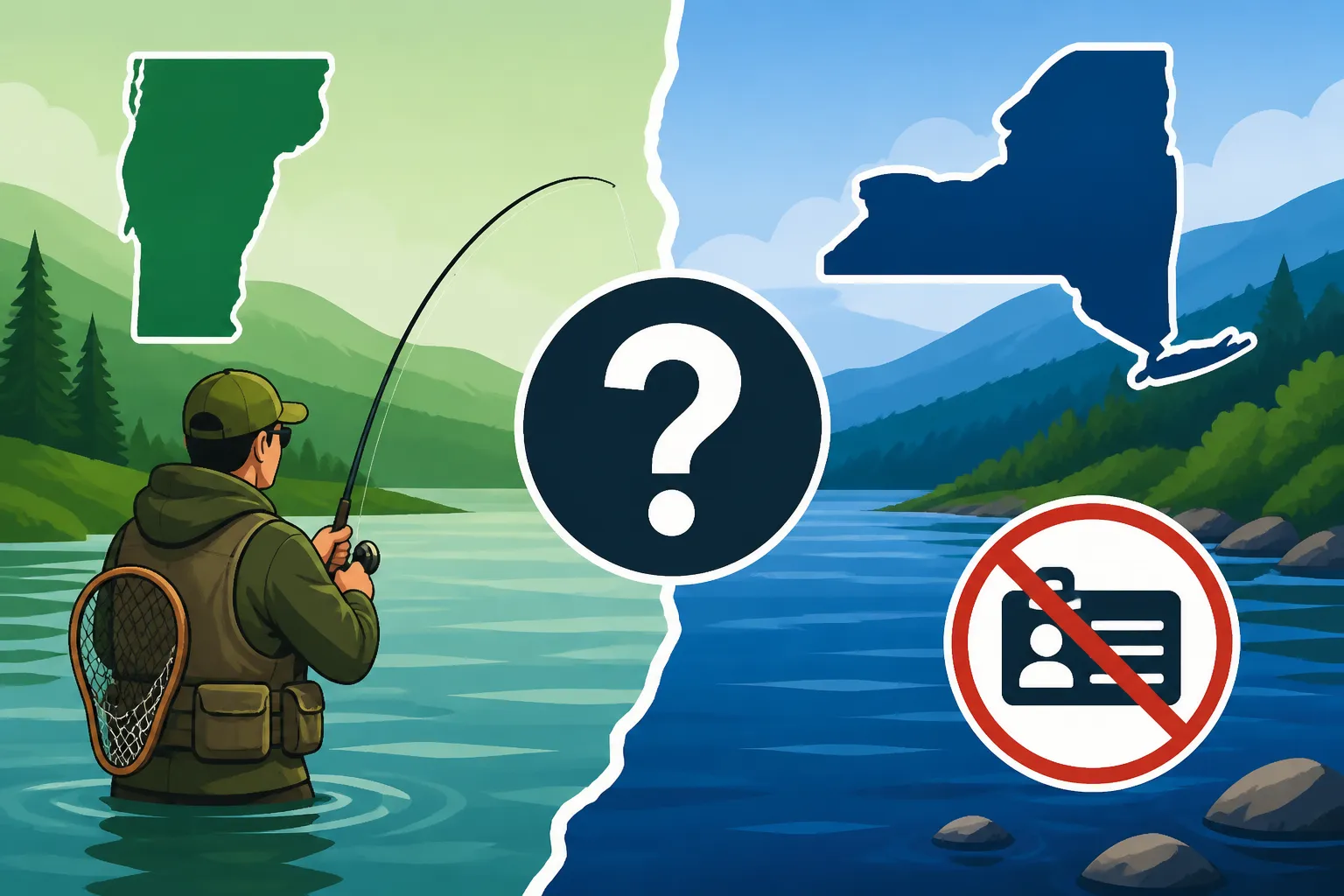
Can a Vermont Angler Fish New York Border Waters Without a New York License?
It’s a tale as old as time for anglers who live near state lines: you’re standing on the shore of a beautiful body of water, perhaps Lake Champlain, with your rod in hand, wondering if your home state’s fishing license covers you here. The truth is, the world of border water fishing licenses can be incredibly confusing, leading to accidental violations or missed fishing opportunities. This guide will cut through the fog, specifically addressing whether a Vermont angler needs a New York fishing license to fish in New York’s border waters, and why these rules exist in the first place.
The Nuance of Border Water Fishing Licenses
Fishing near state lines presents a unique set of challenges and questions for even the most seasoned anglers. It’s easy to assume that if you're just across the border, or in a shared water body, your existing license should suffice. Unfortunately, that's often not the case, and understanding why is the first step toward staying compliant and enjoying your time on the water.
Why State Lines Matter in Fishing
Fish, bless their finned hearts, don't care about the invisible lines we draw on maps. They swim wherever the water takes them. However, the human systems put in place to manage those fish – their populations, habitats, and the angling pressure they face – absolutely depend on those lines. Each state, in this case, New York and Vermont, has its own Department of Environmental Conservation (DEC) or Fish & Wildlife department, tasked with managing its unique aquatic resources. These agencies operate under state-specific laws, fund their programs through licenses and other revenue, and tailor their conservation efforts to the local ecosystem.
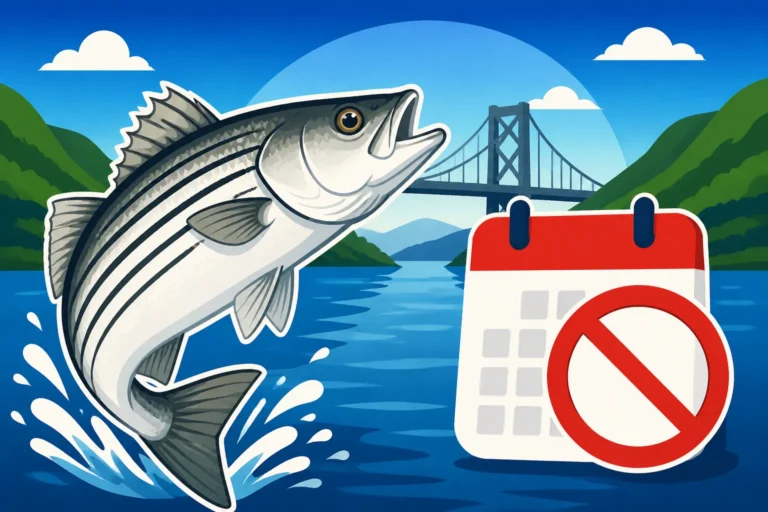
Imagine you're casting a line into Lake Champlain. One moment, your lure might be in water legally considered part of Vermont; the next, a gentle drift could carry it into New York territory. Without clear rules, enforcement would be a nightmare, and the critical funding mechanisms that support fishing for everyone would crumble. These state lines, while invisible to the fish, are very real and significant to anglers and the future of fishing.
Common Misconceptions About Reciprocity
One of the biggest misconceptions I hear from folks is the idea that if you possess any state fishing license, you're somehow covered in adjacent border waters. "I have my Vermont license, so I'm good for Lake Champlain, right?" is a frequent refrain. The simple answer is almost always "no." While some states do have specific, formal reciprocity agreements for certain border waters, these are the exception, not the rule, especially when it comes to covering all waters up to the state line.
It's tempting to think that since two states share a resource, they must share a licensing system, but that's rarely how it works. These agreements are often complex, specific to certain bodies of water, and can change. Assuming reciprocity without checking can lead to serious consequences. If you're caught fishing without the proper New York license in New York waters, even if you have a valid Vermont license, you could face significant penalties, including fines and the potential confiscation of your gear. It's a frustrating situation that no one wants to find themselves in, which is why it's always best to err on the side of caution and secure the correct documentation. If you're curious about the potential repercussions, you might want to read up on the topic of Penalties for Fishing Without a License in New York.
Fishing New York-Vermont Border Waters: Lake Champlain and Beyond
When it comes to the New York-Vermont border, the grand dame of shared waters is undoubtedly Lake Champlain. This magnificent lake is a premier fishing destination, but its dual-state jurisdiction is precisely where the licensing confusion often arises.
Lake Champlain: A Tale of Two States
For those of us looking to fish Lake Champlain, it's crucial to understand that despite being a single, continuous body of water, it is clearly divided by the state line. This means that if you're a Vermont angler, your Vermont fishing license only allows you to legally fish in the waters designated as part of Vermont. To fish in the New York portions of Lake Champlain, you absolutely, unequivocally need a valid New York fishing license. There is no blanket reciprocity agreement that allows a Vermont license to cover New York waters, or vice-versa, on Lake Champlain.
This isn't just a minor technicality; it's a fundamental aspect of how New York manages its fisheries and protects its resources. Whether you launch your boat from a New York ramp or a Vermont ramp, if your line is in New York waters, you must be compliant with New York's regulations and licensing requirements. The imaginary line often runs roughly down the middle of the lake, but it zig-zags and is influenced by specific geographical features and historical agreements. It's always a good idea to consult a detailed map or a New York fishing guide that clearly delineates the state boundary on the lake. If you're planning a trip, familiarizing yourself with the New York Fishing License Guide is a fantastic starting point.
Other Border Waters: Poultney River and Beyond
While Lake Champlain gets most of the attention, the New York-Vermont border is also defined by other, smaller water bodies, such as the Poultney River. These smaller rivers and streams, which often meander along or across the state line, operate under the same principle as Lake Champlain: if the water you are fishing is within New York's territorial jurisdiction, a New York fishing license is required.
Consider a scenario: you're a Vermont resident, enjoying a peaceful day of fishing on the Poultney River. You might cast from the Vermont bank, but if your bait or lure drifts into the part of the river that is officially considered New York territory, you need a New York license. This applies regardless of your physical location on the bank, or even if you launched your kayak from the Vermont side. The critical factor is the location of your fishing activity in relation to the state's legal boundary. This might sound overly strict, but it's consistent with how states manage their natural resources. It prevents confusion and ensures that those who benefit from New York's fisheries contribute to their upkeep. Always check the specific regulations and maps for any border water you plan to fish, even if it's a small, lesser-known stream, to avoid any unintended issues.
Why Separate Licenses Are Essential
The idea of needing multiple licenses for what seems like a continuous body of water can be frustrating and feel like an unnecessary burden. However, there are very sound ecological and financial reasons why separate licenses are not just a bureaucratic formality, but an essential part of effective fisheries management.
Funding Conservation and Management
The most critical reason for requiring state-specific fishing licenses is funding. Your license fees don't just disappear into a void; they are direct contributions to the conservation and management efforts of the state you're fishing in. In New York, these funds are managed by the Department of Environmental Conservation (DEC) and are vital for a wide array of programs. This includes everything from stocking fish in public waters, maintaining and improving access points, conducting scientific research on fish populations, to enforcing regulations that protect vulnerable species and habitats.
If a Vermont angler were allowed to fish New York waters solely with a Vermont license, New York's conservation budget would effectively be subsidizing the fishing activities of out-of-state residents without receiving proportionate funding. This imbalance would quickly strain resources and hinder the DEC's ability to maintain healthy fisheries for everyone. Each state invests heavily in its own waters, and license sales are the primary way anglers directly support those crucial efforts. Understanding the New York Fishing License Costs and Options helps illuminate where your contributions go.
Navigating Regulations and Catch Limits
Beyond funding, distinct state licenses are necessary because fishing regulations themselves often differ significantly between states, even for shared species or water bodies. While New York and Vermont might both have healthy populations of smallmouth bass in Lake Champlain, their specific rules regarding minimum size limits, daily creel limits, and open seasons could vary. For example, New York Bass Season Dates might open or close differently than Vermont's. Similarly, the New York Statewide Trout Daily Limit Explained might be different from what you're accustomed to in Vermont.
These differences aren't arbitrary. They're based on specific local ecological conditions, population assessments, and management goals unique to each state. A particular section of New York waters might require stricter limits due to localized spawning habits or recent stocking efforts, while an adjacent section in Vermont might have different pressures. Therefore, holding a New York license implies you are agreeing to abide by New York's specific set of rules, which are designed to ensure the sustainability of its fisheries. It's an angler's responsibility to know and follow the regulations of the state they are actively fishing in. A comprehensive resource for this is the New York Fishing Regulations Explained.
Securing Your New York Fishing License as an Out-of-State Angler
For Vermont anglers looking to explore the New York side of Lake Champlain or other border waters, getting a New York fishing license is a straightforward process. It’s definitely worth the minimal effort to ensure you’re fishing legally and contributing to the conservation of New York's fantastic fisheries.
Options for Non-Resident Anglers
New York offers several convenient options for non-resident anglers to purchase a fishing license, catering to different visit lengths and preferences. You're not restricted to just an annual pass if you only plan a quick trip.
- Annual Non-Resident License: This is your best value if you anticipate fishing New York waters multiple times throughout the year. It provides coverage from the date of purchase through the following February 28th (or 29th in a leap year).
- 7-Day Non-Resident License: Perfect for a week-long vacation or an extended fishing trip. This license is valid for seven consecutive days from the date you select at purchase. You can learn more about the New York 7-Day Fishing License to see if this option fits your schedule.
- 1-Day Non-Resident License: If you're just popping over for a single day of fishing, this is the most economical choice. It covers you for one specific calendar day. Details on the New York 1-Day Fishing License are readily available.
The costs for these options vary, but they are all easily accessible. For a full breakdown of the current rates, you can check the official New York Nonresident Fishing License Cost information.
Purchasing your license is also incredibly flexible:
- Online: The quickest and most convenient method is through the New York DEC's official website. You can purchase your license from the comfort of your home, print it immediately, or save it digitally. This is often the preferred method for many, and you can find specific instructions on How to Buy a Fishing License Online in New York.
- In-Person Vendors: Many sporting goods stores, bait shops, Walmart locations, and town/county clerk offices throughout New York are authorized license vendors. It's a great opportunity to grab some local tackle and chat with folks who know the area. You can even find your New York Fishing License at Walmart or other popular retailers.
Planning Your Trip and Staying Compliant
Once you've secured your New York fishing license, a little bit of planning goes a long way to ensure a hassle-free and enjoyable trip.
First and foremost, always check the most up-to-date New York fishing regulations before you head out. Regulations can change seasonally or annually, and what was true last year might be different this year. The New York DEC website is the definitive source for this information.
When you're out on the water, you need to have proof of your license readily available. While the days of needing a physical, paper card are largely behind us, you still need to be able to present your license if asked by an environmental conservation officer. This means you can either:
- Carry a Printed Copy: You can easily Can I Print My Fishing License at Home? after purchasing it online. A simple printout tucked into a waterproof bag is usually sufficient.
- Display on Your Phone: Most officers will accept a digital copy displayed on your smartphone. Just make sure your phone is charged and protected from the elements! For more on this, check out Can I Show a Digital Fishing License on My Phone?.
For both your license and regulations, consider having waterproof options. You can find excellent waterproof cases for phones and document bags on Amazon, which are invaluable for keeping everything safe and dry. It's also a good idea to download or grab a copy of the official New York DEC Fishing Regulations Guide to have on hand. Even if you've studied the rules, having the guide for quick reference can be incredibly helpful, especially when dealing with specific species limits or special regulations that apply to certain water bodies. For example, if you're loading up on fishing supplies for your trip, you can often find great deals on tackle boxes, lures, and even waterproof regulation guides on Amazon before you even leave Vermont.
Here’s a quick comparison of New York and Vermont non-resident freshwater fishing license options, for your convenience:
| License Type | New York Non-Resident (Approx. Cost) | Vermont Non-Resident (Approx. Cost) | Duration | Notes |
|---|---|---|---|---|
| Annual Freshwater | $50 | $56 | ~1 Year | Best for frequent visitors to either state. |
| 7-Day Freshwater | $28 | $30 | 7 Consecutive Days | Ideal for a week-long fishing vacation. |
| 1-Day Freshwater | $10 | $15 | 1 Calendar Day | Good for a quick day trip across the border. |
Note: Prices are approximate and subject to change. Always verify current prices on the official New York DEC and Vermont Fish & Wildlife websites before purchasing.
In conclusion, while the lure of seamless border water fishing is strong, the reality for a Vermont angler fishing New York waters (like Lake Champlain) is clear: you need a valid New York fishing license. It's a small investment that ensures you're fishing legally, supporting critical conservation efforts, and avoiding potential fines, making your cross-border fishing adventures truly enjoyable and worry-free.
Disclaimer
The information provided in this guide is for general informational purposes only and does not constitute legal advice. Fishing regulations and license requirements are subject to change. Always consult the official New York State Department of Environmental Conservation (DEC) website or their physical publications for the most current and accurate information before engaging in any fishing activities.