Best Fishing Spots on the Hudson River
Trying to figure out where to cast your line on the mighty Hudson River can feel like an overwhelming task. This legendary waterway, stretching over 300 miles from the Adirondacks all the way down to New York Harbor, offers incredibly diverse fishing experiences, but knowing where to go for the best action is key. You don't want to spend your precious fishing time driving around aimlessly or casting into barren waters. This comprehensive guide is here to pinpoint some of the best fishing spots along the Hudson River, helping you navigate its vastness and land some fantastic catches.
Understanding the Hudson River's Diverse Ecosystem
Before we dive into specific locations, it's crucial to understand that the Hudson River isn't a monolithic body of water. It's a complex, dynamic system that changes dramatically as it flows south. The upper reaches are distinctly freshwater, influenced by mountain runoff and tributaries, while the lower sections are a vast estuary, where freshwater mixes with tidal saltwater from the Atlantic Ocean. This incredible diversity means different fish species thrive in different zones, and your fishing approach will need to adapt accordingly. From cold-water trout in the headwaters to migratory striped bass in the tidal estuary, the Hudson truly has it all. Familiarizing yourself with the nuances of this river is the first step to unlocking its secrets. To ensure you're fishing legally and responsibly throughout these varied zones, always consult the official guidance on New York Fishing Regulations Explained If you're planning an adventure from beyond New York, remember to check Fishing License Requirements for Out-of-State Visitors to New York.
The Freshwater Headwaters and Upper Hudson
Up north, where the Hudson begins its journey in the Adirondack Mountains, you'll find a very different river than what most people picture. This section is characterized by smaller, colder, and clearer waters, more akin to a traditional mountain stream. As it widens and flows past towns like Glens Falls and Schuylerville, it transitions into a broader river system, but still firmly within the freshwater domain. Here, you're looking at species like smallmouth bass, northern pike, and a variety of panfish, with some trout closer to the colder feeder streams.
Access in these upper reaches can sometimes be more challenging, often requiring smaller boats, canoes, kayaks, or shore fishing from public access points. It's less about massive fishing piers and more about finding quiet stretches of riverbank or launching a nimble craft. Local knowledge is invaluable here, and sometimes booking a local guide through platforms like FishingBooker can give you an immediate edge, especially if you're targeting elusive species in less accessible areas. They often know the hidden gems and recent fishing patterns that aren't widely advertised.
The Tidal Freshwater Section
Even well north of New York City, the Hudson River is tidal, meaning the water levels rise and fall with the ocean's tides, sometimes as far north as the Troy Dam. However, the water remains predominantly fresh in this stretch, particularly above the Newburgh area. This unique blend of tidal flow and freshwater conditions creates a rich environment for a variety of species. Think of it as a super highway for fish, where migratory species push upriver into freshwater, and resident freshwater species benefit from the constant flow and nutrient exchange.
The tidal freshwater section is a fantastic place to target species like largemouth and smallmouth bass, northern pike, channel catfish, and even some walleye. During certain times of the year, anadromous species like striped bass will also make their way into these waters, particularly during their spring spawning runs. The presence of tributaries here also provides additional angling opportunities, often holding different species or providing clearer water after heavy rains. It's a complex system, but incredibly rewarding for those who learn its rhythms.
Prime Freshwater Fishing Upriver: From Albany to Catskill
This stretch of the Hudson, roughly from Albany down to the Catskill area, represents a fantastic transitional zone. While still primarily freshwater, the tidal influence is undeniable, shaping the landscape and the fishing opportunities. Here, you'll find a mix of larger river environments and diverse habitats perfect for both resident freshwater species and migratory visitors.
Fishing Around Albany and Rensselaer
Near the state capital, the Hudson River is a substantial waterway, offering excellent opportunities for various freshwater species. The area around the Port of Albany and the towns of Rensselaer and Green Island are popular access points. Here, anglers often target a robust population of channel catfish, especially during the warmer months. These bottom-dwelling fish are plentiful and offer a strong fight, making them a favorite for many. Using cut bait, nightcrawlers, or stink baits fished on the bottom can be incredibly effective.
Beyond catfish, you'll also find good numbers of smallmouth bass and largemouth bass, particularly around submerged structures, bridge pilings, and the mouths of smaller tributaries like the Mohawk River. Pike are also present, often lurking in weed beds and calmer backwaters. Shore access is available at several parks, and boat launches allow anglers to explore wider sections of the river. Remember to always have your New York Fishing License Guide handy, as the regulations can change slightly depending on the specific waters.
Catskill Creek and Athens Flats
Moving south, the area around Catskill and Athens offers a more scenic backdrop with excellent fishing potential. Catskill Creek, a major tributary entering the Hudson here, can be a hotspot, especially during spring spawning runs for various species. The flats and shallows near Athens are renowned for their northern pike fishing. These aggressive predators often hang out in the shallower, weedy areas, waiting to ambush baitfish. Casting large spoons, spinnerbaits, or even live minnows can entice a strike.
This region also sees significant runs of striped bass in the spring as they migrate upriver to spawn. During this time, the "flats" can come alive with activity. Many anglers prefer to fish from boats in this area, drifting or trolling to cover more water, but there are also opportunities for shore fishing, particularly at public access sites like the one in Athens. Local fishing reports are invaluable here, as the best spots can shift with water levels and fish movements. For a deeper dive into targeting these migrating giants, check out Striped Bass Fishing on New York's Hudson River.
The Estuary's Bounty: Fishing the Mid-Hudson (Catskill to Newburgh)
This section truly embodies the "estuary" character of the Hudson, where the tidal influence is strong, and the water slowly transitions from fresh to brackish as you head south. It's a hugely productive zone, particularly famous for its striped bass fishing, but also holding many other species that thrive in this unique environment. This is where the river feels truly immense, with broad expanses of water, islands, and numerous deep channels.
Kingston and Poughkeepsie Hotspots
The stretch around Kingston, especially near the Rondout Creek, and further south towards Poughkeepsie, is prime territory for some of the Hudson's most sought-after fish. The confluence of Rondout Creek with the Hudson creates a rich feeding ground and a popular staging area for fish. This is a fantastic place for striped bass, especially during their spring and fall migrations. Anglers often target them by boat, trolling plugs, casting swimbaits, or fishing with live bait like herring or bunker. There's also good shore access around Kingston Point Park and the Walkway Over the Hudson in Poughkeepsie, offering unique angling perspectives.
Beyond striped bass, you can find a healthy population of largemouth and smallmouth bass, particularly in the numerous coves and bays that punctuate this part of the river. Crappie and yellow perch are also plentiful in calmer backwaters. If you're looking to explore deeper into the opportunities here, especially for specific species, consider consulting a local fishing guide. Platforms like FishingBooker can help you find experienced guides in the Kingston or Poughkeepsie areas who specialize in particular species or fishing styles.
Newburgh and Beacon Areas
Further downriver, the Newburgh Bay area and the waters around Beacon continue to offer exceptional angling. This wider section of the river, with its deeper channels and strong currents, is another hotspot for striped bass. The combination of depth, current, and diverse forage makes it highly attractive to these migratory fish. Many charter boats operate out of these areas, taking anglers out for a full or half-day of targeting stripers. These charters often provide all the necessary gear and local expertise, making it a great option for visitors or those new to Hudson River fishing.
You'll also find significant populations of white perch and even some Atlantic sturgeon (though these are highly protected and must be immediately released if caught). The robust ecosystem supports a variety of predatory fish. Access points like the Newburgh Waterfront or Beacon's Riverfront Park offer great opportunities for shore anglers. For those keen on understanding the specific species that thrive in this dynamic environment, our guide on Fish Species Found in the Hudson River provides valuable insights.
Downriver Excitement: Fishing the Lower Hudson and Beyond (Newburgh to NYC)
As the Hudson River progresses past Newburgh and moves closer to New York City, the transition from fresh to brackish, and eventually saltwater, becomes increasingly apparent. This lower section, often referred to as the "salt front" or "estuary proper," is a world-class fishery, especially for migratory saltwater species that use the Hudson as a highway to spawn or feed.
Croton Point and Haverstraw Bay
The expansive waters of Haverstraw Bay and the area around Croton Point Park offer exceptional fishing for a variety of species. This region is famous for its tremendous spring striped bass run, where massive schools of stripers push upriver. Anglers here use a wide array of techniques, from casting large swimbaits and topwater plugs to drifting live bait like herring or bunker. The confluence of the Croton River with the Hudson also creates excellent fishing opportunities, acting as a funnel for baitfish and predators alike.
During the summer months, as the water warms, you'll also find good numbers of white perch, bluefish (particularly in the more brackish areas), and even some fluke (summer flounder) moving into the lower reaches. This is a bustling section of the river, with many boaters and shore anglers taking advantage of the rich fishery. For those considering casting their lines from shore, public parks and accessible points provide excellent views and angling spots.
Manhattan and the New York Harbor Estuary
Right in the heart of New York City, the Hudson River meets the Atlantic Ocean in New York Harbor. While often overlooked by anglers due to its urban setting, this area offers surprisingly productive fishing. The tidal currents are strong here, bringing in a constant supply of baitfish and nutrients. Species like striped bass, bluefish, weakfish, and even some fluke are regularly caught from the piers, bulkheads, and boats within the harbor and the lower Hudson.
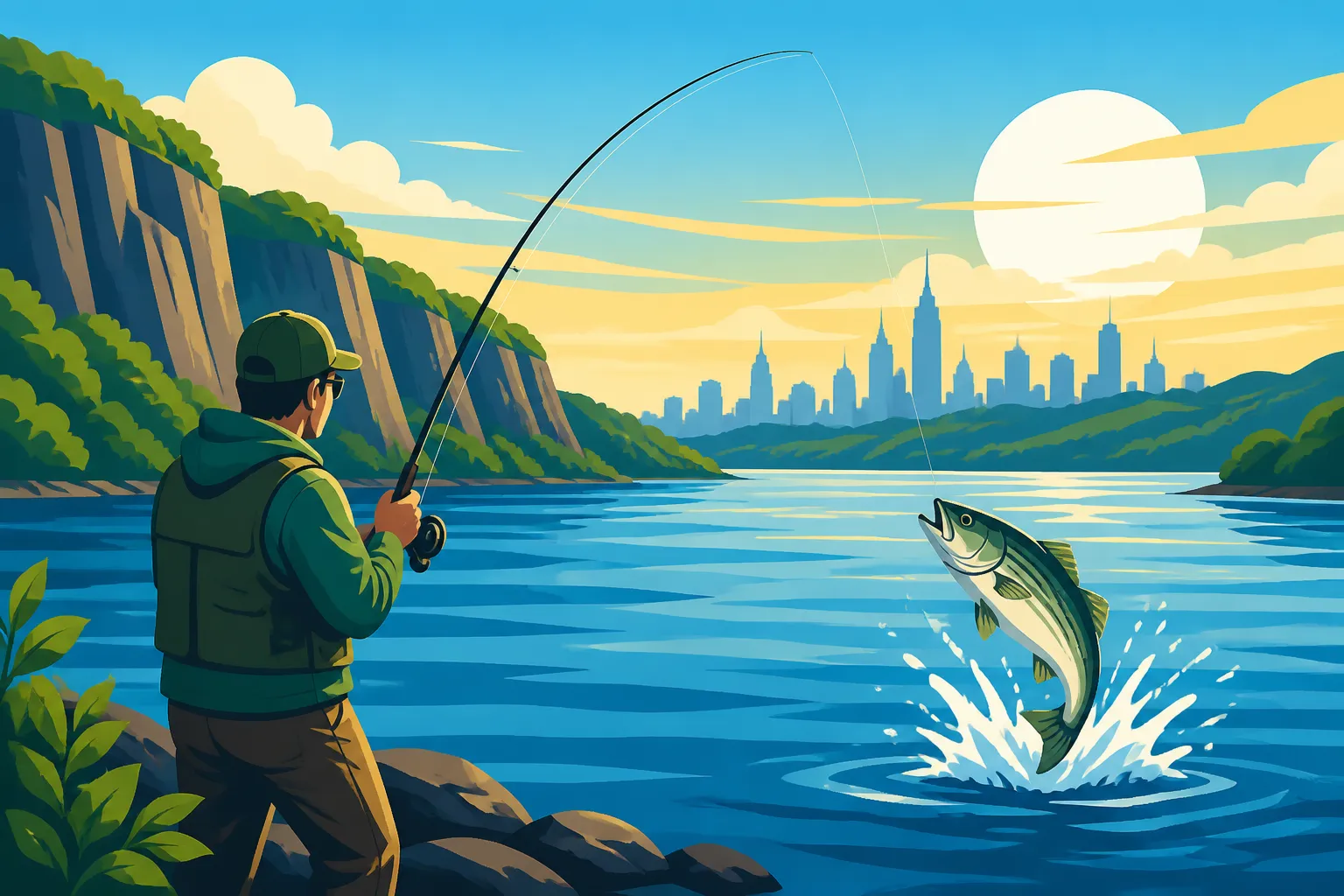
Popular spots include piers along Manhattan and Brooklyn, such as Pier 25, Pier 84, and the Brooklyn Bridge Park piers. While shore fishing is dominant here, many charter boats also operate out of the various marinas, offering trips into the harbor and surrounding waters. It's a truly unique experience to fish with the iconic New York City skyline as your backdrop. Because this is fully tidal and saline, keep in mind that you might need to register with the New York Saltwater Fishing Registration Guide in addition to any freshwater license you hold.
Essential Tips for a Successful Hudson River Fishing Trip
Fishing the Hudson, with its varying conditions and vastness, requires more than just a rod and reel. A little preparation and understanding of its unique characteristics can dramatically increase your chances of success.
Understanding Tides and Currents
The Hudson River is heavily influenced by the ocean's tides, often for hundreds of miles inland. Understanding the tidal swings is paramount, especially for targeting migratory fish like striped bass. Fish often feed most actively during moving water – either the incoming or outgoing tide. Slack tide, when the water is still, can sometimes be slower. Check local tide charts for your specific fishing location, as the timing of high and low tide will vary significantly from New York Harbor all the way up to Albany. Fishing around the peak of the tide change, or a couple of hours before or after, often yields the best results.
Moreover, the currents can be incredibly strong, particularly in deeper channels or during powerful tidal movements. This means you'll often need heavier sinkers to hold your bait on the bottom or adjust your trolling speed and direction to present lures effectively. Pay attention to how the current is moving your line; sometimes a subtle adjustment is all it takes to get your bait into the strike zone. For specific species, understanding the best time to fish can make all the difference, as covered in Best Time of Day to Fish in New York.
Choosing the Right Bait and Lures
The best bait and lures will depend heavily on your target species and the specific section of the river you're fishing. In the upper, freshwater sections, traditional freshwater baits like nightcrawlers, shiners, and various soft plastic lures or crankbaits work well for bass and pike. For catfish, stink baits or cut bait are often king.
In the tidal estuary, especially for striped bass, live bait such as Atlantic menhaden (bunker), herring, or eels can be incredibly effective. For artificials, large swimbaits, bucktail jigs, topwater plugs, and soft plastics rigged on jig heads are popular choices. Don't forget the importance of matching the hatch – if you see baitfish skipping on the surface, try to mimic their size and color with your lure. For striped bass in particular, there's a wealth of knowledge on Best Bait for Striped Bass and even specific techniques like How to Chum for Striped Bass to draw them in.
Here's a quick overview of some popular Hudson River fishing locations and what to expect:
| Location (General Area) | Primary Species | Common Techniques | Access Notes |
|---|---|---|---|
| Albany/Rensselaer | Catfish, Bass, Pike | Bottom fishing, Casting lures | Shore access, Boat launches |
| Catskill/Athens | Pike, Striped Bass (spring), Bass | Casting lures (spoons, spinnerbaits), Live bait | Boat-centric, some shore |
| Kingston/Rondout | Striped Bass, Bass, Crappie | Trolling, Casting, Live bait | Boat launches, Piers, Shore access |
| Poughkeepsie | Striped Bass, Bass, Perch | Trolling, Casting, Live bait | Boat launches, Walkway Over the Hudson |
| Newburgh/Beacon | Striped Bass, White Perch | Trolling, Live bait, Jigging | Boat launches, Piers, Shore access |
| Croton Point/Haverstraw | Striped Bass, Bluefish, Fluke | Casting, Trolling, Live bait | Boat launches, Large park for shore |
| NYC Piers/Harbor | Striped Bass, Bluefish, Fluke, Weakfish | Casting, Live bait, Jigging | Piers, Bulkheads, Charter boats |
Safety First on the River
The Hudson River is a large, powerful body of water, and safety should always be your top priority. If you're fishing from a boat, always ensure you have all the required safety equipment, including properly fitting Life Jacket Requirements While Fishing for everyone on board. Be aware of commercial traffic, especially tugboats and barges, which can create large wakes. Water conditions can change rapidly, so keep an eye on weather forecasts.
If fishing from shore, be mindful of slippery banks, strong currents, and any posted warnings. Never fish alone in isolated areas, and always let someone know where you're going and when you expect to return. The sheer size of the river means that currents can be treacherous, and visibility can sometimes be low, so being prepared is non-negotiable.
When to Consider a Fishing Guide or Charter
For those new to the Hudson, or targeting specific, challenging species, a fishing guide or charter can be an invaluable asset. Local guides possess an intimate knowledge of the river's ever-changing conditions, fish patterns, and prime locations that would take years to acquire on your own. They typically provide all the necessary gear, bait, and often share tips and techniques that will serve you well on future trips.
Whether you're after a trophy striped bass, a hard-fighting northern pike, or simply want to learn the ropes of Hudson River fishing, booking a guide ensures a productive and safe outing. Platforms like FishingBooker make it easy to find and compare experienced Hudson River fishing guides and charters, reading reviews, and booking with confidence. For more details on finding the right expert for your trip, check out our guide on Hudson River Fishing Guides.
Ultimately, the Hudson River offers an incredible array of fishing experiences, from tranquil freshwater streams to the vibrant urban estuary. With a little planning, respect for the environment, and perhaps some local guidance, you're sure to create unforgettable fishing memories on this iconic New York waterway.
Disclaimer
The information provided in this guide is for general informational purposes only and is subject to change. Always consult the most current New York State Department of Environmental Conservation (DEC) regulations and local advisories before engaging in any fishing activity on the Hudson River. Fishing conditions, species availability, and regulations can vary significantly by location and season.