Best Tip-Up Setup for Ice Fishing Pike
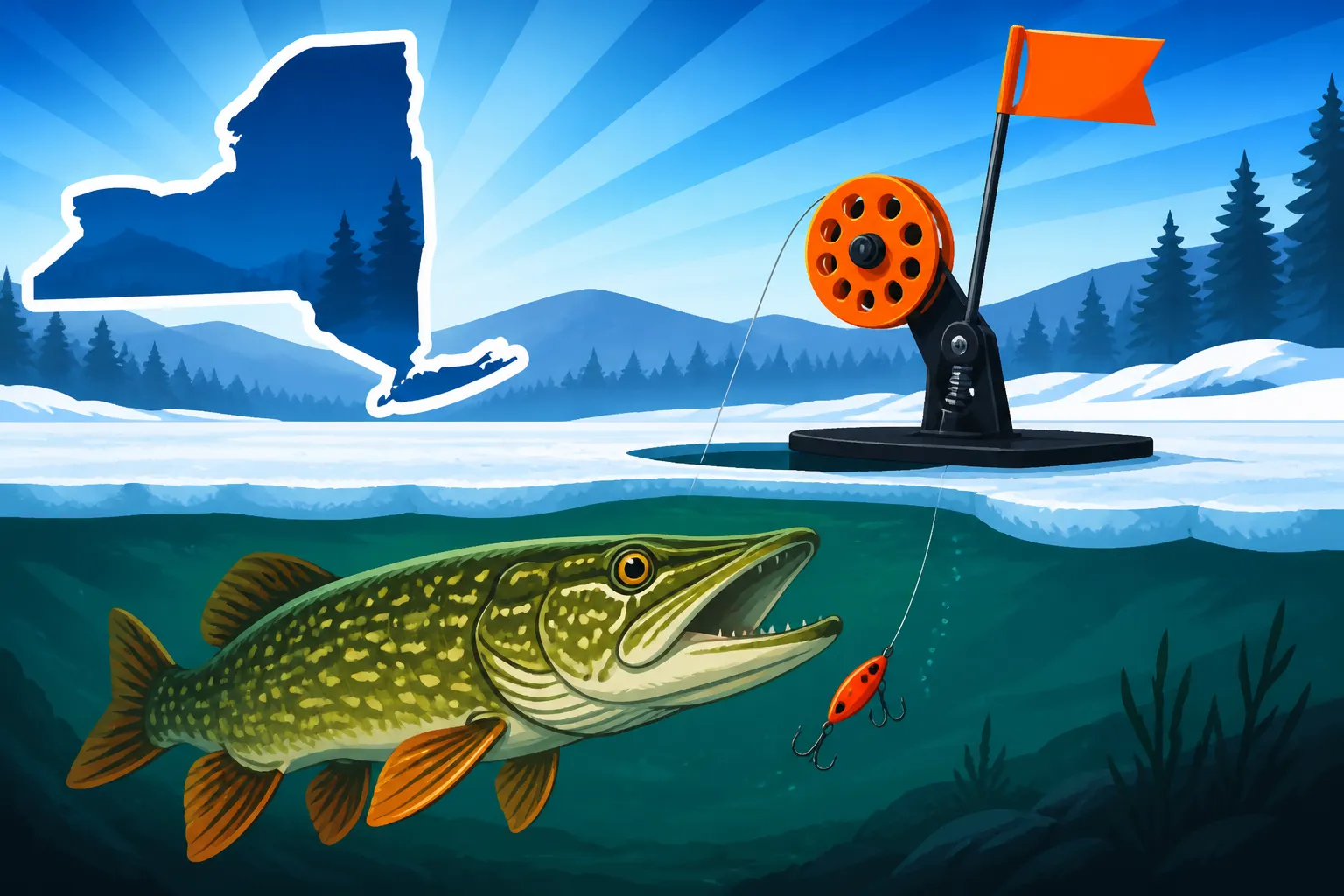
There’s nothing quite like the thrill of a flag flying high over a freshly drilled hole, signaling a fish on the line beneath the ice. But if you're specifically targeting pike while ice fishing in New York, you know it can be a unique challenge. These toothy predators demand a specialized approach, and a haphazard tip-up setup just won't cut it. This guide is all about helping you perfect your tip-up rig to maximize your chances of landing that trophy northern pike, ensuring you're ready when that flag goes up.
Understanding Pike Behavior Under the Ice
Before you even think about drilling a hole, it pays to understand what makes pike tick when the water turns to ice. They're not the same fish they are in open water, and adapting your strategy to their winter habits is key to success.
Where Pike Hunt in Winter
Pike are ambush predators, and that doesn't change when the lake freezes over. In winter, they tend to gravitate towards specific structures and depths where they can efficiently hunt unsuspecting prey. Think about weed lines, especially those green, healthy patches that still offer cover and hold baitfish. These are often in shallower bays, coves, or along distinct depth contours. They'll also patrol drop-offs, underwater points, and the edges of submerged islands where the bottom structure provides a natural ambush point. If you have access to a good contour map of your chosen lake, study it for these features.
Many anglers make the mistake of assuming pike are only in the deepest parts of the lake during winter. While they certainly can be, especially larger ones, don't overlook those shallower areas, even as little as 4-8 feet, particularly during low-light conditions or just after first ice. Baitfish like perch and sunfish often seek refuge in these areas, and the pike will follow. Keep an eye out for areas where there might be some current, as this often indicates oxygen-rich water that attracts both predators and prey.
What Attracts Winter Pike
Pike are visual hunters, but in the often murky or low-light conditions under the ice, they also rely on vibrations. Live bait is almost universally preferred for tip-up fishing for pike because its natural movements are irresistible. Shiners, suckers, or even small perch (check local regulations carefully before using game fish as bait) are excellent choices. The bigger the bait, generally, the bigger the pike you're targeting. A lively 6-8 inch sucker swimming under your tip-up sends out powerful signals that can draw pike from a surprising distance.
Beyond the bait itself, the presentation matters. You want your bait to be active enough to attract attention but not so active that it wraps itself around your line or structure. The depth at which you suspend your bait is also crucial. Sometimes, pike are hugging the bottom; other times, they're cruising higher in the water column, perhaps just under the ice. Experimentation is your friend here. Furthermore, knowing New York Fishing Season Dates and Catch Limits for pike will help you plan your trips around their most active periods.
The Patience Game with Pike
Ice fishing for pike is often a game of patience, punctuated by moments of intense excitement. Pike are not always aggressive biters, especially in colder water. They might circle your bait, nudging it, before committing. This is why a good tip-up setup is designed to allow the pike to take the bait without feeling too much resistance. If they feel a heavy drag or resistance from your line or spool right away, they might drop the bait.
Waiting for the right moment after a flag goes up is also part of the patience game. Resist the urge to sprint to the hole and yank immediately. Give the pike a moment to really take the bait into its mouth and turn. Some anglers count to five or even ten after the flag pops before approaching and setting the hook. This ensures a better hook set and reduces the chances of pulling the bait right out of their mouth. Remember, pike can be finicky eaters in the winter, making your setup and approach even more important.
Essential Components of a Pike Tip-Up Setup
A successful pike tip-up setup is a symphony of components working together. Each part plays a crucial role, and skimping on quality in any area can lead to lost fish and frustration.
Choosing the Right Tip-Up
When it comes to tip-ups for pike, you want something sturdy and reliable. Traditional wooden cross-stick tip-ups are classics for a reason; they're durable, stable, and can handle strong winds. There are also thermal tip-ups, which are fantastic for preventing your hole from freezing over in bitter New York cold, especially when you're fishing multiple holes. Brands like Frabill and Beaver Dam are popular choices among serious ice anglers, and you can find a great selection of these on Amazon.
Consider the size of the spool on your chosen tip-up. Pike are powerful fish and can make long runs, so you need enough line capacity. A larger spool also helps reduce line memory and allows for smoother deployment. Look for tip-ups with a sensitive flag mechanism that triggers easily, but not so easily that a stiff breeze sets it off. A good quality metal or composite shaft that won't easily bend or break is also important when dealing with larger fish. For those venturing out onto the ice, checking out an Ice Fishing in New York: A Complete Guide can offer broader insights into essential gear.
Spooling with the Right Line
The line on your tip-up is a critical link between you and the fish. For pike, you generally want something heavy-duty. Many anglers opt for specialized tip-up line, which is often a braided Dacron or nylon line, anywhere from 30 to 50 lb test. The higher visibility of these lines on the ice is a plus, and their strength is paramount. Unlike jigging, where line sensitivity is key, with a tip-up, it's all about durability and breaking strength.
While braided line is excellent for its strength and low stretch, some anglers prefer a fluorocarbon leader or even a short section of monofilament as a "cushion" right above the leader, especially in very clear water. The primary line should be spooled neatly and tightly to prevent tangles and ensure smooth deployment when a fish runs. Make sure you have at least 50-75 yards of main line, preferably more if you're targeting truly large pike or fishing deeper water. A heavier line also makes it easier to handle the fish once it's close to the hole, especially when you're bare-handing the line on cold days.
The Critical Leader Setup
This is arguably the most crucial part of your pike tip-up setup. Pike have sharp teeth, and they will cut through monofilament or fluorocarbon line instantly. You absolutely need a steel or heavy-duty fluorocarbon leader.
Here's a breakdown:
- Steel Leaders: These are the most common and reliable choice. They come in various styles:
- Seven-strand wire: Very flexible and kink-resistant. Look for strengths of 20-50 lbs.
- Titanium leaders: Even more flexible and virtually kink-proof, but often more expensive.
- Pre-made leaders: Convenient and often come with swivels and snaps already attached. Make sure the snaps are strong enough and easy to open and close with cold hands.
- Heavy Fluorocarbon Leaders: Some anglers prefer fluorocarbon for its near-invisibility in water, especially in clear lakes. However, it needs to be very heavy – 60-100 lb test – to stand up to pike teeth. Even then, there's a risk of it getting abraded or cut if the pike gulps it deeply. Use a long section (18-24 inches) to minimize this risk.
Whatever leader material you choose, ensure it's crimped or knotted securely. A strong barrel swivel between your main line and leader is essential to prevent line twist, especially with lively bait. The leader should be long enough (12-24 inches) to prevent the pike from biting through your main line but not so long that it becomes unwieldy in the hole. You can find excellent quality leader materials and pre-made leaders for pike fishing on Amazon.
Hooks and Bait Options
The right hook and bait combination is what ultimately seals the deal.
- Hooks:
- Treble Hooks: Often preferred for pike. A size 4 or 2 is common, but adjust based on bait size. Make sure they are sharp!
- Single Hooks: Some anglers prefer large, strong single hooks (e.g., octopus hooks, sizes 1/0 to 4/0) for easier unhooking and less damage to the fish if practicing catch and release. This also depends on local New York Freshwater Fishing Rules which might specify single hooks in certain areas.
- Quick-Strike Rigs: These are highly effective for pike. They consist of two treble hooks spaced out, designed to hook the pike as soon as it grabs the bait, without needing to wait for it to swallow. One hook is typically placed near the dorsal fin, the other near the head of the baitfish. This can significantly reduce instances of gut-hooking.
- Bait:
- Live Minnows/Shiners: The go-to. Purchase them fresh from a local bait shop. Ensure they are lively.
- Suckers: Excellent for larger pike, as they are hardier and can be bigger.
- Perch/Panfish: If legal to use as bait in your area (always verify New York Fishing Regulations Explained), these are natural prey for pike.
- Smelt: Another fantastic option where available and legal.
- Dead Bait: Believe it or not, dead bait, especially oily ones like herring or mackerel, can be effective. Rig them to look natural, perhaps with a small lead weight inside to give them some action when lightly jigged.
When rigging live bait, hook it lightly through the back, just below the dorsal fin, being careful not to hit the spine. This allows the bait to swim naturally and stay alive longer. For quick-strike rigs, ensure the hooks are positioned for optimal exposure and hook-up.
Setting Up Your Tip-Up for Success
Now that you have your gear, it's time to put it all together on the ice. Proper deployment is just as important as the gear itself.
Drilling the Hole and Depth Considerations
First things first, you need a hole! For pike, a standard 8-inch auger is usually sufficient, but if you're consistently targeting trophy-sized fish, a 10-inch auger might be a wise investment. Make sure you drill safely; always be aware of How Thick Does Ice Need to Be to Fish Safely? before venturing out. Position your holes strategically around those underwater structures we talked about earlier: weed lines, drop-offs, and points. Don't clump your holes too close together; spread them out to cover more area, but keep them within a reasonable distance so you can respond quickly to a flag.
Determining the depth to set your bait is crucial. Use a depth finder or a weighted marker to ascertain the bottom depth. A common starting point is to set your bait anywhere from 6 inches to 3 feet off the bottom. If there are healthy weeds, you might want to suspend your bait just above the top of the weed canopy. If the pike are cruising higher, you might try a bait closer to mid-water, or even just a few feet under the ice. If you have multiple tip-ups (check New York Fishing Regulations Explained for the maximum number allowed), vary your depths across them to find the "strike zone." Pay attention to where baitfish are appearing on your sonar if you're using a flasher, and set your pike bait accordingly.
Deploying Your Bait Effectively
Once your hole is drilled and depth determined, it's time to get your bait in the water. Carefully unspool your line, lowering the baited hook slowly to avoid tangles and ensure your live bait remains active. If using a depth marker, lower your bait to the desired depth, then remove the marker. Place your tip-up carefully over the hole, ensuring the spool sits in the water (or just above if using a thermal tip-up) and the flag mechanism is properly set. The little stopper or "clothespin" on the main line should be set to hold the line at your desired depth.
It's common practice to add a small split shot or two just above your leader to help keep your bait from swimming away too far or becoming tangled, and to help it sink to the desired depth. However, don't use too much weight, as it can hinder the bait's natural action and make it feel unnatural to a pike. The goal is a lively, enticing presentation. Ensure the flag is balanced correctly so it triggers easily with a bite but doesn't get set off by small nudges or wind. Some anglers put a handful of ice shavings around the base of the tip-up to help insulate the hole and keep it from freezing too quickly, especially on colder days.
Spacing and Monitoring Your Tip-Ups
New York has specific regulations regarding how many fishing lines you can use, so always check the current rules before setting out. For tip-ups, this usually means a maximum number of devices, each considered a line. Spreading your tip-ups out allows you to cover more territory and locate active pike. A good rule of thumb is to space them at least 15-20 yards apart, especially if you're targeting those ambush points like weed edges and drop-offs.
Once deployed, keep a watchful eye on all your flags. While you might be jigging with a rod at one hole, the tip-ups are your primary pike-seeking tools. When a flag pops, react calmly but quickly. As mentioned earlier, give the pike a moment to ensure it has the bait firmly. If you run over and immediately pull, you might just scare it off. Walk, don't run, to the hole. Gently grab the line and feel for weight. If you feel the fish, set the hook with a firm, upward motion. Be prepared for a fight, especially with a larger pike. Bringing a pair of gloves or a large towel can help you grip the line in freezing temperatures.
Advanced Tips and Troubleshooting
Even with the perfect setup, ice fishing for pike can throw some curveballs. Here are some advanced tips to help you adapt and succeed.
Dealing with False Flags and Finicky Bites
It's a common scenario: you see a flag pop, your heart races, you get to the hole, and… nothing. This can be due to a false flag, where a strong gust of wind or an overactive baitfish triggers the mechanism. To reduce false flags, ensure your tip-up is stable on the ice and the flag mechanism isn't overly sensitive. You can also try adding a small amount of grease or lubricant to the trip mechanism to make it less prone to accidental triggers.
Finicky bites, however, are a different story. Sometimes a pike will nudge the bait, drop it, and move on. If you're getting repeated flags with no hook-up, consider a few adjustments:
- Leader length: A slightly longer or shorter leader might be the key.
- Bait size/species: Sometimes a smaller, more active bait is preferred, or a different species altogether.
- Hook style/size: A quicker-strike rig might be necessary for cautious biters.
- Patience: After a flag, try waiting an extra 5-10 seconds before approaching. The pike might just be testing the bait.
If a pike drops the bait, don't reel it in immediately. Often, they will come back for it. Give it five to ten minutes, and if there's no second flag, then consider resetting. Keep your distance and minimize noise on the ice, as pike can be spooked by heavy footsteps or loud conversations.
Safety and Regulations Specific to Pike Ice Fishing
Beyond general ice safety, there are regulations and safety considerations unique to pike fishing. Always consult the New York DEC Fishing Regulations Guide before heading out. This will detail specific season dates, legal baitfish, and catch limits for pike in the waters you plan to fish. For instance, using game fish as bait is often prohibited or heavily restricted. Also, some waters might have special regulations for pike, such as different size or bag limits, or even single-hook-only rules.
When handling pike, be extremely cautious of their sharp teeth and gill plates. A pair of long-nosed pliers or a jaw spreader can be invaluable for safely removing hooks, especially if the pike has swallowed the bait deep. If you plan to release the fish, minimize its time out of the water and handle it gently. Wear appropriate clothing for the cold; layers are key, and waterproof outer gear is a must. Bring essentials like a first-aid kit, a spud bar for checking ice thickness, and a cell phone for emergencies. Checking for New York Ice Fishing Rules is essential every season.
Maintaining Your Gear
Your tip-up setup is an investment, and proper maintenance will ensure it lasts for many seasons. After each trip, especially if you've been using live bait, rinse all your gear with fresh water to remove any salt, dirt, or bait residue. Pay special attention to the spool and flag mechanism to ensure they operate smoothly. Dry everything thoroughly before storing to prevent rust and mildew.
Inspect your lines and leaders regularly. Replace any braided line that shows signs of fraying or wear. Your steel leaders can also kink or rust over time, so replace them as needed. Keep your hooks sharp; a small hook file is a useful tool to have in your tackle box. Store your tip-ups in a way that prevents them from getting tangled or damaged. Many anglers use dedicated tip-up bags or buckets to keep everything organized and protected. A well-maintained setup is a reliable setup, and reliability is crucial when that trophy pike is on the other end of the line. You can find gear bags and storage solutions for your tip-ups on Amazon, making it easy to keep everything in top shape.
Here's a quick comparison of popular leader materials for pike:
| Leader Material | Pros | Cons | Best Use Case |
|---|---|---|---|
| 7-Strand Steel Wire | Flexible, strong, bite-proof, good knot strength | Can kink if not handled carefully, visible in clear water | All-around reliable choice for most pike fishing |
| Titanium Wire | Extremely flexible, virtually kink-proof, very strong | More expensive, can be harder to crimp or knot securely | High-end, durable option for serious anglers |
| Heavy Fluorocarbon | Nearly invisible in water, good abrasion resistance | Can be cut by sharp pike teeth if not heavy enough (80lb+), less flexible than wire | Very clear water, when stealth is paramount (use long sections) |
| Braided Steel | Good flexibility, strong, excellent bite protection | Can be prone to kinking if not high quality, more visible | Cost-effective, strong option |
| Quick-Strike Rigs | High hook-up ratio, often pre-assembled, reduces deep hooking | Can be harder to rig bait, not allowed in all waters | Aggressive pike, when you want to minimize wait time |
With these insights and a carefully prepared setup, you're well on your way to a more successful and enjoyable ice fishing experience targeting pike in New York. The satisfaction of battling and landing one of these formidable predators through the ice is truly unmatched. Tight lines out there!
Disclaimer
This article is for general informational purposes only and does not constitute professional advice. Laws, prices and regulations vary by location and change over time. Consult a qualified professional for guidance on your specific situation.