New York State Record Walleye Weight
There's a special thrill that comes with chasing a trophy fish, a feeling every angler knows deep in their bones. But for many, the ultimate dream is to land a catch that isn't just big, but truly historic – a New York State record. This guide is all about one of those legendary pursuits: the official state record for walleye, delving into the story behind the current record, what it takes to find such a giant, and how you'd even begin to certify a potential new one.
The Elusive New York State Record Walleye: A Legacy of Giants
The pursuit of a state record isn't just about the fish; it's about the story, the dedication, and the sheer luck of being in the right place at the right time. For walleye anglers in New York, the current state record stands as a testament to the incredible potential of our waters, a benchmark that inspires countless hours on the water.
The Historic Catch and the Angler Behind It
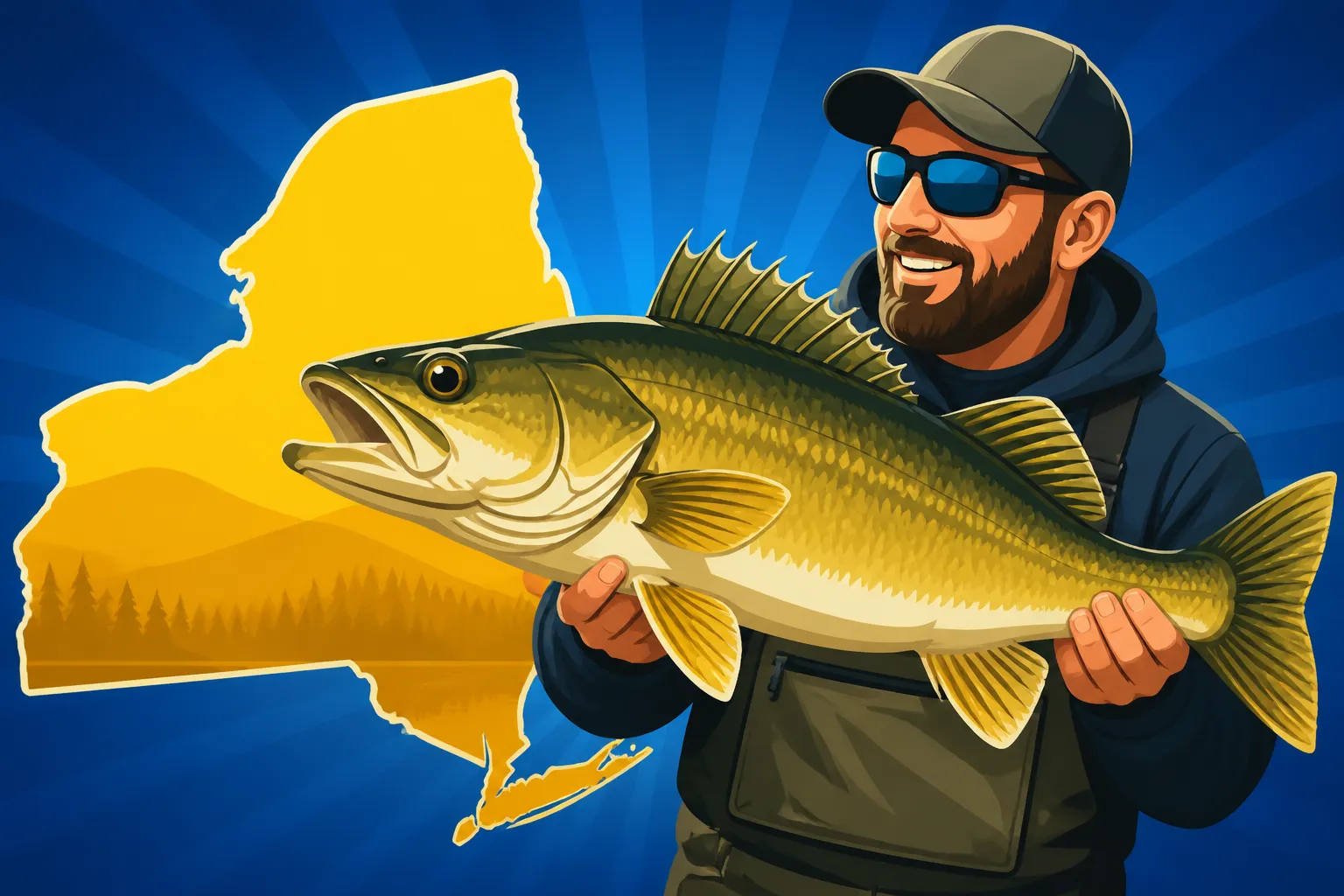
The current New York State record walleye is a truly magnificent specimen. It weighed in at a whopping 18 pounds, 2 ounces, a fish that would make any angler's jaw drop. This legendary walleye was caught by a dedicated angler named Blake Urmson. The catch happened in the sprawling, productive waters of the St. Lawrence River, a place renowned for its incredible walleye fishery. Imagine the fight, the adrenaline, the moment that colossal fish broke the surface. It’s a moment etched into New York fishing history.
This particular record has held strong for quite some time, reflecting just how rare a catch of this magnitude truly is. It speaks to the health and abundance of the St. Lawrence River and its ability to grow fish to such impressive sizes. Every year, anglers head out with the hope of not just catching dinner, but of perhaps, just perhaps, encountering another one of these giants.
Why Records Matter to Anglers and Conservation
Beyond bragging rights, state records serve a much larger purpose. They're a benchmark, yes, but also a vital piece of information for fisheries biologists. A record-setting fish indicates optimal conditions: a healthy ecosystem, abundant food sources, and ideal habitat that allows a species to reach its maximum genetic potential. It tells us that something is going very right in a particular body of water.
For us anglers, knowing these records exist fuels our passion and helps us understand what's possible. It encourages us to explore different waters, refine our techniques, and respect the fish we pursue. It also implicitly highlights the importance of adhering to New York Fishing Regulations Explained and limits, ensuring that future generations have the same opportunities to chase these incredible fish. When you think about the sheer age and survival skills a fish needs to reach 18 pounds, you gain an even deeper appreciation for the species.
Anatomy of a Trophy: What Makes New York Walleye Grow So Big?
So, what factors contribute to a walleye reaching such an monumental size, pushing past the average to truly legendary status? It's a combination of genetics, environment, and sheer longevity. Understanding these elements can help you target those bigger fish.
Ideal Habitats for Jumbo Walleye
Walleye are incredibly adaptable fish, but to grow to trophy sizes, they need specific conditions. Deep, cool, clear waters with plenty of structure are often key. Lakes and rivers with abundant forage fish, like alewives, smelt, or yellow perch, provide the fuel for rapid growth. Think about the massive water bodies like Lake Erie, with its vast stretches of open water and deep shoals, or the St. Lawrence River, with its complex currents, islands, and varied bottom structure. These are places where Walleye in New York thrive.
A consistent food supply is paramount. If a walleye has to expend too much energy hunting for scarce meals, it simply won't have the excess calories to pack on those extra pounds that push it into record territory. Waters with diverse forage populations, where walleye can easily switch between different prey items depending on the season, are often the ones producing the biggest fish. The availability of diverse cover, such as rocky reefs, submerged timber, or even deep weed lines, provides crucial ambush points and protection for these apex predators.
Longevity and Genetics: The Unseen Factors
Just like humans, some fish are simply born with better genetics for growth. Couple that with a long lifespan, and you've got the recipe for a giant. Walleye can live for many years, sometimes well over a decade, and in that time, they have the opportunity to grow steadily, packing on size year after year. The older a fish gets, the larger it can potentially become, assuming it continues to find enough food and avoids predators.
Of course, genetics alone aren't enough. A walleye with excellent growth potential needs to survive those early years, avoiding being caught or falling victim to natural mortality. This is where healthy fisheries management and responsible angling practices come into play. Catch-and-release, especially for larger breeding females, ensures these valuable genes stay in the population, contributing to future generations of potential record-breakers. Remember, a massive walleye is usually an old walleye, and its continued presence in the ecosystem is vital.
Hunting for Giants: Strategies and Hotspots for Record-Class Walleye
While catching an 18-pound walleye might seem like a dream, understanding where and how to target big walleye greatly improves your odds. It's about combining knowledge of their habits with the right techniques.
Targeting Big Walleye: Beyond the Basics
To catch a true monster walleye, you often need to adjust your approach from standard walleye fishing. Big fish are smart; they've survived multiple seasons and seen countless lures. This usually means fishing deeper, in less pressured areas, or during specific times when these giants are most active. Night fishing is a prime example, as larger walleye often move into shallower feeding grounds under the cover of darkness. Trolling large crankbaits or deep-diving stickbaits can be incredibly effective, covering a lot of water and mimicking the larger baitfish that trophy walleye prefer.
Consider also the seasonal movements of large walleye. During the colder months, they often congregate in deeper basins, making vertical jigging or slow-trolling heavy presentations more effective. In the spring, they'll move shallower for spawning, offering a brief window of opportunity before they retreat to deeper, cooler waters for the summer. Don't be afraid to use larger baits than you might typically for walleye; a big fish wants a big meal. For specialized deep-diving crankbaits or heavy jigs, a quick search on Amazon can reveal a vast selection designed specifically for trophy walleye.
Prime New York Waters for Trophy Walleye
When you're chasing that elusive trophy walleye, certain bodies of water in New York consistently produce larger fish. The St. Lawrence River, as the home of the current state record, is an obvious top contender. Its immense size, diverse structure, and abundant forage create an ideal environment. Fishing New York's St. Lawrence River and Thousand Islands offers incredible opportunities.
Lake Erie is another renowned walleye factory, especially the eastern basin within New York waters. Known for its incredible numbers and impressive average size, Lake Erie frequently yields walleye in the 8-12 pound range, with true giants pushing past that. Lake Erie Walleye Fishing Near Buffalo, New York can be very productive. Oneida Lake also holds a reputation for producing good numbers of quality walleye, though perhaps not as many record-class fish as the deeper, colder Great Lakes. Understanding Best Time to Fish for Walleye in New York in these locations is crucial.
| Water Body | Primary Walleye Characteristics | Key Features for Trophy Walleye | Common Fishing Methods |
|---|---|---|---|
| St. Lawrence River | World-class fishery, diverse structure | Abundant forage, deep channels, complex currents | Trolling, jigging, live bait rigging |
| Lake Erie | Huge numbers, consistent large fish | Vast open water, productive reefs and shoals, rich forage base | Trolling (worm harnesses, crankbaits), jigging |
| Oneida Lake | Excellent numbers, good size class | Expansive shallow water, weed lines, gravel bottoms | Trolling, casting cranks, jigging, slip bobbers |
| Finger Lakes | Deeper, colder waters; good for lake-run walleye | Specific deep structure, cold water for larger fish | Trolling, vertical jigging |
| Niagara River | Productive outflow from Lake Erie | Strong currents, deep pools | Jigging, drifting live bait |
Beyond the Catch: How to Document and Certify Your Potential State Record
So, you've landed the fish of a lifetime. It's huge, definitely bigger than anything you've ever seen. What do you do next if you suspect it might be the new New York State record walleye? The excitement is real, but the process for official certification is critical and requires adherence to specific steps.
Immediate Steps After Landing a Potential Record
First and foremost, do not clean or alter the fish in any way if you suspect it's a state record. The fish must be weighed and measured in its entirety. Your immediate priorities should be to keep the fish alive if possible, or at the very least, preserve its condition by keeping it cool. A large cooler filled with ice is essential. You'll need to locate a certified scale quickly. This isn't just any scale; it needs to be certified by the New York State Department of Agriculture and Markets, typically found at bait shops, marinas, or grocery stores that handle commercial weighing. Many reputable fishing guides and marinas are familiar with this process and can guide you.
Take multiple clear photos of the fish from different angles, showing its full length and girth. If you have a measuring tape, get a preliminary length measurement, but do not rely solely on this for official certification. The exact length and girth measurements will be done by the official certifier. The goal is to document everything before any official weigh-in. Think of it like gathering evidence for a major discovery – every detail counts.
The Official Certification Process with the DEC
Once you have your potential record fish, the next crucial step is to contact the New York State Department of Environmental Conservation (DEC) as soon as possible. They have a specific procedure for verifying state record fish. You’ll need to complete an official application, which typically requires details about the catch, including the date, location, fishing method, and witnesses. The DEC will want to examine the fish, weigh it on a certified scale, and take precise measurements. This often involves a DEC biologist.
Witnesses are incredibly important. Having one or more credible individuals who can attest to the catch and the subsequent handling of the fish can greatly aid the verification process. The DEC will also want to confirm the species identification, ensuring it truly is a walleye and not a hybrid or a similar species that might be misidentified. This meticulous process ensures the integrity of the state record list and gives every record its well-deserved place in history. While navigating the official forms can sometimes feel like a chore, remember that this rigorous approach is what makes a state record truly special and recognized statewide. You can often find copies of the necessary forms and contact information on the New York DEC's official website, or by visiting a local DEC office. For anglers looking to understand all the specific rules for keeping various species, the New York DEC Fishing Regulations Guide is an indispensable resource.
Disclaimer
This article is for general informational purposes only and does not constitute professional advice. Laws, prices and regulations vary by location and change over time. Consult a qualified professional for guidance on your specific situation.