Muskellunge Lifespan Explained
Many anglers dream of catching a massive muskellunge, often dubbed the "fish of a thousand casts," but few truly understand the incredible journey these elusive predators undertake to reach such impressive sizes. Their lifespan is a testament to their resilience and predatory prowess, yet it's often a mystery to even seasoned fishermen, leaving many wondering how long these giants truly live. This guide will pull back the curtain on the fascinating life cycle of muskellunge in New York, diving deep into the natural factors that contribute to their impressive longevity and how we, as anglers, can help protect these magnificent fish for future generations.
The Natural Lifespan of a Muskellunge
Muskellunge, or "muskies" as they're affectionately known, are apex predators in New York's freshwater systems, and their long lives are a significant part of what makes them such legendary catches. Unlike many shorter-lived game fish that might complete their life cycle in just a few years, muskies can truly become ancient denizens of the deep, growing to enormous sizes over decades. Understanding their natural lifespan helps us appreciate the sheer scale of their existence and the remarkable patience required to pursue them. It's not just about the size of the fish, but the history it represents—a true survivor of the underwater world.
Average vs. Maximum Lifespan
When we talk about the lifespan of a muskellunge, it's crucial to distinguish between the average age you might encounter in a typical New York fishery and the absolute maximum age they can achieve under ideal, undisturbed conditions. In many of New York's diverse waters, an average muskie that successfully navigates the gauntlet of early life, finds ample food, and manages to avoid most significant threats might live to be between 8 and 15 years old. These are still incredibly impressive fish, often reaching sizes that provide an unforgettable fight and a truly memorable catch for the angler. They’ve seen a fair number of seasons, survived winters, and honed their hunting skills.
However, the true marvel and allure of the muskellunge species lie in their extraordinary potential maximum lifespan. Under pristine conditions, where food is abundant, environmental stressors are minimal, and angling pressure is light, muskies have been scientifically documented living well into their late teens, often reaching ages over 20, 25, or in very rare and exceptional cases, close to 30 years old. Imagine a fish that has witnessed decades of changing seasons, grown from a tiny, vulnerable fry into an undisputed dominant predator, and survived countless natural and human-imposed challenges. These ancient, large muskies are the true giants of our lakes and rivers, often the very fish that spark legends among local anglers and inspire a lifetime of pursuit. These long-lived fish often represent, or come very close to, the New York State Muskellunge Record: 69 Pounds, 15 Ounces.
Factors Influencing Longevity
Several critical and interconnected factors play a huge, often decisive, role in determining how long a muskellunge will not only survive but also truly thrive in its New York habitat. First and foremost is the overall quality and stability of its environment. Clean, oxygen-rich water, healthy and diverse aquatic vegetation providing crucial ambush points and cover, and suitable, undisturbed spawning grounds are not just beneficial but absolutely non-negotiable for muskie survival and long-term health. Waters that suffer from chronic pollution, or habitats that are frequently degraded by human activity or natural disasters, can significantly reduce their lifespan, making individual fish more susceptible to disease, compromising their immune systems, and making them less efficient at feeding and avoiding stress.
Food availability is another massive and undeniably crucial component. Muskies are legendary for being voracious, opportunistic eaters, and their growth rate, overall health, and energy levels are directly and proportionally tied to a consistent and accessible supply of prey fish. Species like suckers, perch, panfish, and ciscoes form the backbone of their diet. Lakes and river systems that boast robust, diverse baitfish populations tend to produce healthier, faster-growing, and ultimately longer-lived muskies. Conversely, aquatic systems with depleted forage bases will inevitably see slower growth rates, reduced body condition, and potentially much shorter individual lifespans for the muskies residing there. Water temperature also matters profoundly. While muskies can tolerate a fairly wide range of temperatures, extreme heat waves or sudden, prolonged cold snaps can severely stress fish. Their metabolism is generally slower in colder water, which can mean slower growth, but potentially also less physiological wear and tear over their lifetime.
Predation, especially during their incredibly vulnerable younger years, is another huge hurdle that only a small percentage of muskies successfully overcome. Juvenile muskies, barely more than fry, are highly susceptible to predation from larger fish (including other larger muskies), birds like ospreys and herons, and even larger amphibians. Only a tiny fraction of the hundreds or thousands of fry hatched each year will ever survive to reach adulthood. As they grow larger, their position at the very top of the food chain solidifies dramatically, making them much less susceptible to most natural predators. However, even large adults still face threats from various human activities and increasingly unpredictable environmental changes.
Growth and Development Over a Muskie's Life
The remarkable journey from a tiny muskie egg to a formidable, often gigantic, adult predator is a truly long and challenging one, marked by distinct and fascinating growth stages. Each stage is critical, contributing directly to their eventual impressive size, predatory prowess, and ultimate longevity. Understanding this intricate developmental process helps us, as anglers and conservationists, to appreciate the species even more deeply and reinforces the absolute importance of protective measures for all age classes of Muskellunge in New York.
Early Life and Juvenile Stages
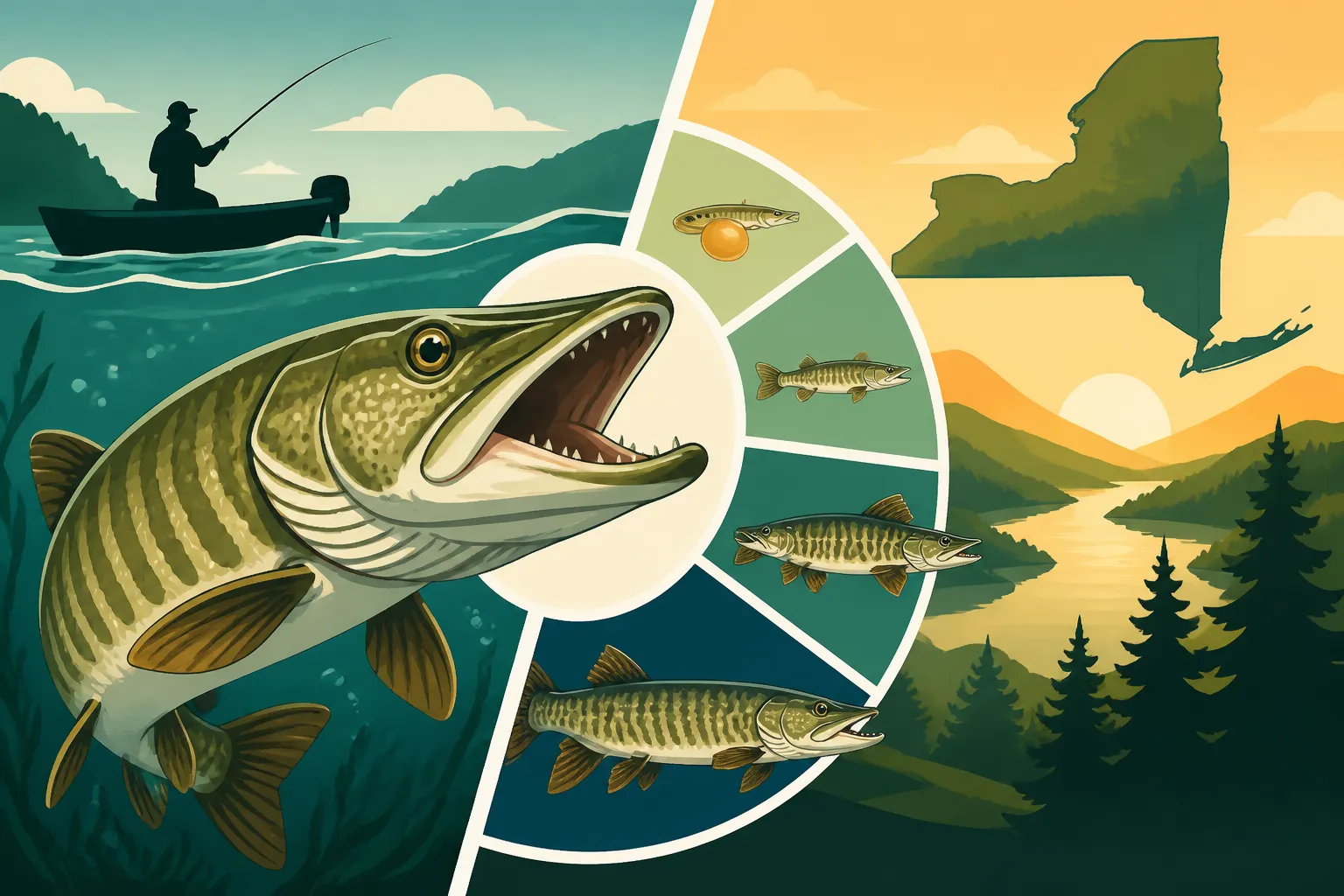
Muskies commence their intricate life cycle as small, amber-colored eggs, which are typically laid in shallow, heavily vegetated areas of lakes and rivers during the spring, usually when water temperatures begin to rise. Once hatched, the muskie fry are incredibly delicate and vulnerable. They spend their initial weeks absorbing vital nutrients from an attached yolk sac, a critical energy reserve for their first days. After the yolk sac is depleted, they rapidly transition to feeding on microscopic zooplankton and tiny aquatic insects. This early period is notoriously fraught with immense danger; mortality rates are extraordinarily high, with countless fry succumbing to predation and environmental stressors. It's a sobering thought – countless tiny muskie are hatched, but only a precious, resilient few will ever make it past their very first year of life.
As these young muskies grow and develop into juveniles, they undergo a pivotal dietary shift, progressively becoming more piscivorous (fish-eating). Their diet expands to include small minnows, darters, and other vulnerable baitfish. This crucial stage, which can span their first two to three years, is characterized by rapid growth, provided that food sources are plentiful and competition isn't too fierce. A well-fed juvenile muskie can reach anywhere from 10 to 20 inches in length by its second or third year, which represents a significant and impressive jump from their minuscule beginnings. During this time, they become increasingly adept at ambush predation, patiently refining the stealthy hunting skills that will serve them throughout their long and successful lives as apex predators. This is also a critical developmental window for them to establish and defend territories, find suitable cover in weed beds or submerged timber, and effectively avoid predation from larger fish.
Maturation and Reproductive Cycles
Muskellunge typically exhibit a slower rate of sexual maturation compared to many other common freshwater game species. Males often reach sexual maturity around 3 to 5 years of age, while females, needing to accumulate more energy for egg production, usually take a bit longer, often maturing between 4 to 7 years. This delayed maturation rate is a common biological trait among long-lived, large predatory fish, and it means that individual muskies need to survive for several years before they even have their first opportunity to contribute to the next generation. This biological reality fundamentally underscores why protecting adult and sub-adult muskies is so absolutely vital for the overall health and long-term viability of the entire muskie population. Every mature fish represents a significant investment of ecological time and resources.
Once sexually mature, muskies will typically engage in annual spawning rituals each spring, cued by suitable water temperatures and photoperiod. The female muskies release their eggs over submerged vegetation, woody debris, or other suitable substrates in shallow waters, where they are then fertilized by attending males. A critical distinction of muskie reproduction, unlike anadromous salmon species, is that muskies do not perish after spawning; they are iteroparous, meaning they can and do reproduce multiple times throughout their lives. This ability to contribute to many different year classes is fundamental to their long-term reproductive success and population stability. However, spawning itself can be a physiologically demanding and stressful event, and adequate recovery periods following spawning are essential for the fish's continued health and longevity. These repeated spawning efforts over many years are a key aspect of their success, highlighting why regulatory efforts to protect them, like the Muskellunge Season Dates in New York, are so important.
Challenges and Threats to Muskie Longevity in New York
While muskellunge are undeniably incredibly tough, resilient, and adaptable fish, they nevertheless face a myriad of challenges throughout their long and complex lives. Some of these challenges are natural ecological pressures, while many others are directly human-induced. These threats can significantly impact their ability to reach their full lifespan potential, making proactive conservation efforts and responsible angling practices all the more critical for sustaining New York's incredible muskie fisheries.
Environmental Pressures
One of the most profound and pervasive threats to muskie longevity stems from environmental degradation and habitat loss. Habitat alteration and outright destruction are huge, overarching problems that ripple through the entire aquatic ecosystem. Critical spawning grounds, often shallow, vegetated areas, can be severely degraded or completely destroyed by rampant shoreline development, indiscriminate dredging activities, or excessive sedimentation runoff from agricultural lands or construction sites, all of which drastically reduce the number of successful hatches. Equally important nursery areas – the same shallow, often heavily weeded bays where young muskies hide, grow, and feed – can also be compromised or eliminated, removing vital safe zones for juvenile fish. When their essential habitat shrinks, becomes fragmented, or grows unhealthy, muskies have fewer places to live, hunt effectively, and reproduce safely, leading to increased stress and reduced survival rates.
Water quality issues, such as chronic pollution from agricultural runoff (pesticides, herbicides, excess nutrients) or industrial discharge (heavy metals, chemicals), can directly and severely impact muskie health. Elevated levels of toxins can lead to chronic disease, impaired growth, weakened immune systems, and reproductive failure, all of which directly contribute to shortening their lives. Climate change also presents an increasingly looming and complex threat. Muskies thrive within specific temperature ranges; extreme and prolonged heat waves or unusually warm water temperatures can profoundly stress fish, reduce critical dissolved oxygen levels, and render them more susceptible to various diseases and parasites. For instance, a long, hot summer could mean a significantly tougher time for Muskellunge in New York residing in shallower, warmer lakes.
Furthermore, the introduction and proliferation of invasive species can indirectly yet significantly affect muskie longevity by disrupting the delicate balance of the food chain or introducing novel pathogens and diseases. For example, the pervasive spread of zebra mussels can drastically alter water clarity and nutrient cycling, fundamentally impacting the entire aquatic ecosystem that muskies rely on for survival and sustenance. Maintaining healthy, biodiverse aquatic ecosystems is therefore absolutely fundamental to ensuring that muskies can truly live out their full natural lives and continue to play their vital role as apex predators.
Angling Pressure and Conservation Efforts
Muskies are widely revered as ultimate trophy fish, and while catch-and-release practices are thankfully widespread and increasingly common among dedicated muskie anglers, the cumulative impact of angling pressure can still have a measurable effect on individual fish and, by extension, the overall population. The physiological stress associated with being caught and handled, even for brief periods, can take a significant toll on a muskie, especially on larger, older, and more valuable fish. Extensive scientific studies have shown that factors such as the duration of the fight, the amount of time the fish spends exposed to air, and the specific handling techniques employed by anglers all contribute, to varying degrees, to post-release mortality. A muskie that endures a prolonged fight in warm water, or is mishandled during photography or hook removal, might not survive, even if it appears to swim away strongly after release.
This critical understanding is precisely why regulations, such as the stringent New York State Muskellunge Minimum Size Limit, are so incredibly important and strictly enforced. By implementing a high minimum length requirement (which is often 40 inches or more in various New York waterbodies, depending on specific local regulations), anglers are strongly encouraged, both ethically and legally, to release all but the truly exceptional, fully mature fish. This allows the vast majority of muskies ample time to mature, contribute to the gene pool, and reproduce multiple times before they ever become eligible for legal harvest, thereby safeguarding and strengthening the population. Anglers are always urged to consult the New York DEC Fishing Regulations Guide regularly for the most current updates and specific regulations pertaining to their target waters.
Beyond regulation, active conservation efforts are absolutely vital to counterbalance these diverse pressures. This includes strategic stocking programs in certain waters where natural reproduction is limited, vital habitat restoration projects that aim to rehabilitate degraded environments, and ongoing scientific research into muskie populations, genetics, and behavior. All these initiatives collectively help to ensure that these magnificent fish continue to thrive across New York. Many dedicated fishing clubs and conservation organizations work tirelessly to protect muskies, often relying heavily on volunteer efforts and the financial support of passionate anglers. They understand that the very future of muskie fishing, and the health of these aquatic ecosystems, depends directly on careful management, robust scientific understanding, and respectful, ethical angling practices.
How Anglers Can Support Muskie Longevity
As dedicated anglers, we hold a profound and significant role to play in the ongoing conservation of muskellunge. Catching a muskie is, for many, often the culmination of a lifelong quest, and with that immense privilege comes the inherent responsibility to ensure these fish can live long, healthy lives, continuing to thrill and challenge future generations of fishermen. Our actions on the water, from the moment we hook a fish to the instant we release it, can directly and dramatically influence a muskie's chances of survival and its ability to contribute to the population after release. It's a testament to our stewardship.
Catch-and-Release Practices
For a species characterized by such an impressive lifespan and a notably slow maturation rate, genuinely responsible catch-and-release is perhaps the single most important factor in sustaining healthy, vibrant muskie populations. While most muskie anglers already practice catch-and-release as a core ethic, often targeting these fish purely for the unparalleled challenge and the sheer thrill of the encounter, the word "responsible" is the critical qualifier here. It's simply not enough to merely let the fish go; how you let it go matters immensely for its post-release survival.
When you're engaged in the heart-pounding battle with a muskie, strive to land it as quickly and efficiently as possible, without unduly overstressing the fish or risking damage to your valuable tackle. Once the fish is alongside the boat or brought carefully to the shore, your immediate priority should be to minimize its time exposed to the air. Have all your essential tools—specifically, long-nosed pliers, robust hook cutters (bolt cutters are often recommended for larger hooks), and a generously sized, knotless rubber net or muskie cradle—ready and within arm's reach before the fish is even fully landed. Avoid the common but damaging practice of holding the fish vertically by its jaw alone, as this can inflict severe internal damage to its spine and vital organs. Instead, always support its entire body horizontally, with one hand firmly under its belly and the other gripping the lower jaw. For quick, accurate measurements, consider using a soft, flexible measuring tape that can be unrolled on the boat's floor or directly within the cradle, allowing you to get a length without excessive handling.
Learning how to safely and quickly remove hooks is also paramount. If a hook is deeply embedded or difficult to extract without causing significant tissue damage, it is almost always better to simply cut the line and leave the hook in place; modern stainless steel hooks will eventually corrode and fall out. Releasing a muskie properly involves holding it gently and horizontally in the water, allowing it sufficient time to regain its equilibrium, energy, and strength, and then swimming off under its own power. Sometimes, a gentle, slow forward and backward motion of the fish in the water can help to effectively oxygenate its gills and aid in its full revival. There are many excellent educational resources, including detailed videos and informative books available on platforms like Amazon, that meticulously detail best practices for safe muskie handling and release. By adhering to these guidelines, you maximize the chance that the fish you release has the best possible opportunity to continue its Muskellunge Lifespan Explained journey.
Understanding Regulations and Gear Choices
Beyond the immediate act of handling and releasing a fish, a thorough understanding of and strict adherence to all applicable fishing regulations is absolutely paramount. New York's Department of Environmental Conservation (DEC) carefully and scientifically sets New York Freshwater Fishing Rules specifically for muskies, including critical season dates, minimum size limits, and occasionally, specific gear restrictions that apply to certain sensitive waterbodies. These carefully crafted rules are designed with the primary objective of protecting muskie populations, particularly during their most vulnerable periods, such as spawning season or when they are aggregating in specific areas. For example, knowing and respecting the Muskellunge Season Dates for your target body of water isn't just about legality; it's a fundamental aspect of ethical and responsible angling. You should always be aware of the Muskellunge Minimum Length to Keep.
Your thoughtful gear choices can also significantly impact a muskie's survival prospects. Employing appropriate, heavy-duty tackle specifically designed for these powerful fish—this includes robust rods, high-quality reels with smooth drags, and strong, abrasion-resistant fishing line—serves to reduce fight times, which, in turn, minimizes the physical stress endured by the fish. Barbless hooks, or the proactive practice of pinching down the barbs on your hooks, can make hook removal much easier, quicker, and less damaging to the fish's delicate mouth tissue. Furthermore, single, in-line hooks on lures are increasingly gaining popularity among conscientious muskie anglers for their demonstrably reduced harm compared to traditional treble hooks. You can readily find specialized muskie gear and essential tools, ranging from exceptionally large, fish-friendly nets to dedicated hook removers and jaw spreaders, on popular retail platforms like Amazon, ensuring you are always well-equipped for a successful, respectful, and most importantly, responsible muskie outing. If you're looking for Best Lures for Muskellunge, consider those with single hooks.
Finally, education stands as another incredibly powerful tool in muskie conservation. Actively sharing best practices, vital information, and ethical considerations with fellow anglers, especially those who are new to the challenging yet rewarding pursuit of muskie fishing, can foster and cultivate a robust culture of conservation. Many dedicated muskie clubs and vibrant online communities are specifically devoted to sharing comprehensive knowledge about How to Fish for Muskellunge responsibly and ensuring the sustained longevity of this incredible species. By remaining informed, consistently employing proper techniques, and always respecting the magnificent fish we pursue, we contribute immensely to the overall health and enduring populations of muskellunge in New York's pristine waters.
| Lifespan Stage | Typical Age Range (Years) | Key Characteristics | Common Challenges to Longevity | Angler's Role in Conservation |
|---|---|---|---|---|
| Egg/Fry | 0-0.1 | Hatched, absorb yolk sac, begin feeding on microscopic plankton. | Extremely high mortality from predation (other fish, birds), poor water quality, lack of suitable vegetation, environmental fluctuations. | Protect and advocate for healthy spawning habitats, minimize shoreline disturbance, support watershed protection initiatives. |
| Juvenile | 0.1-3 | Rapid growth if food is abundant, transition to consuming small fish, developing crucial predatory skills, establishing territories. | Continued significant predation (larger fish, wading birds, other muskies), habitat degradation (loss of cover), competition for food. | Understand and respect size limits, support habitat restoration efforts, avoid fishing sensitive nursery areas. |
| Sub-Adult | 3-6 | Approaching sexual maturity, continued fast growth, refining hunting techniques, becoming more resilient. | Increased angling pressure (stress from capture/release), environmental changes (temperature extremes), reduced food availability. | Diligently practice proper catch-and-release techniques, use appropriate heavy-duty gear, minimize air exposure during handling. |
| Adult/Mature | 6-15+ | Reproductive years, often achieve peak growth and size, establish themselves as dominant apex predators in their habitat. | Sustained angling pressure, cumulative environmental stress, habitat degradation, potential for overharvest if regulations are not followed. | Strict adherence to catch-and-release, prompt reporting of illegal fishing activities, active advocacy for strong regulations and conservation. |
| Trophy/Old | 15-30 | Growth rate significantly slows, attain maximum size and age, become highly vulnerable to handling stress and environmental changes due to age. | Extreme vulnerability to handling stress (even minor), prolonged environmental extremes (heat/cold), genetic factors, disease susceptibility. | Handle with utmost care and respect, prioritize the fish's health over photos, quick measurements, ensure full and vigorous revival before release. |
Disclaimer
This article is for general informational purposes only and does not constitute professional advice. Laws, prices and regulations vary by location and change over time. Consult a qualified professional for guidance on your specific situation.