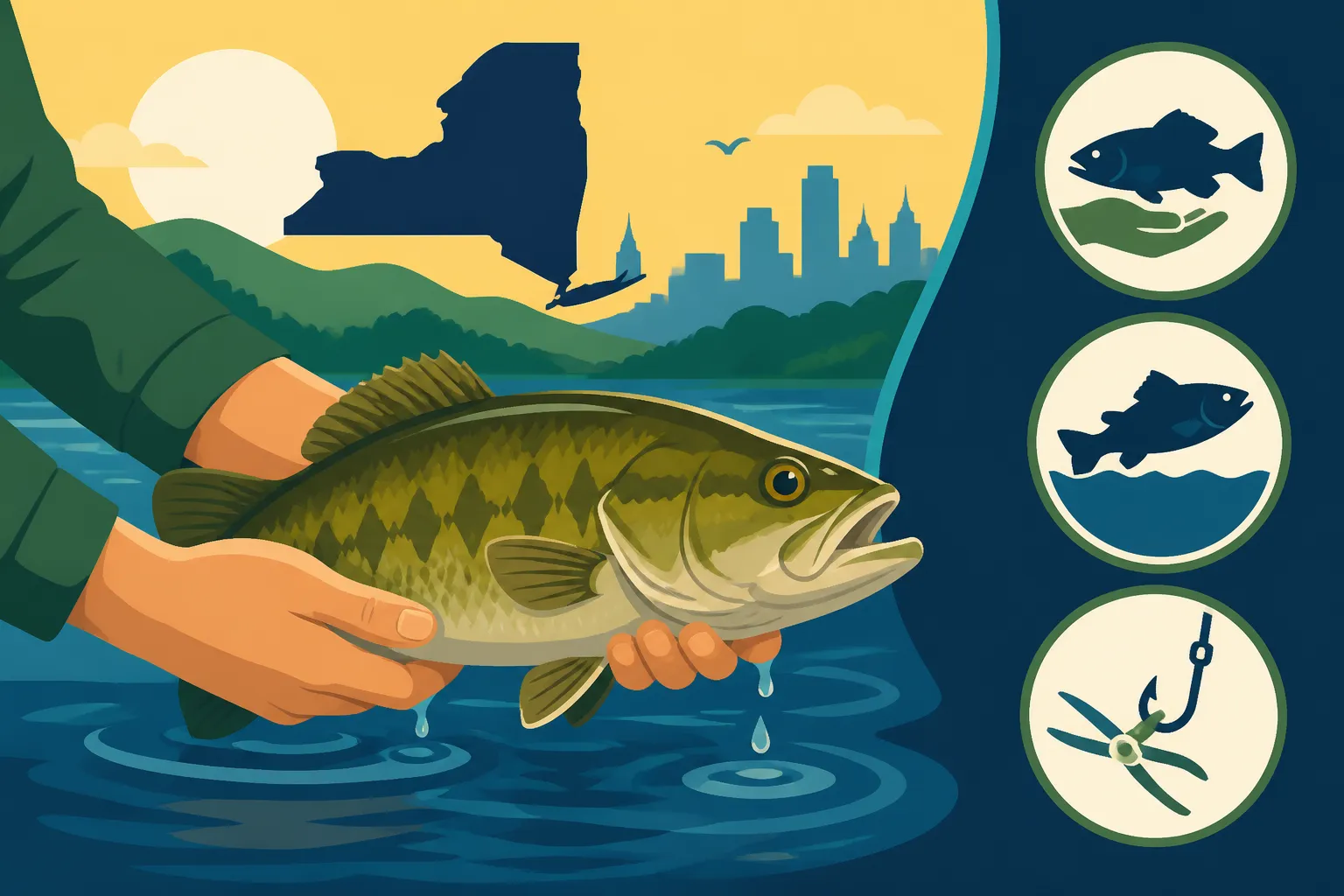
Catch-and-Release Handling Rules
There’s nothing quite like the thrill of a fish on the line, especially here in New York. But what happens when you reel in a beautiful catch that you know, deep down, needs to go back into the water? Maybe it’s a juvenile, out of season, or you're just practicing responsible angling. The moment of truth arrives, and the pressure is on: how do you release that fish without causing it undue harm? It’s a common frustration, and doing it wrong can feel counterproductive to the very act of conservation. This guide is here to unravel the mysteries of proper catch-and-release handling rules, ensuring your fish swims away strong, ready to fight another day.
The Essential Philosophy Behind Catch and Release
Catch and release isn't just about following rules; it's a vital part of sustainable angling and fishery management, especially in a state as diverse in its waters as New York. It’s a conscious decision to return a fish to its environment, allowing it to continue its life cycle and contribute to future populations. But simply tossing a fish back isn't enough. The way we handle a fish from the moment it bites to the second it swims away critically impacts its chances of survival.
More Than Just a Regulation: The Ethical Imperative
Think about it: when you commit to catch and release, you're making a promise to the fish and to the ecosystem. It's an ethical choice that asks us to be responsible stewards of our natural resources. Many anglers adopt catch and release as a personal philosophy, even when legal limits might allow them to keep a fish. They understand that a healthy fishery today means great fishing opportunities for generations to come. This mindfulness is particularly crucial for species that are recovering, like certain populations of wild trout, or for larger, older fish that are vital for spawning. It's about respecting the fish as a living creature, not just a target.
Understanding the Biological Realities of Stress
Fish, just like any other animal, experience stress. The act of being hooked, fought, and handled can trigger a cascade of physiological responses that can be detrimental, even fatal, if not managed properly. This is where the biological realities come into play. When a fish fights, it uses up energy and builds up lactic acid, similar to what happens in our muscles during strenuous exercise. Prolonged fights, rough handling, or exposure to air can exacerbate this stress. Scales can be easily damaged, leading to infections. Gills are incredibly delicate and crucial for oxygen exchange; even a slight brush can cause significant trauma. The goal of proper handling is to minimize these stressors, allowing the fish to recover quickly and completely. For specific New York regulations on fish health and limits, always consult the current New York Fishing Regulations Explained.
Equipping Yourself for a Successful Release
You wouldn't go hiking without the right boots, and you shouldn't practice catch and release without the right tools. Having the proper gear on hand makes the entire process smoother, quicker, and significantly less stressful for the fish. It’s about being prepared to minimize the time the fish is out of water and reduce physical trauma.
The Right Landing Net and Fish Grips
When it comes to bringing a fish into your control, a good landing net is paramount. But not just any net will do. Traditional knotted nylon nets can strip away a fish’s protective slime coat and damage its delicate fins and scales. The best option for catch and release is a rubberized or knotless mesh net. These materials are much gentler on the fish, preserving their slime coat and reducing the risk of injury. You can easily find high-quality rubberized nets on Amazon or at any well-stocked local tackle shop.
Fish grips, often called lip grippers, can be incredibly useful, especially for larger, toothy species like pike or muskellunge. They allow you to control the fish safely without putting your hands near sharp teeth or spines. However, it's crucial to use them correctly. Never lift a large fish vertically by just its lip gripper, as this can dislocate its jaw or damage its internal organs due to its body weight. Always support the fish's belly with your other hand when using a lip gripper, distributing its weight evenly. For species like bass, a gentle lip-lock with a wet hand can be sufficient.
Tools for Quick and Gentle Unhooking
The quicker you can remove the hook, the better. This reduces stress, minimizes mouth damage, and gets the fish back in the water faster.
- Long-Nosed Pliers or Forceps: These are non-negotiable. A good pair of long-nosed pliers, which you can often find bundled on Amazon with other essential tools, gives you the reach and leverage to quickly grasp and twist out hooks. Forceps are excellent for smaller hooks and more delicate species like trout.
- Dehookers: For those truly deep-set hooks, specialized dehookers can be a lifesaver. These tools allow you to retrieve hooks without ever touching the fish's body, which is ideal. Berkley offers some reliable options on Amazon, designed for easy and efficient use.
- Barbless Hooks: If you’re serious about catch and release, consider crimping down the barbs on your hooks or purchasing barbless hooks. They make unhooking incredibly simple and cause far less damage to the fish’s mouth. Many fly anglers exclusively use barbless hooks for this very reason, particularly when targeting sensitive species in special regulation waters like those covered in New York Catch-and-Release Trout Fishing Rules.
Measurement and Weighing Tools
Sometimes you want to get a quick measurement or weight of your catch before release. This is perfectly fine, but again, the tools and methods matter.
- Fish-Friendly Measuring Boards: Instead of laying a fish on rough, hot surfaces, use a dedicated measuring board that’s designed to be gentle. These are often made of smooth plastic and can be wetted down. You can find various models on Amazon that cater to different fish sizes.
- Digital Scales with Sling or Net: Avoid hanging a fish vertically by its gill plate or jaw on a scale, as this can cause severe internal damage. Instead, use a soft, wetted mesh sling or the landing net itself, zeroing out the scale with the empty net/sling first. This supports the fish's body weight evenly.
The Step-by-Step Guide to a Flawless Release
Knowing the theory is one thing, but putting it into practice is where it counts. Follow these steps to maximize the survival chances of your released fish.
Landing the Fish Gently and Efficiently
The fight itself is the first stage of stress for a fish. Your goal is to land the fish as quickly as possible without "horsing" it in, which can tear its mouth or stress it unnecessarily.
- Minimize Fight Time: Use appropriate tackle for the size of fish you expect to catch. A longer, drawn-out fight causes more lactic acid buildup and exhaustion. Once you've hooked a fish, try to bring it in steadily.
- Keep it Wet: As soon as you bring the fish close, make every effort to keep it in the water. Use your rubberized landing net to scoop it up while it's still submerged. If you must bring it aboard a boat or onto shore, do so quickly and gently.
- Wet Hands or Gloves: If you need to touch the fish directly, always wet your hands thoroughly first. Dry hands can strip away the fish's protective slime coat, leaving it vulnerable to fungal infections and parasites. There are also specialized fishing gloves available that provide grip while minimizing slime removal.
- Horizontal Support: When lifting a fish, always support its body horizontally, especially for larger fish. Never hold a fish vertically by the jaw, tail, or gills alone. One hand should support its belly, particularly near the tail, while the other provides gentle control near the head or gill plate (being careful not to insert fingers into the gills). This prevents damage to its spine and internal organs. This is especially important for fish like those found in New York Bass Season Dates where trophy catches are frequent.
Quick and Careful Unhooking
This is the most critical phase. The less time the fish is out of water and the less struggling it does during unhooking, the better.
- Assess the Hook: As soon as the fish is secured (preferably still in the water in a net), quickly assess where the hook is set.
- Unhook in the Water (If Possible): If the hook is easily accessible and the fish is calm, try to remove it while the fish is still in the water, perhaps with the help of your net to keep it contained.
- Hold Firmly, but Gently: If you need to bring the fish out of the water, hold it horizontally with wet hands, keeping it over the net or a soft, wet surface to cushion any drops.
- Use Your Tools: Grab your long-nosed pliers or forceps. With barbless hooks, a simple twist is often all it takes. For barbed hooks, grasp the bend of the hook and twist it out gently in the reverse direction it went in.
- Deeply Hooked Fish: This is the toughest scenario. If a fish is deeply hooked in the gills or gut, don't try to rip the hook out. This will almost certainly cause fatal damage. Instead, cut the line as close to the hook as possible. Studies show that hooks left in often dissolve or rust out over time, and the fish has a much better chance of survival than if you attempt a traumatic extraction. This is particularly relevant when using certain baits, as highlighted in Rules on Using Live Bait in New York.
Revival and Release: The Final Act
Once unhooked, the fish needs to be revived properly before being released. This ensures it has the energy and oxygen to swim away and avoid predators.
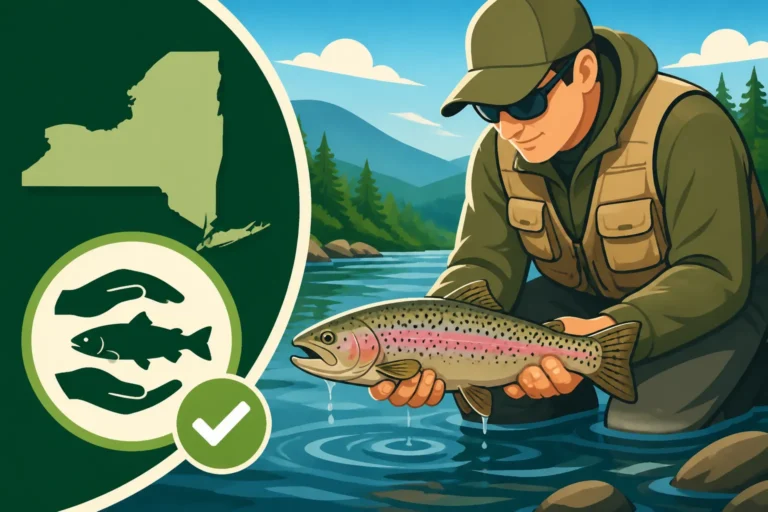
- Support the Fish: Hold the fish gently in the water, facing into a current if possible. This allows water to flow over its gills, helping it to breathe.
- Observe for Signs of Life: You’ll feel the fish start to twitch and eventually try to swim out of your hands. Don't simply toss it back; wait until it can maintain its own equilibrium and swim away under its own power.
- Gentle Movements: If there's no current, gently move the fish back and forth in the water to manually push water over its gills. Be careful not to push it backwards, as this can damage the gill filaments.
- Release When Ready: When the fish strongly resists your hold and can swim upright on its own, let it go gently. Watch it swim away to ensure it doesn't just float to the surface. If it struggles, continue revival.
- Environmental Factors: Be mindful of water temperature and oxygen levels. In very warm water, fish are more stressed and require longer revival times. Consider avoiding fishing during the hottest parts of the day, as discussed in Best Time of Day to Fish in New York.
Here's a quick checklist for your catch-and-release toolkit:
| Item | Purpose | Best Type | Notes |
|---|---|---|---|
| Landing Net | Safely land fish, keep them wet | Rubberized or knotless mesh | Avoid knotted nylon; minimizes slime coat removal |
| Long-Nosed Pliers | Quick hook removal | Stainless steel, 6-8 inches long | Essential for all hook sizes; consider a sheath for easy access |
| Forceps | Delicate hook removal for smaller hooks/fish | Stainless steel, locking mechanism | Great for trout and panfish; precise control |
| Dehooker | Safely remove deeply set hooks | Specialized tool (e.g., Berkley, T-handle) | Minimizes handling, ideal for gut-hooked fish (cut line if necessary) |
| Fish Grips/Lip Gripper | Securely hold larger, toothy fish | Floating or ergonomic design | Always support belly; avoid vertical lifting of heavy fish |
| Measuring Board | Accurately measure length without harm | Smooth, wet plastic; bump board style | Quick measurement, easy to keep wet |
| Wet Towel/Gloves | Protect slime coat during handling | Microfiber towel or specialized fishing gloves | Keeps hands wet and provides gentle grip |
| Line Clippers | Cut line for deeply hooked fish | Sharp, easily accessible | Crucial for minimizing harm when hooks cannot be removed |
Special Considerations for New York Anglers
New York's diverse waters, from the cold, clear trout streams of the Catskills to the expansive Great Lakes and bustling marine estuaries, mean that "catch and release" isn't a one-size-fits-all approach. Specific environments and species demand tailored considerations.
Deep-Water Release and Barotrauma
If you're fishing in deeper lakes or marine environments, especially for species like lake trout or walleye, you might encounter barotrauma. This occurs when fish are brought up quickly from deep water, causing gases in their swim bladder to expand. The visible signs include a bulging eye, stomach protruding from the mouth, or a distended belly.
- Symptoms and Prevention: The best way to avoid barotrauma is to minimize the time a fish spends at the surface. If you see signs of barotrauma, a fish descending device (often called a "sea-rel") can be a lifesaver. These devices clip onto the fish's lip, and a weight carries the fish back down to its original depth, allowing its swim bladder to recompress. They are sometimes available on sites like Amazon and are invaluable for deep-water conservation.
- Fizzing (Venting): While some anglers practice "fizzing" (venting a fish’s swim bladder with a needle), this technique requires precise knowledge and sterile equipment. If done incorrectly, it can cause severe internal injury or infection. It's generally best left to experienced hands or avoided in favor of descending devices for the average angler. Always refer to New York Freshwater Fishing Rules or specific marine regulations for guidance on this practice.
Temperature Extremes: Fishing in Hot and Cold Water
Water temperature plays a huge role in a fish's ability to recover from the stress of being caught.
- Warm Water Stress: During hot summer months, especially in shallower lakes and rivers, water temperatures can rise to dangerous levels. Warm water holds less dissolved oxygen, making it harder for fish to recover. If the water temperature is particularly high (e.g., above 70°F for trout, or even higher for bass in already stressed environments), consider limiting your fishing or targeting different species. If you do catch a fish, keep it in the water as much as possible, minimize handling, and ensure a long, thorough revival. Trout, in particular, are highly susceptible to warm water stress; be extra cautious during their catch-and-release season. You can learn more about specific requirements for trout in New York Catch-and-Release Trout Fishing Season Dates.
- Cold Water Handling: While cold water generally holds more oxygen and fish are less prone to heat stress, extreme cold can still be hard on a fish, especially if exposed to freezing air for too long. In winter, try to keep the fish submerged as much as possible and release it quickly. Their metabolic rate is slower, so revival might take a bit longer.
Species-Specific Handling Advice
Different fish species react differently to handling, and knowing their unique characteristics can help you tailor your approach.
- Trout: Trout are famously delicate. They have a very protective slime coat, and cold, well-oxygenated water is paramount for their survival. Minimize air exposure to mere seconds, keep your hands wet, and ensure a full revival, especially if you're catching them in streams where they might be naturally reproducing. The New York Statewide Trout Daily Limit Explained often necessitates careful release of certain sizes or numbers.
- Bass (Largemouth and Smallmouth): Bass are more resilient than trout, but still benefit from careful handling. While lip-locking is a common technique, always support the belly of larger bass. They have strong jaws, but excessive vertical pressure can still cause injury. Many anglers participate in catch-and-release tournaments for bass, and proper handling ensures these fish contribute to future events. For more on targeting these species, refer to How to Fish for Bass in New York.
- Pike and Muskellunge: These toothy predators require extreme caution. Always use a lip gripper and have long-nosed pliers or jaw spreaders (if necessary) ready. Their sharp teeth can make unhooking dangerous for both angler and fish if not done correctly. Keep their handling time to an absolute minimum.
- Panfish (Perch, Bluegill, Crappie): While seemingly hardy, panfish are often caught by beginners or children, sometimes leading to less-than-ideal handling. Teach kids the importance of wet hands and gentle support when fishing for these species, especially if you're practicing catch and release. For tips on angling with younger ones, check out How to Fish With Kids in New York.
By understanding and implementing these catch-and-release handling rules and techniques, you not only comply with New York fishing regulations but also actively contribute to the health and vitality of our amazing fisheries. It's a small effort that yields monumental returns for the future of angling.
Disclaimer
Please note that fishing regulations, including catch-and-release rules, can change. Always consult the most current New York State Department of Environmental Conservation (DEC) fishing regulations guide before heading out on the water. This article provides general guidance and is not a substitute for official legal documents.