Best Ice Fishing Techniques for New York Panfish
There's nothing quite like the crisp, silent mornings out on a frozen New York lake, patiently waiting for that delicate tap on your line. However, if you've ever spent hours staring down an ice hole only to come up empty-handed, you know the frustration. It's easy to get discouraged when the panfish aren't biting, especially when other anglers seem to be pulling them in left and right. This comprehensive guide is here to unravel the mysteries of ice fishing for panfish in New York, equipping you with the knowledge, techniques, and strategies to turn those slow days into successful ones.
Understanding New York Panfish for Ice Fishing
Before you even step foot on the ice, knowing your target species is paramount. New York's waters are teeming with various panfish, each with its own quirks and habits, especially when the mercury drops. Understanding what makes them tick under the ice is the first step to filling your bucket. They might be small, but they offer some of the most consistent and exciting winter action if you know where to look and what they prefer.
Crappie: The Elusive Winter Angler
Crappies, both black and white, are a favorite target for many New York ice anglers. They are known for their delicious white meat and their sometimes-finicky nature, particularly during the coldest months. While they can be found in a variety of water bodies across the state, they tend to prefer clear, deep lakes with plenty of submerged structure like brush piles, weed lines, and fallen timber. These structures provide them with cover from predators and ambush points for smaller baitfish, even under the ice.
During winter, crappies often suspend in the water column, sometimes in schools, making a good fish finder indispensable. They can range from just a few feet under the ice to 20 or 30 feet deep, depending on the lake and time of day. They are light biters, often just mouthing the bait, which requires keen attention to your line and a sensitive rod. Knowing the Black Crappie vs White Crappie: Key Differences can help you understand subtle behavioral patterns, though their ice fishing techniques are generally similar. Successful crappie ice anglers often move frequently, drilling several holes around known structure until they locate a school.
Perch: The Reliable Ice Target
Yellow perch are arguably the most popular and readily caught panfish through the ice in New York. They are abundant, relatively easy to locate, and aggressive feeders, making them a fantastic species for both beginners and seasoned ice anglers. You'll find them in most freshwater bodies across the state, from the Great Lakes tributaries to smaller inland ponds and Finger Lakes. They tend to school up, often hugging the bottom or relating to subtle breaks and transition zones, such as where soft mud meets harder gravel.
Unlike crappies, perch are often more forgiving in their bite, though they can still be subtle on cold days. They are curious fish and will often investigate a jig that’s being actively worked. Their schools can be massive, and once you find them, you can often catch them one after another. Early ice and late ice tend to be prime times for perch, as they are often more active near shallower structures. During mid-winter, they might move to deeper basin areas, especially in larger lakes like Lake Erie or Oneida Lake, searching for a consistent food source.
Bluegill and Sunfish: Small but Mighty
Bluegills and other sunfish species (like pumpkinseed and green sunfish) are smaller than crappies and perch but offer an incredible amount of fun, especially for families and those looking for consistent action. They are widely distributed throughout New York and thrive in smaller ponds, shallow bays, and weed-choked areas of larger lakes. While they can be found deeper, they often stick to depths of 5 to 15 feet under the ice, particularly around any remaining green vegetation or submerged timber. Understanding the nuances, such as the Bluegill vs Sunfish: What's the Difference?, can sometimes help you tailor your approach to the specific species more common in your chosen water.
These small fighters are known for their voracious appetites and their willingness to strike, even on frigid days. They might not pull hard, but their consistent bites make them a joy to catch. They are particularly responsive to tiny baits and lures, requiring the most delicate presentation. When fishing for bluegills, precision and patience are key. They often nibble rather than strike forcefully, meaning you need to be constantly vigilant for even the slightest twitch in your line or rod tip. Don't underestimate these little guys; a bucket full of bluegills makes for a fantastic fish fry!
Essential Gear for Ice Fishing Panfish in New York
Having the right equipment is non-negotiable for a comfortable, safe, and successful panfish ice fishing trip in New York. The gear you choose can make all the difference, especially when you're battling the elements or trying to detect those incredibly light bites. Investing in quality, purpose-built ice fishing gear isn't just about catching more fish; it's about making the entire experience more enjoyable.
Rods, Reels, and Line: The Delicate Balance
For panfish, finesse is the name of the game, and your rod, reel, and line setup are at the forefront of this approach.
- Rods: Forget your heavy bass rods; panfish ice fishing calls for ultra-light to light action rods, typically ranging from 24 to 32 inches in length. Look for rods with extremely sensitive tips, often made of graphite or fiberglass, that can telegraph even the subtlest tap. The rod tip needs to be soft enough to bend at the slightest inhale from a bluegill but have enough backbone to handle a larger crappie or perch. Rods with spring bobbers or highly flexible tips are excellent for bite detection. Brands like St. Croix, Fenwick, and Clam offer excellent panfish-specific ice rods that balance sensitivity with durability.
- Reels: A small, lightweight spinning reel (500 or 1000 series) is perfect. It should have a smooth drag system and be able to handle cold temperatures without seizing up. The key is ease of use and good line management, as you'll be constantly dropping and retrieving small baits. If you're really into the ultralight game, some anglers opt for inline ice reels, which prevent line twist, a common issue with small jigs and light line.
- Line: This is where many anglers make a mistake. For panfish, you need incredibly light line, usually 2 to 4-pound test monofilament or fluorocarbon. Monofilament offers a bit of stretch, which can be forgiving with aggressive hooksets, while fluorocarbon is nearly invisible underwater and has less stretch, offering superior sensitivity. The low visibility of fluorocarbon can be a significant advantage in clear New York waters where panfish can be line-shy. Some anglers even use a short fluorocarbon leader with braided mainline for ultimate sensitivity, but ensure your knot strength is reliable. A common mistake is using line that is too heavy, which can make your tiny jigs look unnatural and spook wary panfish.
Augers and Shelters: Comfort and Convenience
Venturing onto the ice without a way to drill holes or stay warm is a recipe for a miserable day. These items are about comfort, efficiency, and ultimately, extending your time on the productive hardwater.
- Augers: A reliable ice auger is your best friend. For panfish, an 8-inch auger is typically sufficient, allowing for easy hole drilling and comfortable fishing. While manual augers are lightweight and great for a few holes, a powered auger (gas, propane, or electric) becomes invaluable when you're drilling dozens of holes in thick New York ice, especially on larger bodies of water. Electric augers, like those from Strikemaster or Ion, have become incredibly popular due to their quiet operation, lack of fumes, and consistent performance, often powered by robust lithium-ion batteries. You can find many great options on Amazon, and a good starting point for choosing the right one is our guide on the Best Auger for New York Ice Fishing.
- Shelters: Ice fishing can be brutally cold, and a good shelter can transform your experience. Portable pop-up shelters (like those from Clam or Eskimo) are excellent for their quick setup and mobility, allowing you to move easily to new spots. Hub-style shelters offer more interior space and stability, while flip-over shelters are perfect for solo or duo anglers who want to quickly move and fish out of the elements. These shelters not only keep you warm but also block out sunlight, making it easier to see down the hole and spot subtle bites, especially with the use of a flasher or fish camera. A small portable heater inside can make a huge difference on a frigid day.
Electronics and Baits: Seeing and Luring Them In
In modern ice fishing, electronics are no longer a luxury; they're a necessity. And of course, having the right bait can turn a slow day into a hot bite.
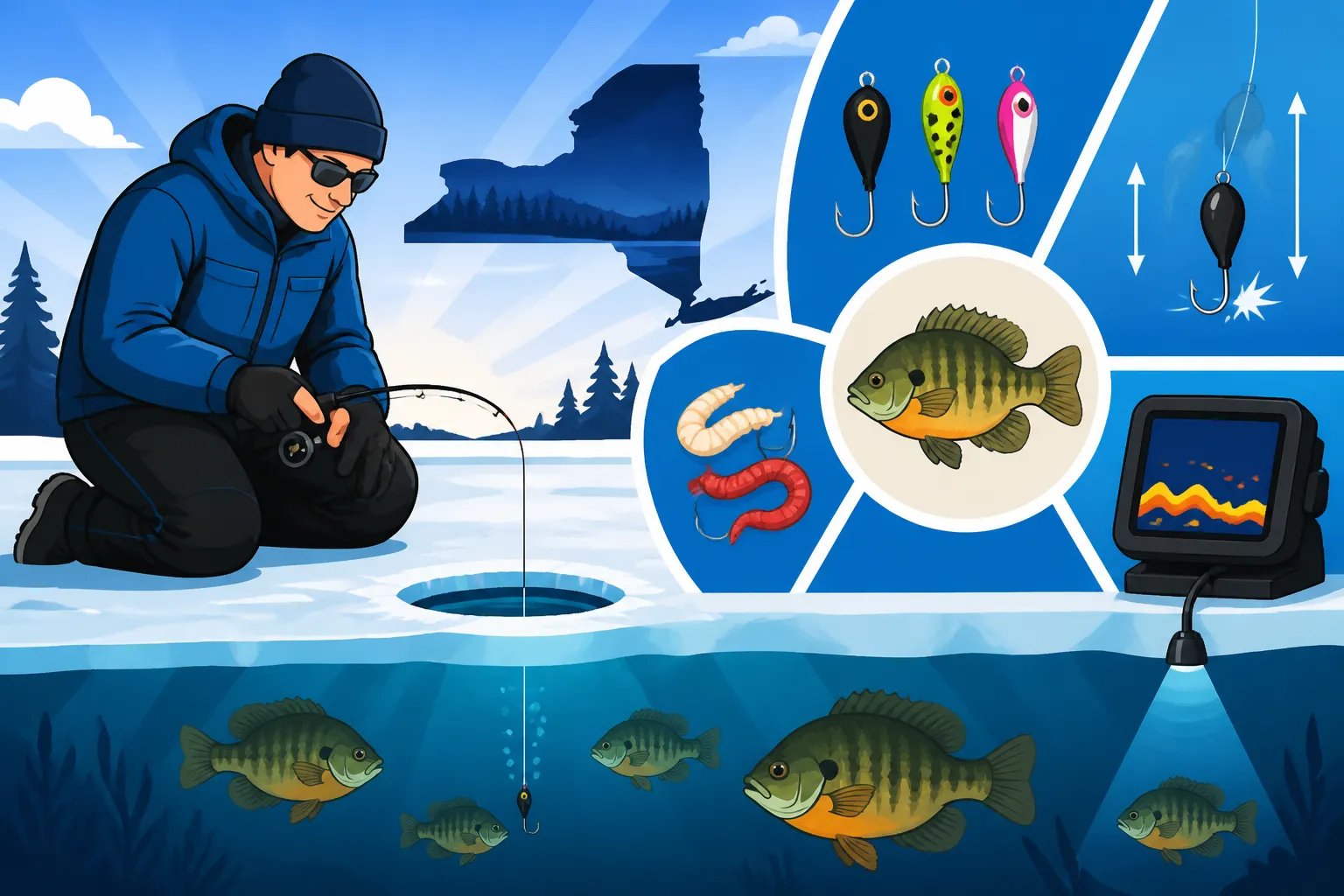
- Electronics: A flasher or an ice fishing sonar unit is an absolute game-changer for panfish. These devices show you real-time what's happening beneath the ice – the depth, the bottom composition, and most importantly, fish and your lure. This allows you to precisely present your bait at the fish's depth, observe their reaction, and adjust your technique accordingly. Brands like Vexilar, Marcum, and Humminbird are popular choices. Seeing fish approach your lure and then shy away, or seeing them dart in for a strike, provides invaluable feedback and drastically increases your success rate. Learning How to Find Fish Under the Ice using these tools is a skill that will pay dividends.
- Baits: For panfish, tiny jigs are king. Micro jigs, often weighing 1/64 to 1/16 ounce, are typically tipped with either live bait or plastics.
- Live Bait: Wax worms, spikes (maggots), and mousies are perennial favorites. A single wax worm or two spikes threaded onto a small jig hook provides irresistible scent and subtle action. Minnows, especially tiny ones, can be effective for larger crappies and perch, either fished actively or on a tip-up.
- Plastics: The world of micro-plastics for panfish has exploded. Tiny soft plastics resembling larvae, worms, or small fish, often impregnated with scent, are highly effective. Companies like Custom Jigs & Spins, Maki Plastics, and Northland Tackle offer a huge variety. The advantage of plastics is their durability (no need to constantly re-bait) and the ability to customize colors and actions. Pink, chartreuse, white, and glow-in-the-dark colors are popular choices. Some anglers prefer to fish plastics without any live bait, relying solely on the action and scent of the plastic. Our guide on Best Bait for Ice Fishing Panfish delves deeper into specific recommendations.
Prime Locations and Timing for New York Panfish Ice Fishing
You can have the best gear and the most refined techniques, but if you're not in the right place at the right time, you're still not going to catch fish. Understanding where panfish hold under the ice and when they are most active is critical for consistent success on New York's diverse waterways.
Identifying Productive Waters
New York offers an incredible array of lakes and ponds that hold healthy populations of panfish, making it a true ice angler's paradise. When looking for a spot, consider these key characteristics:
- Structure is Key: Panfish, especially crappies, are drawn to structure. Look for areas with submerged timber, brush piles, old weed lines, rock piles, or even artificial fish habitats. These spots provide cover from predators and ambush points for food. A good contour map of the lake is essential to identify these underwater features before you even drill a hole.
- Depth Transitions: Productive areas often involve transition zones, like where a shallow flat drops off into deeper water, or where a hard bottom meets a soft, mucky bottom. Perch often cruise these breaks. In large, deep lakes, panfish might suspend over deeper basin areas, often relating to baitfish schools or thermoclines (though less defined in winter).
- Vegetation: While most aquatic vegetation dies back in winter, remaining green weeds, especially coontail or milfoil, are magnets for panfish. These weeds still produce oxygen and hold small invertebrates and baitfish, making them a prime feeding ground. Target the edges of these weed beds or pockets within them.
- Specific New York Hotspots: Places like Oneida Lake are renowned for their incredible yellow perch and walleye fishing, but also hold good crappie populations. Chautauqua Lake is famous for its muskellunge, but also has excellent panfish. For more localized recommendations and detailed breakdowns, check out our guide on Top New York Lakes for Ice Fishing. Smaller ponds and reservoirs throughout the state also offer fantastic panfish opportunities, often with less pressure.
Best Times and Conditions
Panfish activity levels under the ice can fluctuate wildly based on time of day, weather, and ice conditions. Paying attention to these factors can dramatically improve your catch rates.
- First and Last Ice: These periods, generally early December/January and late February/March, are often the most productive. Panfish are typically more active and feed more aggressively during these transition times as the ice forms or begins to break up. They are also often found in shallower water during these periods, making them easier to access. However, these are also the periods requiring the most vigilance regarding ice safety. Always prioritize safety and read our guide on How to Read Ice Thickness for Safe Ice Fishing.
- Low Light Conditions: Like many fish, panfish are often most active during periods of low light. This means early mornings, late afternoons, and even into the evening hours (where legal) can be prime time. Crappies, in particular, are known for their strong evening bite. On heavily overcast days, activity can extend throughout the day.
- Weather Patterns: Stable weather patterns are generally preferred. A sudden cold front can often shut down the bite, making panfish lethargic. Days leading up to a front, or during a prolonged period of stable weather, tend to be more productive. Overcast days with light snow can often be excellent, as the reduced light penetration makes fish feel more comfortable feeding. Pay attention to changes in barometric pressure; a falling barometer can sometimes signal increased activity.
- New York Ice Fishing Rules: Always remember to consult the New York State Department of Environmental Conservation (DEC) regulations. Our New York Ice Fishing Rules guide provides a comprehensive overview of statewide and specific water body regulations, including season dates and special restrictions that might affect when and where you can fish for panfish.
Top Ice Fishing Techniques for New York Panfish
Once you've located your panfish and the conditions are right, it's time to entice them to bite. There's an art to presenting a tiny jig under the ice, and a few techniques stand out as particularly effective for New York's panfish.
Vertical Jigging: The Active Approach
Vertical jigging is the cornerstone of panfish ice fishing, especially when using a flasher. It's an active technique that allows you to present your bait directly to the fish and observe their reactions.
- The Drop and Pause: Start by dropping your jig to the depth where you're seeing fish on your flasher, or just above them. Let it settle, then give it a slight twitch, just enough to make the bait dance. Panfish are often attracted to this subtle movement. The key is to vary your cadence and retrieve. Sometimes a steady, slow lift and drop is best; other times, sharp, quick snaps are needed to trigger a reaction strike.
- Micro Jigging: For bluegills and smaller perch, think ultra-finesse. Use the smallest jigs you have, tipped with a single spike or a tiny plastic. The movement should be almost imperceptible. Hold the rod absolutely still, then just vibrate the tip ever so slightly, or lift it a fraction of an inch and let it fall. Often, a fish will strike on the fall, so keep your line taut to detect the bite. Crappies also respond well to this, sometimes preferring a slow, almost deadstick-like retrieve combined with subtle lifts.
- Reading the Flasher: This is where jigging becomes truly effective. If you see a fish approaching your lure, try to match its depth. If it stops short, try a different jigging motion – a sharper lift, a longer pause, or a slight shake. Sometimes, raising the bait slowly can make the fish "chase" it, triggering a strike. If they are aggressively moving in on your bait, a more active jigging motion might be more effective. If they seem to ignore it, switch up colors or baits. For those looking to refine their skills, knowing How to Find Fish Under the Ice using a flasher can be revolutionary.
Deadsticking and Tip-Ups: The Patient Play
While vertical jigging is active, sometimes a more passive approach is needed, especially for wary fish or when you're running multiple lines (within legal limits, of course, as per New York Fishing License Guide). Deadsticking and tip-ups allow you to cover more water and offer a different presentation that can often tempt finicky panfish.
- Deadsticking: This technique involves setting up a second rod in a separate hole, usually with a light bobber, and simply letting the bait sit still or with very minimal movement. Often, the deadstick is set just off the bottom or at a suspended depth where you’ve previously marked fish. The bait for deadsticking is typically a small live minnow for crappies or larger perch, or a wax worm on a tiny jig. The key here is patience; sometimes, a completely still presentation is what the fish want, especially when they are lethargic. The subtle movement of a live minnow can be incredibly effective when everything else fails. The sensitivity of your rod tip or bobber is crucial for detecting bites.
- Tip-Ups: While more commonly associated with larger predatory fish like pike or walleye, tip-ups can also be effective for panfish, especially larger crappies and perch that are cruising for minnows. A small hook (size 8 or 10) tipped with a small fathead or shiner minnow, set just above the depth you expect fish, can often get results when the bite is slow. The advantage of tip-ups is that they allow you to spread out your fishing efforts and cover a wider area. When the flag goes up, you know you have a fish, giving you time to get to the hole. Just remember that New York Ice Fishing Rules specify the number of lines and tip-ups an angler can use at one time.
Finesse Presentations: When They're Finicky
There are days when panfish seem to have lockjaw, barely responding to even the most enticing presentations. These are the days when extreme finesse techniques come into play.
- Downsizing Everything: If the bite is tough, go smaller. Use the absolute tiniest jigs you can find (1/80 or even 1/100 ounce), the thinnest line (2-pound test or even 1-pound), and the smallest bait (a single spike or a tiny piece of plastic). The goal is to make your presentation as natural and unobtrusive as possible. Sometimes, simply removing any split shot or unnecessary hardware above your jig can make a difference.
- Glow Baits: Many panfish jigs and plastics come in glow-in-the-dark varieties. Charging these with a small LED flashlight can be incredibly effective, especially in stained water, deeper areas, or during low light conditions. The glow acts as an attractant, drawing fish in to investigate.
- Scent Applications: Adding commercial fish attractant scents to your jigs or plastics can sometimes trigger a bite, particularly when fish are hesitant. Brands like Berkley PowerBait or Pro-Cure offer a variety of scents designed to appeal to panfish. A little dab can go a long way in convincing a curious but cautious fish to commit.
- Subtle Movement Only: When fish are finicky, aggressive jigging can scare them away. Try barely moving your bait at all. A deadstick presentation with a tiny jig, perhaps with just a quiver every 30 seconds, can be deadly. Watch your spring bobber or line for any tiny movement, as the bites can be incredibly light – sometimes just a slight "heave" or a tiny straightening of the line. Learning to detect these subtle indications is a skill that comes with practice and patience.
Safety First: Ice Fishing Precautions in New York
Ice fishing is an exhilarating winter pursuit in New York, but it comes with inherent risks. Your safety, and the safety of those around you, must always be your top priority. Ignoring ice safety precautions can quickly turn a fun day into a life-threatening situation. The cold waters of New York lakes are unforgiving, so being prepared is not just smart, it's essential.
Ice Thickness and Conditions
The golden rule of ice fishing is: "No ice is 100% safe." Ice thickness can vary dramatically across a single body of water, even on the same day. Understanding how to assess ice conditions is crucial.
- Minimum Thickness Guidelines: The New York State Department of Environmental Conservation (DEC) provides general guidelines for safe ice thickness, but these are just guidelines, not guarantees.
- 2 inches or less: STAY OFF! Extremely dangerous.
- 4 inches: Suitable for ice fishing on foot. This is a minimum, and it's always better to have more.
- 5-7 inches: Suitable for a snowmobile or ATV.
- 8-12 inches: Suitable for a car or small truck.
- 12-15 inches: Suitable for a medium truck.
However, these are for clear, solid, black ice. Slush ice, white ice (from frozen snow), or ice with cracks or pressure ridges is significantly weaker. Always add a buffer to these numbers if the ice quality isn't pristine.
- Assessing Ice Quality: Before stepping out, check with local bait shops or other anglers for current ice conditions. When you arrive, visually inspect the ice. Look for unusual colors (gray or dark spots can indicate thin areas), open water, or cracks. Use an ice spud or auger to check thickness every 10-15 feet as you venture out, especially near shore, points, or inlets. These areas often have weaker ice due to currents or springs. Be extra cautious around feeder streams, springs, aerators, and bridge abutments, which can weaken the ice from underneath. Always tell someone your plans and expected return time. Our detailed article on How to Read Ice Thickness for Safe Ice Fishing provides more in-depth guidance on this critical topic.
Essential Safety Gear
Beyond ice thickness, having the right personal safety gear can be the difference between a close call and a tragedy. Don't skimp on these items.
- Ice Picks: These are small, sharp spikes connected by a cord worn around your neck or accessible on your jacket. If you fall through, they provide grip on the ice, allowing you to pull yourself out. They are inexpensive and absolutely vital.
- Spud Bar: A heavy chisel-like tool used to test ice thickness as you walk. If the spud bar goes through the ice easily, you know the ice is too thin. This is your first line of defense before drilling with an auger.
- Flotation Suit or Life Vest: A specialized flotation suit (often called an ice fishing suit) provides warmth and buoyancy if you go through the ice. At a minimum, wear a personal flotation device (PFD) or life vest over your layers. Hypothermia sets in rapidly in cold water, and the ability to stay afloat dramatically increases your chances of survival.
- Rope and Whistle: Carry a coil of rope (at least 50 feet) for rescuing others or being rescued. A whistle can help attract attention if you're in distress.
- First-Aid Kit and Emergency Supplies: A basic first-aid kit is always a good idea. Also, pack extra warm, dry clothing in a waterproof bag, a thermos of hot beverage, high-energy snacks, and a fully charged cell phone. If you do go through the ice, getting warm and dry as quickly as possible is paramount.
Advanced Strategies for Challenging Panfish
Even with all the right gear and knowledge, some days panfish just don't want to cooperate. That's when you need to dig deeper into your bag of tricks and employ some advanced strategies to coax those elusive bites. Being adaptable and willing to experiment is what separates good ice anglers from great ones.
Reading the Fish Finder for Panfish
Your fish finder (flasher or LCD unit) is more than just a depth finder; it's a window into the underwater world. Learning to interpret its signals, especially for panfish, can provide a significant edge.
- Distinguishing Panfish from Baitfish: On a flasher, panfish often appear as solid, thicker marks, while schools of baitfish might show up as a "cloud" or a series of smaller, less distinct marks. Pay attention to how your lure appears and how fish react to it. Sometimes, large schools of baitfish will hold larger panfish in the vicinity, so don't dismiss baitfish entirely.
- Understanding Fish Behavior: Watch how fish approach your lure. Do they shoot up quickly, indicating aggression? Do they slowly rise, hesitate, and then turn away, suggesting they're curious but finicky? Or do they barely move off the bottom? Each behavior tells you something about their mood and helps you adjust your presentation. If fish are rising to your lure, try raising it slowly to draw them up and away from the bottom. If they're shy, lower your jig slightly below them and then slowly raise it to their level.
- Locating the Strike Zone: Panfish often have a preferred "strike zone" or depth where they are most comfortable feeding. This might be just off the bottom, suspended 10 feet down in 25 feet of water, or even right under the ice. Use your fish finder to identify this zone and consistently present your bait there. If fish are at multiple depths, try setting up multiple lines (if legal) at different levels to find the most active depth. For example, if you're marking fish at 10 feet and 20 feet, fish one rod at 10 and another at 20.
Adapting to Challenging Conditions
New York weather can be notoriously fickle, and ice fishing often throws unexpected curveballs. Being able to adapt to changing conditions is a hallmark of a successful angler.
- Post-Front Slowdowns: After a strong cold front passes, panfish can become extremely lethargic. This is when downsizing your bait, slowing down your presentation to an almost motionless deadstick, and using the smallest, most natural movements become crucial. Consider using more natural bait colors or glow baits to attract attention without being too aggressive. This is also a good time to experiment with scent.
- High Pressure Systems: When the barometer is high and stable, fish can often be found deeper and are less active. Focus on deeper structure, basin edges, and subtle humps. Light line and ultra-finesse tactics are often required.
- Low Pressure Systems: Conversely, a falling or low barometer (often associated with approaching storms or warmer weather) can sometimes trigger a feeding frenzy, moving fish shallower and making them more aggressive. This is when you might be able to get away with slightly larger jigs and more active jigging motions. However, always be aware of rapidly changing weather and ice conditions during these periods.
- Moving Around and Drilling More Holes: The biggest mistake anglers make on slow days is staying in one spot too long. Panfish, especially crappies and perch, are often nomadic, moving in schools. If you haven't had a bite in 15-20 minutes, move to a new hole, or even a new area of the lake. Drill a grid pattern, checking various depths and structures until you intercept an active school. This is where a good electric auger, easily found on Amazon, truly shines. Don't be afraid to be a "run and gun" angler, especially for perch.
- Experimenting with Presentation: Don't get stuck in a rut. If your current jigging cadence isn't working, try something different. Faster, slower, longer pauses, shorter twitches, raising the bait, lowering it – every variation can trigger a bite. Also, don't hesitate to switch colors or bait types. Sometimes a subtle shift from a white jig to a chartreuse one, or from a wax worm to a spike, is all it takes to get them biting again. Having a variety of small jigs and baits readily accessible is a huge advantage. Remember, even though we're talking panfish, sometimes those larger schools will still be around, so understanding techniques like How to Ice Fish for Walleye in New York might give you an idea of how to present a slightly larger profile to bigger perch or crappies mixed in.
Disclaimer
Fishing regulations, license requirements, and ice conditions can change rapidly. Always consult the most current New York State Department of Environmental Conservation (DEC) regulations before heading out on the ice. Prioritize safety by checking ice thickness and conditions frequently, and never venture onto unsafe ice. This guide is for informational purposes only and does not constitute professional advice.