How Deep to Troll for Salmon on New York’s Lake Ontario
There’s nothing quite like the thrill of chasing Chinook and Coho salmon on the vast expanse of Lake Ontario. But let’s be honest, finding those elusive fish can sometimes feel like trying to locate a needle in a colossal haystack, especially when it comes to figuring out how deep they’re holding. It's a common struggle for many anglers, whether you’re a seasoned veteran or just starting your journey on these Great Lakes waters. This guide aims to pull back the curtain on salmon trolling depths, giving you the knowledge and practical tips to dramatically increase your chances of a successful day out on New York's Lake Ontario.
Understanding Lake Ontario's Thermal Structure
Before we even talk about specific depths, it's crucial to understand why salmon are at certain depths in the first place. Lake Ontario, like most large freshwater bodies, isn't a uniform temperature from top to bottom. Its thermal structure is a dynamic system, constantly changing and heavily influencing where salmon decide to spend their time. Ignoring this fundamental aspect is like trying to navigate without a compass – you might get lucky, but you're probably going to wander aimlessly.
The Thermocline Explained
Think of the thermocline as the salmon's favorite neighborhood. It’s a distinct layer of water where the temperature rapidly changes from warmer surface water to colder deep water. This isn’t just some arbitrary line; it’s a critical zone for a few key reasons. First, this transition layer is often where baitfish, particularly alewives, tend to congregate because it offers a comfortable temperature range and often a rich concentration of plankton and other food sources. For a hungry salmon, finding the thermocline means finding dinner.
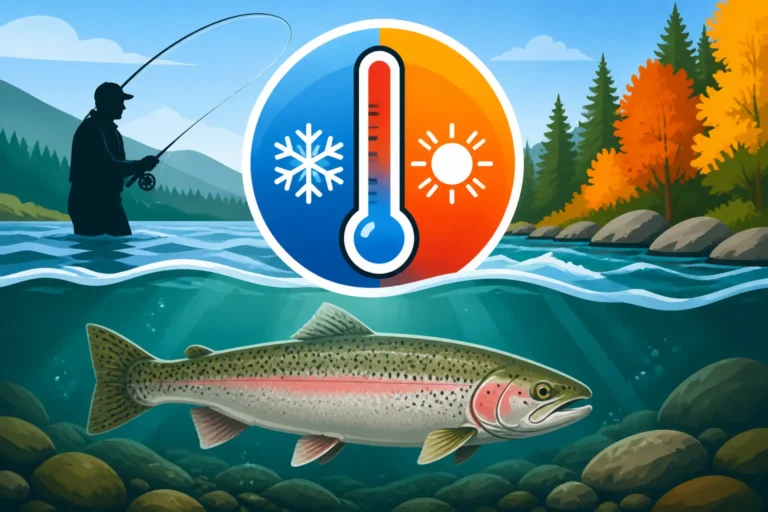
Secondly, salmon are cold-blooded creatures, and they have an optimal temperature range they prefer for feeding and activity, usually between 40-55 degrees Fahrenheit (4-13 degrees Celsius) for Chinook salmon, and slightly warmer for Coho. The thermocline provides this consistent, cooler water, acting like a giant, invisible comfort zone in the lake. If your lures aren't in this zone, you're essentially fishing in an empty room, no matter how enticing your presentation might be. Locating this temperature break with your fish finder is often the first and most vital step to a productive day.
Water Temperature's Role
Surface water temperature can be a real game-changer when you're trying to figure out how deep to troll for salmon. In early spring, the entire water column might be relatively cold and uniform, meaning salmon could be anywhere from the surface down to significant depths, often chasing bait in shallower waters closer to shore as the lake begins to warm. As summer progresses, the surface water heats up considerably, sometimes reaching into the 70s or even 80s, creating a thick, warm layer that salmon avoid like the plague.
This warmer surface water pushes salmon deeper, compressing them into the cooler thermocline or even below it if the thermocline becomes too shallow or too warm. Conversely, during a cold snap or prolonged periods of overcast weather, the surface water can cool down, allowing salmon to move higher in the water column, sometimes even feeding actively within 20-40 feet of the surface. Always pay attention to the readings on your boat's temperature gauge; it's a direct indicator of where the comfort zone for these fish might be. Understanding New York Fishing Seasons Explained can give you an even broader perspective on these seasonal changes.
Key Factors Influencing Salmon Depth
While the thermocline is central, it's not the only factor dictating where salmon will be. Many elements play a role, from the time of year to the weather conditions, and even the natural behavior of their prey. Overlooking these variables can lead to frustrating days where you're dragging lures through seemingly empty water, wondering why the fish aren't biting. A truly effective angler considers the whole picture.
Time of Year and Seasonality
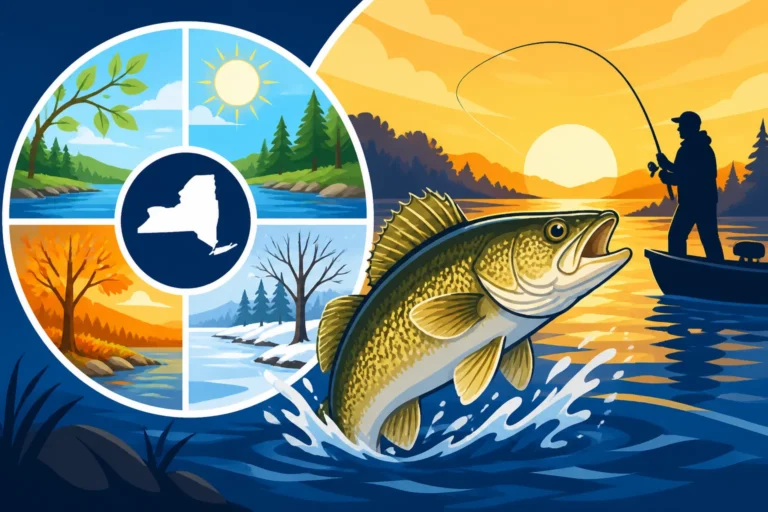
The fishing season on Lake Ontario is a dynamic progression, and salmon depths shift dramatically with it. In spring, as the lake begins to thaw and water temperatures are still quite cool, salmon, especially Chinook, often cruise shallower waters. They might be anywhere from 20 to 60 feet down, sometimes even shallower, as they follow baitfish schools moving into warmer nearshore areas or river mouths. This is a fantastic time for planer boards, allowing you to cover a wide spread of relatively shallow water. You can find more specific timing information in our guide on the Best Time to Fish for Chinook Salmon on New York's Lake Ontario.
As summer truly sets in, usually by late June and throughout July and August, the surface waters warm significantly. This is when the thermocline becomes king. Salmon will typically be found much deeper, often concentrated in or just above the thermocline, which can range anywhere from 50 to 120 feet deep, or even more in certain areas and conditions. This is prime time for downriggers. Then, as fall approaches and the salmon prepare for their spawning runs, often around September and October, they will again begin to move shallower, especially closer to tributaries like the Salmon River. They become more aggressive, chasing bait closer to the surface, and might be found in 20-80 feet of water as they transition. Knowing the general patterns for New York Fishing Seasons Explained is a huge advantage.
Baitfish Presence
Salmon are predators, and their movements are intrinsically linked to the whereabouts of their primary food source: baitfish, particularly alewives. If you're not finding bait, you're probably not finding salmon. Alewives themselves are sensitive to water temperature and light conditions. They tend to school up in the thermocline where the temperature is comfortable, providing a buffet for hungry salmon. However, they can also move up or down the water column depending on plankton availability, predatory pressure, or light levels.
This means that sometimes, salmon might be deeper, gorging on alewives huddled near the bottom of the thermocline. Other times, the bait might be suspended higher, and the salmon will follow. Using your sonar to identify baitfish schools is just as important as finding the salmon themselves. If you see dense clouds of bait at 70 feet, that’s a pretty good indication that you should be presenting your lures in that same depth range. Think like a salmon: where’s the easiest meal? Understanding the Chinook Salmon in New York diet definitely helps.
Weather and Light Conditions
Believe it or not, the sun in the sky and the atmospheric pressure can have a profound impact on where salmon choose to swim. On bright, sunny days, salmon tend to shy away from the intense light penetrating the clearer surface waters of Lake Ontario. They often move deeper, seeking refuge in the dimmer, cooler depths or the shadows of the thermocline. This is particularly true for shallow-running presentations; if the sun is high, you'll likely need to put your lures further down.
Conversely, on overcast days or during periods of low light, such as early morning or late evening, salmon are much more likely to be found higher in the water column. The reduced light penetration makes them feel more secure and allows them to hunt closer to the surface, sometimes even hitting topwater presentations or lures running just a few feet down. Barometric pressure can also play a subtle role; stable or rising pressure often correlates with more active fish, while rapidly falling pressure can make them sluggish and sometimes send them deeper. Paying attention to the sky and your weather app is almost as important as watching your fish finder.
Techniques and Gear for Precise Depth Control
Knowing where the fish are is only half the battle; the other half is being able to consistently put your lures in that strike zone. Lake Ontario salmon fishing requires specialized gear and techniques to achieve the precise depth control necessary for success. It’s not just about tossing a line out and hoping for the best; it’s about strategic deployment.
Downriggers: Your Best Friend
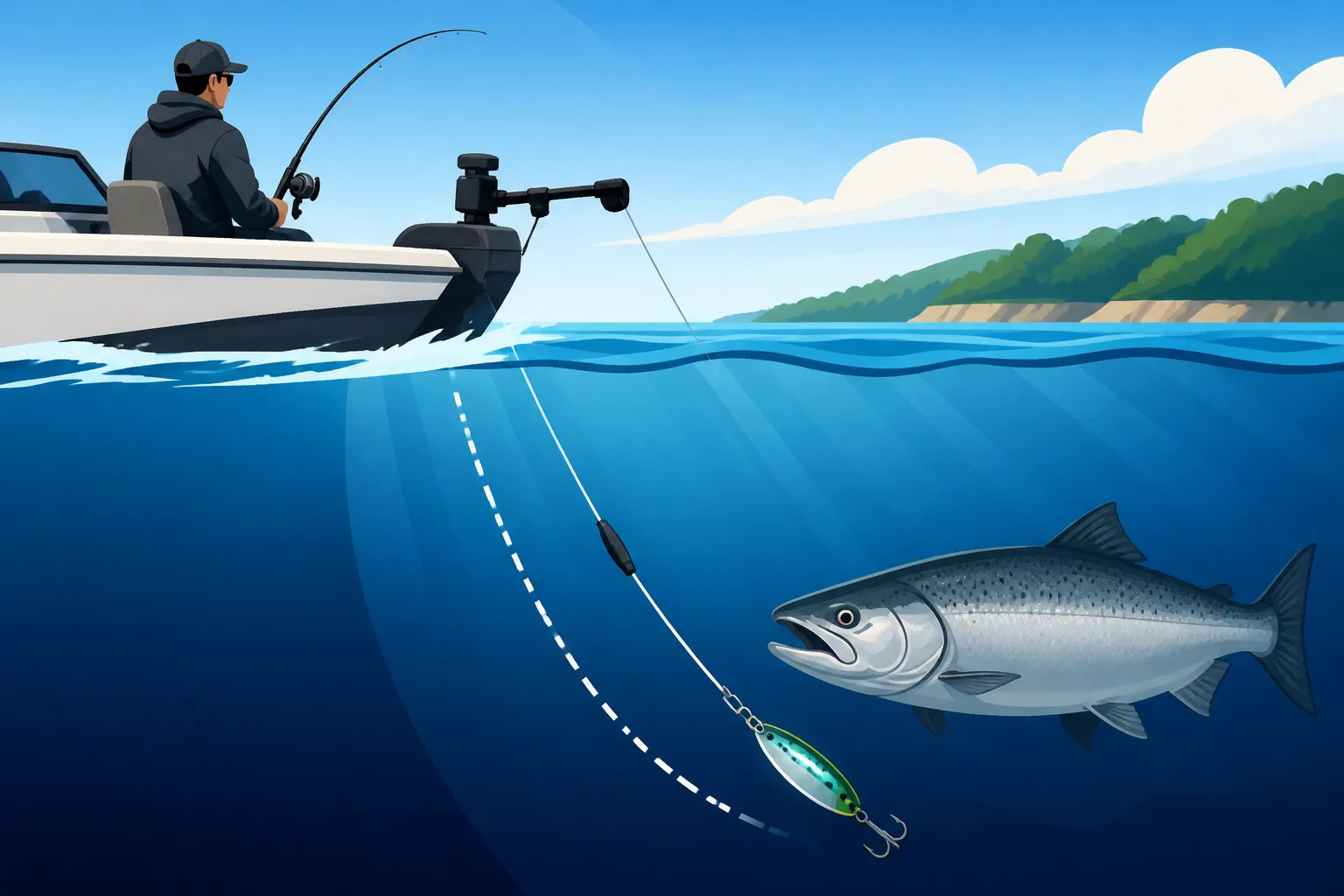
For serious Lake Ontario salmon anglers, downriggers are indispensable. These ingenious devices allow you to precisely control the depth of your lures by using a heavy weight (called a cannonball) to pull your fishing line straight down. Your main fishing line, which has a lure attached, is held to the downrigger cable by a release clip. When a fish strikes, the line pops free from the clip, allowing you to fight the fish directly without the weight. This precision is vital, especially when salmon are holding in a narrow temperature band within the thermocline.
Modern downriggers, like those from Cannon or Scotty, offer electric retrieval and display actual depth, making adjustments incredibly easy. You can run multiple downriggers off the back of your boat, each set to a slightly different depth, effectively "stair-stepping" your lures through the water column until you find the fish. Without downriggers, consistently hitting specific depths in 50-150 feet of water would be nearly impossible. They are a significant investment, but for consistent salmon success, they're worth every penny. For those looking to upgrade or just get started, you can find a wide range of options on platforms like Amazon.
Dipsy Divers and Planer Boards
While downriggers provide direct vertical depth control, dipsy divers and planer boards offer horizontal spread and additional depth capabilities, especially useful in early season or when fish are scattered. Dipsy divers are disc-shaped devices that use water resistance to dive and move your lure away from the boat, adding both depth and spread. They come in various sizes and settings, allowing you to adjust how deep and how far out they run. They are fantastic for covering the upper layers of the water column, typically from 15 to 80 feet, and are particularly effective for Coho salmon which often cruise shallower.
Planer boards, on the other hand, are primarily for spreading your lines out to the sides of the boat, covering a wider swath of water without spooking fish with your boat's presence. They typically don't add much depth on their own, but they are often used in conjunction with weighted lines, lead core line, or even small inline weights to achieve moderate depths, usually in the 0-40 foot range. Combining these tools with your downriggers allows for a comprehensive presentation, hitting multiple depths and horizontal zones simultaneously. Our guide on Trolling Techniques for New York's Lakes dives deeper into these strategies.
Choosing the Right Lures and Tackle
The type of lure you choose also impacts your trolling depth, even when using downriggers. Heavy, deep-diving crankbaits will naturally run deeper than light spoons. However, the biggest factor here is often the line itself. Using lighter braided line, like 20-30 lb test, for your main fishing line offers less water resistance and allows your lures to run truer to the depth you're targeting, especially when using dipsy divers or lead core. Fluorocarbon leaders, while nearly invisible, also have less stretch and less resistance than monofilament.
When selecting lures, remember that flash and vibration are key. Common choices for Lake Ontario salmon include spoons (like Dreamweaver or Michigan Stinger), flasher/fly combinations, and various stick baits or crankbaits. The color and size of your lure will vary based on light conditions, water clarity, and the size of the baitfish. You can explore a vast array of salmon lures, from proven classics to the latest innovations, available online through retailers like Amazon. For more detailed information, check out our piece on the Best Lures for Chinook Salmon.
Practical Tips for Dialing in Salmon Depth
Now that you understand the "why" and "how" of depth control, let's talk about putting it all into practice on Lake Ontario. There’s a constant dance between what you observe, what your electronics tell you, and how you adjust your spread. Flexibility and observation are key to consistent success.
Using Sonar and Fish Finders
Your sonar (or fish finder) is your window into the underwater world, providing crucial data for determining salmon depth. Before you even set your lines, spend some time cruising your intended fishing area, looking for baitfish schools, arcs that might indicate salmon, and most importantly, the thermocline. Most modern fish finders will clearly show the thermocline as a distinct line or band where the water changes density. Some units even offer real-time water temperature readings at different depths.
Once you’ve identified the thermocline and any bait schools, aim to set your lures in and around that zone. Start by placing a few lures right at the top of the thermocline, a few in the middle, and one or two just below it. Salmon often orient themselves differently within this layer. Pay attention to where your bites come from, and then adjust all your lines to that most productive depth. Don't forget that How to Read a Fish Finder for New York Lakes can offer a wealth of information to help you interpret those sonar screens.
Starting Points and Adjustments
There’s no magic number for salmon depth, but general starting points can save you a lot of guesswork.
- Spring (April-May): 20-60 feet, often shallower near shore or river mouths.
- Early Summer (June): 40-80 feet, as the thermocline begins to establish.
- Mid-Summer (July-August): 60-120 feet, with some fish going even deeper if the thermocline is pronounced and stable.
- Fall (September-October): 20-80 feet, moving shallower as they stage for spawning.
These are just guidelines. Always let the fish tell you what they want. If you're not getting bites after 20-30 minutes at one depth, don't be afraid to change things up. Raise or lower your downriggers by 5-10 feet, try a different lure color, or adjust your trolling speed. Sometimes, a subtle change can trigger a strike. Keep meticulous notes on what works – depth, lure, speed, water temperature, and time of day – to build your own local knowledge base.
Reading the Water and Other Anglers
Beyond your electronics, always keep an eye on what’s happening around you. Observe other boats. If you see a cluster of boats working a particular area, or if you notice other anglers consistently reeling in fish, they might be onto something. While it’s bad form to crowd another boat, observing general patterns from a respectful distance can provide valuable clues. Are they running specific types of gear? Are they making tight turns or running straight?
Also, pay attention to surface activity. While salmon are often deep, sometimes they will come up to smash bait on the surface, especially during low light or when there’s a strong bait ball. Birds diving or large schools of baitfish breaking the surface can indicate active feeding that might extend into shallower depths. Sometimes, the simplest observations can lead to the biggest breakthroughs. Our guide to the Best Time of Year to Fish in New York will give you seasonal averages and expectations.
Typical Salmon Trolling Depths on Lake Ontario
To help you visualize, here's a general table of common trolling depths for salmon on Lake Ontario, keeping in mind that these are just starting points and can vary wildly based on real-time conditions.
| Season | Typical Water Temperature | General Depth Range (Feet) | Key Factors & Notes | Primary Gear |
|---|---|---|---|---|
| Early Spring | 38-45°F | 20-50 | Fish often follow bait into warmer nearshore waters. Lower light penetration allows shallower fish. | Planer Boards, Dipsy Divers, Lead Core |
| Late Spring | 45-55°F | 30-70 | Thermocline forming, but fish can be scattered. Follow bait schools closely. | Downriggers, Dipsy Divers |
| Early Summer | 55-65°F | 40-90 | Thermocline established, salmon often hold just above or in it. Surface warming. | Downriggers (primarily) |
| Mid-Summer | 65-75°F (Surface) | 60-120+ | Warm surface water pushes salmon deep into a strong thermocline or below. Look for specific temp. | Downriggers (essential) |
| Early Fall | 60-70°F (Surface cooling) | 40-100 | Salmon begin to move shallower as they stage for spawning, still thermocline-dependent. | Downriggers, Dipsy Divers |
| Late Fall | 50-60°F | 20-80 | Fish are aggressive and shallower near tributary mouths. Lower light tolerance. | Downriggers, Dipsy Divers, Planer Boards |
| Overcast Days | Variable | Often 10-20 feet shallower | Reduced light allows salmon to rise higher in the water column. | Any gear, adjusted shallower |
| Bright Sunny Days | Variable | Often 10-20 feet deeper | Intense light pushes fish deeper into darker, cooler water. | Downriggers, Dipsy Divers (deeper settings) |
Remember, these are averages. Always cross-reference with your fish finder, temperature probe, and current conditions. And don't forget the importance of Best Trolling Speed for New York's Lake Ontario Salmon in ensuring your lures are presented correctly at the desired depth.
Disclaimer
Fishing regulations and conditions in New York State can change frequently. Always consult the latest New York State Department of Environmental Conservation (DEC) regulations guide before heading out on the water. This article is for informational purposes only and should not be considered a substitute for official guidelines. Stay safe and fish responsibly!