How to Fish Bunker for Striped Bass
There’s nothing quite like the raw power of a New York striped bass, especially when you’re targeting them with their absolute favorite meal: bunker. But getting that elusive striper to bite a bunker isn't always as simple as tossing it in the water. From sourcing your bait to rigging it perfectly and understanding where and when to present it, there's a real art to fishing bunker. This guide will walk you through everything you need to know to effectively fish bunker for striped bass in New York, helping you turn those frustrating blank days into memorable battles with powerful fish.
Understanding Bunker and Striped Bass in New York
Before we even talk about hooks and lines, it’s crucial to understand the relationship between bunker (also known as Atlantic menhaden) and striped bass in New York waters. This isn't just a random bait choice; it's a fundamental part of the striper's diet and migration.
Why Bunker Are a Striped Bass Favorite
Bunker are a high-fat, protein-rich forage fish that form massive schools along the Atlantic coast, including throughout New York’s marine districts and into brackish rivers like the Hudson. Think of them as the ultimate energy bar for a striper. When these large, oily baitfish are around, striped bass will often key in on them almost exclusively, ignoring other offerings. Their oily composition leaves a strong scent trail in the water, which striped bass, with their keen sense of smell, can track from a distance.
The sheer abundance of bunker during their seasonal migrations makes them an irresistible target for hungry stripers. From the warm waters of Long Island Sound to the cooler currents near Montauk and up the mighty Hudson River, wherever bunker gather, stripers are often not far behind. This consistent presence is why smart anglers in New York always keep an eye out for bunker schools, as they often signal the arrival and feeding patterns of trophy striped bass.
Striped Bass Behavior and Bunker
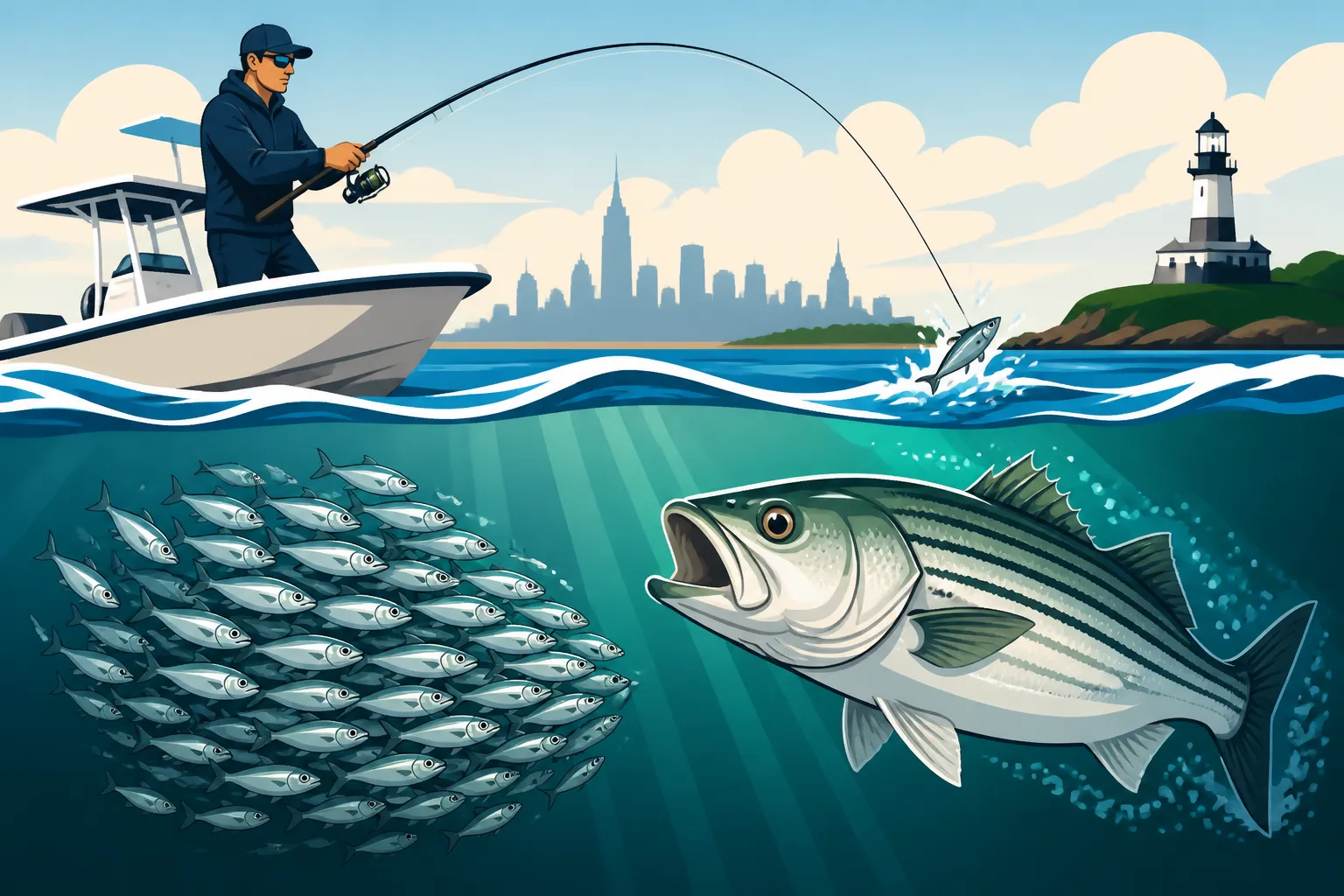
Striped bass are opportunistic predators, and when bunker schools are tight-knit, stripers will often slash through them with incredible force. This behavior often creates a visible "blitz" on the surface, where you can see water churning and birds diving – a clear sign that bunker are being attacked. Understanding this feeding frenzy is key to your strategy. Stripers will push bunker to the surface, against structure, or into shallower waters to corner them, making them easier targets.
When stripers are actively hunting bunker, they can be incredibly aggressive. They're focused on gorging themselves, building up reserves for migration or spawning. This means that presenting a bunker, whether alive or in a juicy chunk, that mimics a wounded or easy meal is often met with a ferocious strike. Conversely, if bunker are plentiful and unmolested, stripers might be lazier, picking off stragglers or simply cruising below the main school. Your approach needs to adapt to how the stripers are interacting with the bait.
Sourcing and Preparing Your Bunker Bait
The effectiveness of bunker as bait hinges on its freshness and how it's presented. There are distinct advantages and methods for using live, fresh dead, or even frozen bunker.
Live Bunker: The Ultimate Striper Candy
There’s absolutely no substitute for a lively, wiggling bunker when it comes to attracting a trophy striped bass. The natural swimming action and distress signals of a live baitfish are incredibly enticing. The most common ways to get live bunker are by cast netting or snagging them.
Cast netting requires some skill, but it’s arguably the best way to get undamaged, healthy bait. You'll need a good quality cast net, typically 6 to 10 feet in diameter, with appropriate mesh size (usually 1-inch to 1.5-inch for bunker). Look for schools of bunker near the surface in harbors, bays, or along coastal areas. A well-thrown net can scoop up dozens of prime baits in one shot. Once netted, immediately transfer them to a well-aerated livewell. Keeping them alive means having a livewell with sufficient capacity, a good pump for water circulation, and ideally, some form of filtration to remove scales and waste. Overcrowding a livewell is a common mistake that quickly kills your bait, so be mindful of how many fish you keep.
Snagging is another popular method, particularly when bunker are schooled tightly or breaking the surface. This involves using a heavy snagging hook (often a large treble hook weighted with lead) cast into a school of bunker, then quickly retrieved to hook a fish. While effective, snagged bunker are often injured, bleeding, or have scales removed, which can shorten their lifespan in a livewell. If you snag a bunker, it’s often best to use it quickly, either by live-lining it immediately or cutting it up for chunks. You can find a wide array of snagging hooks and cast nets on platforms like Amazon, making it easy to gear up for bunker catching.
Fresh Dead and Chunked Bunker: Still Highly Effective
While live bunker are gold, fresh dead bunker, especially when chunked, are incredibly potent, especially for anglers fishing from shore, piers, or anchored boats. The key here is freshness. A bunker that has been dead for hours or days won't have the same scent appeal as one that was just caught.
When you have a fresh bunker, cutting it into chunks allows its rich oils and blood to seep into the water, creating an irresistible scent trail that stripers can't ignore. There are several ways to chunk a bunker:
- Head: The head section, often including a few inches of body, is a potent chunk. It’s dense, full of blood, and has a strong smell. Many big stripers are caught on bunker heads.
- Body Steaks: Cut the main body into 1 to 2-inch thick "steaks." These are very juicy and offer a good target for a striper. Keep the backbone and ribs intact for durability.
- Tail: The tail section can also be effective, especially if you leave a little bit of the fin intact for some movement in the current.
To maximize the scent, some anglers will gently squeeze or score the chunks to release more oils before casting. Keep your chunks on ice in a cooler to maintain their freshness until you're ready to deploy them. A sharp bait knife is essential for clean cuts, and you can pick up reliable ones on Amazon.
Frozen Bunker: A Viable Alternative
For those times when fresh bunker simply isn’t available, frozen bunker can still catch fish. It’s certainly not as ideal as live or fresh dead, as the freezing process breaks down cells, leading to less potent scent release and a softer texture. However, for convenience and availability, it’s a perfectly viable option, especially if you're in a pinch or fishing in an area where live bait is hard to come by.
When using frozen bunker, thaw it thoroughly but keep it cool. A partially frozen chunk won't release scent as effectively. The softer texture means it might not stay on the hook as well, so you might need to use a bait thread or elastic to secure it. Many tackle shops stock frozen bunker, or you might find them online. If you're freezing your own, vacuum-sealing individual bunker or chunks immediately after catching can significantly help preserve their quality and minimize freezer burn, and a good vacuum sealer can be easily purchased on Amazon. Just remember, it's a backup, not the first choice for finicky stripers.
Essential Gear for Bunker Fishing
Successfully fishing bunker requires robust gear that can handle the powerful strikes and strong runs of a New York striped bass. Don't skimp on quality here; an improperly matched setup can lead to lost fish and frustration.
Rods, Reels, and Line for Bunker Fishing
Your rod and reel need to be capable of casting heavy baits and handling powerful fish.
- Rods: For live-lining or chunking from a boat or pier, a medium-heavy to heavy action rod, typically 7 to 9 feet in length, is ideal. It needs a strong backbone to set the hook and sufficient give in the tip to absorb head shakes. If you're surfcasting heavy chunks, you'll want a longer, more powerful surf rod, often 10 to 12 feet, to achieve the necessary casting distance.
- Reels: Both conventional and heavy-duty spinning reels work well. For spinning gear, look for a reel in the 6000-8000 size range, known for its smooth drag and strong retrieve. Popular choices include models from Shimano, Daiwa, or Penn. For conventional reels, a level-wind or star-drag model capable of holding a good amount of heavy line is suitable. The key is a strong, reliable drag system that won't give out under pressure.
- Line: Braid is generally preferred for its strength-to-diameter ratio, sensitivity, and lack of stretch. A 30 to 60 lb braided mainline is common. However, for leaders, fluorocarbon or monofilament is essential. A 40 to 80 lb fluorocarbon leader is recommended for its abrasion resistance and invisibility underwater, especially when stripers are wary. The length of your leader can vary, but typically 3 to 6 feet is a good starting point. You can find a wide selection of braided lines, fluorocarbon leaders, and quality monofilament on Amazon.
Hook Selection and Rigs
This is a critical area, especially in New York, where regulations dictate hook types for bait fishing for striped bass.
- Circle Hooks: For bait fishing for striped bass in New York, the use of non-offset circle hooks is mandatory. This regulation is in place to reduce mortality for released fish, as circle hooks are designed to hook fish in the corner of the mouth, minimizing gut hooks. Make sure your circle hooks are non-offset, meaning the point is in line with the shank and not angled inwards or outwards. Hook sizes can range from 7/0 to 10/0, depending on the size of your bunker and the target stripers. If you're unsure about the specifics, check out our guide on how to Use Circle Hooks for Striped Bass.
- Rigs for Live Bunker:
- Live-lining Rig: The simplest and often most effective. Thread your mainline through an egg sinker (1-4 oz depending on current), then tie on a barrel swivel. To the other end of the swivel, attach a 3-foot fluorocarbon leader and then your circle hook. Hook the live bunker through the nose (hard part above the nostril) or lightly through the back near the dorsal fin, avoiding the spine. The goal is to allow the bunker to swim naturally.
- Bobber Rig: For fishing shallower water or over structure, a large bobber or float can suspend your live bunker at a desired depth. The rig is similar to the live-lining rig, just with a float stopper and bobber above the egg sinker.
- Rigs for Chunked Bunker:
- Fish Finder Rig: Excellent for bottom fishing, especially from shore or an anchored boat. This rig allows a biting fish to take the bait without feeling the weight of the sinker immediately. Slide a fish finder clip (or an egg sinker with a bead) onto your mainline, then tie on a barrel swivel. Attach a 1.5 to 3-foot fluorocarbon leader to the swivel, followed by your circle hook. The sinker (pyramid or bank sinker, 2-8 oz) clips to the fish finder slide.
- Three-Way Swivel Rig: Often used for drifting or slow trolling chunks. Tie your mainline to one eye of a three-way swivel. To a second eye, attach a short leader (6-12 inches) with a sinker (often a bank sinker). To the third eye, attach your fluorocarbon leader (2-4 feet) and your circle hook with a chunk of bunker. This allows the sinker to keep your bait near the bottom while the chunk drifts naturally.
Terminal Tackle and Accessories
Don't forget the little things!
- Swivels: High-quality barrel swivels (size 3/0 to 5/0) are essential to prevent line twist and connect components of your rig.
- Sinkers: Have a variety of egg, bank, and pyramid sinkers ranging from 1 to 8 ounces. The weight you choose will depend heavily on current and depth.
- Pliers/De-hooker: Crucial for safely removing hooks, especially with circle hooks that are often set deep in the lip.
- Bait Knife and Cutting Board: For preparing chunk baits cleanly and safely.
- Cooler: A good quality cooler with ice is vital for keeping your fresh dead or chunked bunker in prime condition throughout your trip.
- Bait Brine/Salt: Some anglers like to brine their chunks to toughen them up and enhance their scent, especially for frozen bait.
Fishing Techniques: Putting Bunker to Work
Now that you have your bunker and your gear, it’s time to learn how to present it effectively to entice those New York stripers.
Live-Lining Bunker: An Exciting and Productive Method
Live-lining is perhaps the most thrilling way to fish bunker, as you're offering a natural, struggling baitfish that stripers find impossible to resist. This technique is most effective from a boat, but can also be done from piers or jetties where live bunker are accessible.
The core idea is to let your live bunker swim freely, or with minimal resistance, to mimic a natural prey item.
- Hooking: Hook your live bunker through the nose (just above the nostrils, ensuring you don't hit the brain) or lightly through the back near the dorsal fin. The nose hook allows for a more natural swimming motion, while a back hook is good if you want the bait to stay near the surface.
- Deployment: If drifting, simply cast the bunker out and let it swim away from the boat, free-spooling line. If slow trolling, use just enough weight (or no weight at all, if the bunker can swim freely near the surface) to keep the bunker in the strike zone. Keep your bail open or your reel in free spool with the clicker on, allowing a striper to run with the bait before you engage the reel and set the circle hook.
- The Strike: When a striper hits, it's often a violent take. Resist the urge to yank the rod! Instead, let the fish run for a few seconds, then slowly close the bail or engage the reel, and steadily reel into the fish. The circle hook will do its job and set itself in the corner of the mouth.
This method requires patience but often yields the largest fish because you’re offering the most natural presentation.
Fishing Chunked Bunker from Shore or Boat
Chunking with bunker is a powerful method that creates a scent slick, drawing in stripers from a distance. It's highly versatile and can be done from various platforms.
- Bottom Fishing: This is the most common technique for chunking. Using a fish finder rig or a three-way swivel rig, cast your chunked bunker out and let it sink to the bottom. If you're fishing from a boat, anchor upstream of a promising area, allowing your scent trail to drift down to where stripers might be holding. If fishing from shore, cast into channels, sloughs, or deeper holes where stripers might ambush prey.
- Current and Location: Always consider the current. Stripers often face into the current, waiting for food to drift to them. Cast your chunk slightly upstream of where you expect fish, allowing the current to carry the scent and the chunk naturally into their feeding zone. Productive areas include points, eddies, channel edges, and bridge pilings.
- Scent Trail: If possible, try to create a chum slick. Small pieces of cut bunker (or even ground bunker from a chum pot) can drift down current, attracting stripers to your main chunk bait. However, be aware that not all areas allow chumming, so always check local regulations. For more on this, consider reading up on how to Chum for Striped Bass.
Keep your line relatively tight to feel subtle bites, but not so tight that the current moves your bait unnaturally. Stripers might mouth the bait before fully committing, so pay attention to even light taps.
Snagging and Immediately Live-Lining
This is a specific, high-adrenaline technique that capitalizes on dense schools of bunker and actively feeding stripers. It's often employed when stripers are busting on bunker on the surface.
- Spot the School: Locate a tight school of bunker, either visually on the surface or with your fish finder.
- Snag Your Bait: Cast a heavy snagging hook into the school and retrieve it quickly to hook a bunker.
- Transfer to Striper Rod: Once a bunker is snagged, quickly unhook it (if possible without too much damage) and transfer it to your prepared live-lining rig with a proper circle hook. Many anglers have a second rod rigged and ready specifically for this.
- Send it Back Out: Immediately cast the live bunker back into or near the feeding frenzy. A wounded, disoriented bunker is an easy meal, and stripers will often hit it almost instantly. This technique truly puts you in the middle of the action and is incredibly effective when stripers are actively chasing bait.
Best Times and Locations for Bunker Fishing in New York
Timing and location are paramount when targeting striped bass with bunker in New York. The striper migration and feeding habits are highly seasonal and tide-dependent.
Seasonal Considerations
New York's striped bass season offers distinct opportunities for bunker fishing.
- Spring Run (April – June): This is prime time, especially in the Hudson River and other tidal estuaries, as stripers migrate north to spawn. They are hungry and aggressive, following the bunker schools that also move into these waters. The Striped Bass Season on the Hudson Runs April Through November, making spring a key period for bait fishing. Check out When Do Striped Bass Run Up New York's Hudson River? for more detailed timing.
- Summer Months (July – August): Stripers can be found in coastal waters and bays, often moving to deeper, cooler water during the day, but still actively feeding on bunker, especially during low light hours. Fishing around inlets and outflows of bays where bunker congregate can be very productive.
- Fall Blitzes (September – November): As waters cool, stripers begin their southern migration, feeding voraciously to build fat reserves. This often leads to spectacular "blitzes" where huge schools of bunker are driven to the surface by feeding stripers, creating incredible fishing opportunities along Long Island Sound and the open coast. This is a fantastic time for both live-lining and chunking.
Tides and Currents
Moving water is crucial for successful bunker fishing. Tides concentrate baitfish and create ambush points for stripers.
- Incoming and Outgoing Tides: Both stages of the tide can be productive. Incoming tides often bring baitfish into shallower bays and estuaries, while outgoing tides can flush bait out of these areas, concentrating both bunker and stripers at choke points like inlets and mouths of rivers.
- Slack Tide: This period of minimal current is generally less productive for bunker fishing, as the scent trail doesn't disperse as effectively and baitfish are less likely to be moving.
- Optimal Current: Look for periods of moderate to strong current. This is when stripers are most active in their ambush behavior. The amount of weight you'll need for your rig will depend entirely on the strength of the current in your chosen fishing spot. Understanding Best Tides for Striped Bass Fishing on New York's Long Island Sound can significantly improve your success.
Prime New York Locations for Bunker Fishing
New York offers a plethora of excellent spots for bunker fishing:
- Hudson River: A legendary striped bass fishery, particularly during the spring run. From the Tappan Zee Bridge north to Albany, the Hudson sees massive schools of bunker and equally massive stripers. Check out Striped Bass Hotspots Near the Tappan Zee for some prime areas. Remember to consult Fish Species Found in the Hudson River to understand the full ecosystem.
- Long Island Sound: The entire coastline of Long Island and its surrounding bays, inlets, and the Sound itself are fantastic. Areas like the Western Sound, Peconic Bay, and the waters around Montauk are known for their strong striper populations and abundant bunker.
- New York Harbor and Raritan Bay: These areas are rich in baitfish and serve as crucial migration pathways for stripers, offering excellent opportunities for boat and sometimes shore anglers.
- South Shore Bays: Great South Bay, Shinnecock Bay, and Moriches Bay often hold good numbers of bunker and stripers, especially during migratory periods.
Always check local fishing reports and observe bird activity or baitfish presence – where the bunker are, the stripers are likely to be close behind.
Handling Striped Bass and Regulations
Catching a New York striped bass is a fantastic experience, but it comes with the responsibility of adhering to regulations and ensuring the health of the fish, especially if you plan on releasing it.
Responsible Catch and Release
Many anglers practice catch and release for striped bass, especially for larger breeders. Proper handling is crucial to maximize a fish's survival chances.
- Minimize Fight Time: Bring the fish in as quickly as possible to reduce exhaustion.
- Keep Fish in Water: Avoid removing the fish from the water if you intend to release it. If you must, do so for only a few seconds for a quick photo.
- Support the Fish: If lifting, support the fish horizontally with one hand under the belly and the other gripping the lower jaw (without damaging the gills). Never hold a large striper vertically by the jaw.
- De-hook Carefully: Use pliers or a de-hooking tool to gently remove the circle hook. Since circle hooks typically set in the corner of the mouth, removal is often straightforward.
- Revive: If the fish is exhausted, hold it gently in the water, facing into the current, until it can swim strongly on its own.
Adhering to New York Regulations
New York State has specific and often changing regulations for striped bass, designed to protect the population. Ignorance of the law is no excuse, and penalties can be significant if you're caught fishing without adhering to the rules.
- Fishing License: Ensure you have a valid New York State fishing license. While saltwater fishing technically doesn't require a separate license, you generally need to register with the New York Recreational Marine Fishing Registry. However, this varies, so it's best to confirm the current requirements.
- Season Dates and Slot Limits: Striped bass have specific open seasons and slot limits (a size range within which fish can be kept). These are subject to change annually, so always consult the latest New York State Department of Environmental Conservation (DEC) regulations before you head out. Our comprehensive New York Fishing Regulations Explained can provide general guidance, but always double-check the most current official DEC publications.
- Circle Hook Requirement: As mentioned earlier, non-offset circle hooks are mandatory when using bait (like bunker) for striped bass in New York waters. This is a strict rule designed for conservation. Understanding Why Are Circle Hooks Required for Striped Bass Bait Fishing? is important for all anglers.
- Bag Limits: There is a daily bag limit on striped bass. Do not exceed this limit.
- Gear Restrictions: Be aware of any restrictions on the number of lines you can use or specific areas that may have additional rules.
Always carry a copy of the current regulations or have them easily accessible on your phone. This ensures you're fishing legally and contributing to the conservation of this incredible fishery.
| Aspect | Live Bunker | Chunked Bunker |
|---|---|---|
| Scent Trail | Natural, subtle, enhances distress pheromones | Strong, oily, consistent plume in current |
| Movement/Action | Natural swimming, erratic movements | None, relies on current for natural drift |
| Target Fish | Often attracts larger, more aggressive stripers | Attracts stripers of all sizes, good for finicky fish |
| Effectiveness | High, especially during active feeding | High, especially when chumming or in strong current |
| Hooking Method | Nose or dorsal fin | Through meaty part of chunk |
| Hook Type | Mandatory non-offset circle hook | Mandatory non-offset circle hook |
| Difficulty to Keep | Requires livewell, susceptible to injury | Easy to store on ice, no special equipment needed |
| Casting Distance | Limited by bait size and liveliness | Excellent, can cast heavy chunks far |
| Retrieval | Let bait swim freely, slow drift/troll | Bottom fishing, let current work the bait |
Disclaimer
Fishing regulations, seasons, and licensing requirements in New York State can change frequently. While this guide provides comprehensive information, it is the angler's responsibility to verify all current rules and regulations with the New York State Department of Environmental Conservation (DEC) before heading out on the water. This content is for informational purposes only and should not be considered legal advice.