How Wind Direction Affects Lake Fishing
There's nothing quite as frustrating as heading out to your favorite New York lake, rods rigged and anticipation high, only to find the wind whipping across the surface, making casting a nightmare and seemingly scattering the fish. It's a common scenario that can make or break a day on the water, leaving many anglers wondering how to adapt. This guide will dive deep into how wind direction specifically affects lake fishing in New York, offering insights and strategies to help you turn those blustery days into productive ones.
Understanding Wind's Fundamental Influence on Lakes
Wind is far more than just a nuisance that makes your hat fly off; it's a powerful, dynamic force that fundamentally alters the underwater environment of any lake. From the tiniest pond to the vast expanse of Lake Ontario, wind plays a critical role in shaping where fish feed, where they seek shelter, and how accessible they are to anglers. Ignoring its influence is like trying to navigate a ship without a rudder – you might get somewhere, but it won't be intentional or efficient.
Surface Currents and Water Movement
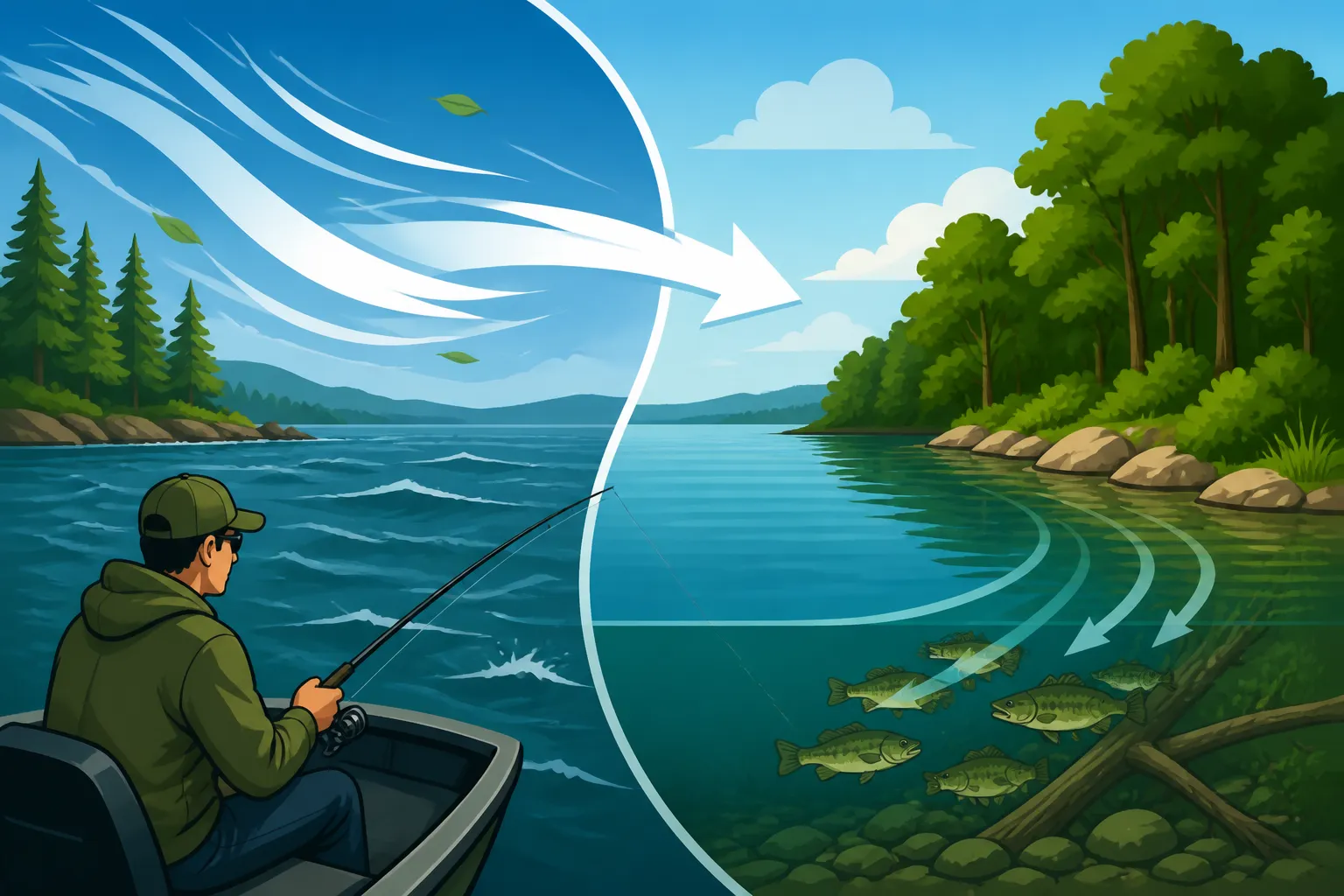
The most immediate and obvious effect of wind on a lake is the creation of surface currents. Even a gentle breeze can start to push the top layer of water, and a strong gust can create significant, sustained movement. Think of it like a giant hand stirring the surface. This movement isn't just cosmetic; it has profound implications for fish. The wind pushes warm surface water towards one shore, causing it to stack up and create a "wind-blown bank." This can also cause a subtle upwelling of cooler, nutrient-rich water on the opposite, sheltered side of the lake, especially in deeper bodies of water like the Finger Lakes.
Beyond surface currents, persistent wind can even affect the thermocline – that invisible boundary between warmer surface water and colder, deeper water. A strong, sustained wind can actually tilt or even temporarily break up the thermocline, especially in smaller lakes or shallow areas. This mixing of water can bring nutrient-rich water up from the depths, or oxygenate deeper, stagnant zones, creating new feeding opportunities or forcing fish to relocate. Understanding these subtle shifts in water movement and temperature is key to anticipating where the fish might be holding.
Forage and Baitfish Distribution
Fish go where the food is, and wind often dictates where that food ends up. Just as debris collects on a wind-blown shore, so too do microscopic plankton, insects, and other small organisms that form the base of the food chain. This concentration of primary food sources, in turn, attracts baitfish – shiners, alewives, perch fry – which are looking for an easy meal. When the wind consistently pushes water towards a particular bank, it essentially acts like a conveyor belt for these smaller creatures, creating a buffet for predatory fish.
Imagine a strong south wind blowing across Lake Erie. This wind will push vast quantities of baitfish, like emerald shiners, towards the northern shore. As these shiners get concentrated, species like walleye and smallmouth bass will follow, knowing that their meal tickets are gathering in predictable locations. This phenomenon isn't limited to baitfish; even terrestrial insects blown off trees or shoreline vegetation can end up concentrated by the wind, drawing hungry trout to the surface on a Catskills stream or bass near overhanging cover in a quiet Adirondack pond. This knowledge can give you a significant advantage, allowing you to focus your efforts on the "windy" side of the lake, even if it feels less comfortable to fish.
Water Clarity and Temperature Shifts
Wind also plays a major role in water clarity and temperature, two critical factors that heavily influence fish behavior. On one hand, strong winds can stir up sediment in shallower areas, particularly near shorelines or over mud flats, leading to murky water. This reduced visibility can actually be a good thing for some species, like bass or pike, as it provides cover for ambushing prey and makes them less wary of anglers. However, for sight-feeding fish like trout in clear mountain streams, or those that rely on clean water, excessive turbidity can send them seeking refuge in clearer pockets or deeper sections.
On the other hand, a persistent wind can also cause significant temperature shifts. A warm south wind blowing across a lake surface can raise the temperature of the nearshore water, making it more inviting for warm-water species. Conversely, a strong north wind, especially after a cold front passes, can rapidly cool surface waters, pushing fish deeper or into more sheltered, thermally stable areas. These shifts are particularly pronounced in the spring and fall when water temperatures are already in flux. Experienced anglers know to pay close attention to the barometer and the wind shifts because How Weather Affects Fishing in New York is often dictated by these very changes.
Decoding Wind Directions: How Specific Winds Affect Fishing in New York's Lakes
Understanding the general influence of wind is one thing, but truly mastering lake fishing means knowing how different wind directions tend to play out on New York's diverse waterways. Each direction carries its own set of implications, often tied to regional weather patterns and the lake's specific geography.
The "Wind-Blown Bank" Phenomenon
This is perhaps the most universally accepted piece of wind-related fishing wisdom. The "wind-blown bank" or "windy side" of a lake is almost always more productive. Why? Because as discussed, the wind pushes surface water, baitfish, and plankton towards that shore. This creates a current that predatory fish will use to their advantage, often positioning themselves with their noses into the current, waiting for food to be delivered. The wave action also breaks up the surface, providing cover for both predator and prey, making fish feel more secure and often more aggressive.
Consider fishing one of New York's Finger Lakes, like Cayuga Lake. If a strong west wind is blowing, the eastern shore will be the "wind-blown bank." Here, the waves will be crashing, and beneath the surface, a subtle current will be moving. This is where you'll want to focus your efforts, casting crankbaits or jigs into the turbulent water, or perhaps drifting parallel to the shore. Shore anglers will find that casting into the wind can be challenging, but positioning themselves where the wind hits the shore can yield excellent results, particularly for species like smallmouth bass or even resident brown trout. The trick is often finding a point or a break in the shoreline that offers some casting comfort while still being on the productive, windy side.
Northerly Winds and Their Challenges
Northerly winds in New York are often synonymous with cold fronts. When a cold front passes through, the wind typically shifts to the north or northwest, bringing with it cooler, drier air and often bluebird skies. While beautiful, these post-front conditions can be notoriously tough for fishing. Fish often become lethargic and less willing to bite. The drop in air and water temperature, combined with high barometric pressure, tends to push fish deeper or into dense cover.
If you're out on a lake like Lake George and a strong north wind picks up after a front, you might find the shallow bays that were hot yesterday are now dead. In these situations, fish tend to move to deeper breaks, humps, or structure where the water temperature is more stable. Techniques like slow jigging, drop-shotting, or even deep trolling might be more effective than trying to target active, shallow-water fish. It's a time to slow down your presentation, downsize your baits, and really work those structure spots. Don't be surprised if the fish aren't aggressively chasing, but rather gently mouthing your bait. This is a classic scenario where knowing How to Fish New York Lakes During a Cold Front can save your day.
Southerly Winds and Warmer Waters
Ah, the beloved south wind! In many parts of New York, a persistent southerly wind often signals stable, warmer weather patterns and generally good fishing conditions. These winds bring in warmer air and can help stabilize water temperatures, making fish more active. They're often associated with lower, more stable barometric pressure, which fish generally prefer.
If you're fishing a bass lake like Oneida Lake with a steady south wind, you'll likely find fish more active in shallower waters, feeding aggressively. The wind will create a chop that helps break up the surface, making fish feel secure, and it will push baitfish into predictable patterns. Look for the north-facing shores or points where this south wind has been consistently blowing. These areas will concentrate bait and warmer water, creating prime feeding zones. Surface lures, spinnerbaits, and faster-moving presentations can often be very effective under these conditions. It's the kind of day where you feel like you can fish Best Time of Year to Fish in New York all day long!
Easterly and Westerly Winds
Easterly and westerly winds can be a bit more nuanced in their effects, often depending heavily on the specific lake and local topography.
-
Easterly Winds: In general, an east wind is often considered less favorable by many anglers, sometimes associated with incoming low-pressure systems, rain, or adverse weather shifts. It doesn't always bring dramatic temperature changes, but it can make fish a bit more finicky, especially if it precedes a storm. On a large body of water, an east wind might push baitfish towards the western shore, but the overall mood of the fish might be subdued. Anglers fishing the eastern tributaries of Lake Ontario might find that an east wind can affect salmon and steelhead runs, often making them more hesitant to move upriver.
-
Westerly Winds: Westerly winds can be excellent, especially if they are moderate and consistent. They often follow cold fronts, but if the air mass has stabilized, they can create fantastic "wind-blown" conditions on eastern shores. On smaller, north-south oriented lakes, a west wind can create a strong current along the eastern bank, concentrating baitfish and driving predatory activity. This is particularly true on many of the larger reservoirs in the Catskills or the eastern Finger Lakes. Many anglers specifically target these eastern banks when the west wind is blowing, knowing that the bait will be pushed there, and the fish won't be far behind.
Here’s a quick overview to help you think about it on the water:
| Wind Direction | Typical Weather Association | General Impact on Fish Behavior | Recommended Fishing Approach |
|---|---|---|---|
| North/NW | Post-cold front, cooler/drier air, high pressure | Fish deeper, less active, seek stable temps/cover | Slow presentations, deep structure, smaller baits, bottom fishing |
| South/SW | Stable, warmer air, lower/stable pressure | More active, shallower feeding, chasing prey, aggressive | Faster presentations, topwater, retrieve on wind-blown banks |
| East | Often pre-storm, unstable, rain possible | More finicky, less predictable, may seek deeper/sheltered areas | Adapt to specific conditions, try different depths and presentations |
| West | Variable, can be stable or post-front | Can create strong wind-blown banks, concentrate bait on eastern shores | Target eastern banks/points, use moving baits, drift fishing |
Tactical Adjustments: Fishing Strategies for Different Wind Conditions
Knowing how the wind affects fish is one thing; putting that knowledge into practice is another. The key to success on a windy day in New York is adaptability – being willing to change your tactics, tackle, and even your approach to boat positioning.
Choosing the Right Lures and Baits
When the wind is blowing and creating chop, your lure choice can make a huge difference. Generally, anything that creates vibration or a strong profile becomes more effective because it helps fish locate it in the turbulent water.
- For the Chop: Crankbaits, spinnerbaits, and chatterbaits are excellent choices for fishing wind-blown banks. Their built-in action cuts through the turbulence and creates a strong presence. Bright or contrasting colors can also stand out better in disturbed or slightly murky water. For walleye on Lake Erie, a bright crankbait trolled on the windy side can be deadly.
- Going Deeper: If the wind has pushed fish deeper due to a cold front, consider jigs, drop-shots, or heavy spoons. These baits get down quickly and allow for a slower, more controlled presentation. Don't forget that Best Bait for Catching Sunfish and Bluegill or even larger game fish can also be live bait presented on the bottom or under a bobber, which can often be retrieved very slowly.
- Shore Fishing: For shore anglers, weighted spoons, larger soft plastics, or even heavier live bait rigs can help you cast into or across the wind more effectively.
Remember that line choice is also important. Heavier fluorocarbon or braid can help your lure sink faster and give you better feel in windy conditions, reducing line bow.
Boat Positioning and Anchoring Techniques
This is where many anglers struggle on windy days. Fighting the wind can be exhausting and unproductive if not done strategically.
- Drifting with Purpose: Instead of fighting the wind, learn to work with it. If the wind is blowing along a productive shoreline or over a submerged hump, consider making controlled drifts. Use a drift sock or sea anchor to slow your drift, allowing you to thoroughly work an area with vertical jigs or by casting perpendicular to your drift. This is a fantastic way to cover water on larger lakes like Oneida Lake for walleye or smallmouth.
- Spot-Lock Technology: If your boat has a trolling motor with GPS-controlled "spot-lock" or "anchor" features, this is a game-changer for windy conditions. It allows you to hold your position precisely over a piece of structure or a bait school, even in strong winds, freeing you up to cast and fish effectively.
- Strategic Anchoring: Traditional anchoring is still effective. Position your boat upwind of your target, dropping anchor so you drift back and settle within casting distance. Use two anchors (one off the bow, one off the stern) if necessary to really hold your boat steady and prevent it from swinging too much. This is particularly useful when targeting specific structures or fishing smaller, more precise spots.
Shore Fishing Strategies in the Wind
Shore anglers face unique challenges, but also unique opportunities, when the wind blows.
- Find Shelter: Sometimes, the best strategy is to find a sheltered cove, a breakwall, or a section of the shoreline that is protected from the direct force of the wind. These areas might not always be the "wind-blown bank," but they can offer calm water where fish might seek refuge from the turbulence or where baitfish have been pushed in.
- Cast with the Wind: Whenever possible, try to position yourself so you are casting with the wind at your back. This will dramatically increase your casting distance and accuracy. If the productive side of the lake is also the windy side, this might mean walking further down the shore to find an advantageous angle.
- Heavy Tackle: Don't be afraid to use slightly heavier weights, lures, or even a heavier rod and reel setup than you might on a calm day. This extra mass helps cut through the wind and ensures your bait gets where you want it to go. For those fishing from a pier, like some of the Best Fishing Piers in New York City, a heavier setup can be critical.
Safety Considerations in Windy Conditions
Lastly, and perhaps most importantly, never compromise safety for a few fish. Wind can turn a pleasant day on the water into a dangerous situation quickly.
- Check the Forecast: Always check the marine forecast before heading out on any significant body of water. Pay attention to wind speed, gust predictions, and wave heights. Conditions can change rapidly, especially on larger lakes like Lake Ontario or Lake Champlain.
- Wear Your Life Jacket: This is non-negotiable, especially in windy or choppy conditions. Even strong swimmers can be quickly overcome by cold water and waves if they fall overboard. Make sure everyone on board is wearing a personal flotation device, as per Life Jacket Requirements While Fishing.
- Know Your Boat's Limits: Understand what your boat can safely handle. Small boats, kayaks, and canoes are particularly susceptible to wind and waves. If in doubt, stay on shore or stick to sheltered bays and smaller, calmer waters.
- Communicate: Let someone know where you're going and when you expect to return. Carry a fully charged cell phone or a marine radio.
By understanding the nuanced effects of wind and adapting your approach, you can turn a challenging day into a rewarding fishing experience on New York's beautiful lakes. It's all about observing, learning, and making those tactical adjustments that will put you on the fish, no matter which way the wind is blowing.
Disclaimer
This article is for general informational purposes only and does not constitute professional advice. Laws, prices and regulations vary by location and change over time. Consult a qualified professional for guidance on your specific situation.