How to Fish Deep Water Lake Trout in Summer on New York’s Finger Lakes
Ah, summer fishing! There’s nothing quite like it in New York, with the sun shining and the water calling. But if you’re setting your sights on lake trout in our beautiful Finger Lakes during these warmer months, you know it's not always as simple as casting a line from shore. These cold-water warriors dive deep when the surface heats up, making them a real challenge to locate and catch. This guide is all about equipping you with the knowledge and techniques to successfully target those deep-dwelling lake trout, transforming your summer fishing trips into productive adventures.
Understanding Lake Trout Behavior in Summer
Lake trout are magnificent creatures, perfectly adapted to the cold, oxygen-rich waters of deeper lakes. When the Finger Lakes warm up in the summer, these fish don't just disappear; they simply seek refuge in their preferred environment. Understanding this behavior is the first step to finding them.
The Thermocline and Lake Trout Comfort Zones
Think of the Finger Lakes in summer as having different layers, almost like a cake. The top layer, warmed by the sun, is called the epilimnion. It's great for swimming, but too warm for lake trout. Below that, you'll find the metalimnion, or thermocline. This is a critical zone where the water temperature changes rapidly, and it often holds a wealth of baitfish. Finally, there's the hypolimnion, the deep, cold, and dark layer. Lake trout absolutely thrive in cold water, ideally between 45 to 55 degrees Fahrenheit. During summer, this usually means they'll be found in or just below the thermocline, sometimes even hugging the bottom in the hypolimnion if that's where their food sources are concentrated. This is why understanding where the thermocline sits in a particular lake on a given day is so vital for success; it essentially tells you the depth range where you should focus your efforts.
Why Lake Trout Go Deep in the Finger Lakes
It’s not just about temperature; it’s a whole lifestyle change for these fish. As surface waters warm and become less oxygenated, lake trout retreat to the depths where the water remains cool and oxygen levels are stable. This isn't just about comfort; it's about survival and finding their food. Many of the baitfish they prey on, like alewives or smelt, also prefer cooler water and will congregate around the thermocline. So, when you're fishing for lake trout in the Finger Lakes in summer, you're essentially playing a game of hide-and-seek where the fish are hiding in their cool, dark sanctuaries, often following the bait. This deepwater migration is a key aspect of their seasonal behavior, and any angler hoping to catch them needs to adapt their tactics accordingly.
Gearing Up for Deepwater Success
Catching lake trout in deep water demands specialized equipment that can present your lures at precise depths and handle the powerful runs of these deepwater denizens. You simply can't rely on your typical bass or panfish setup here.
The Indispensable Downrigger System
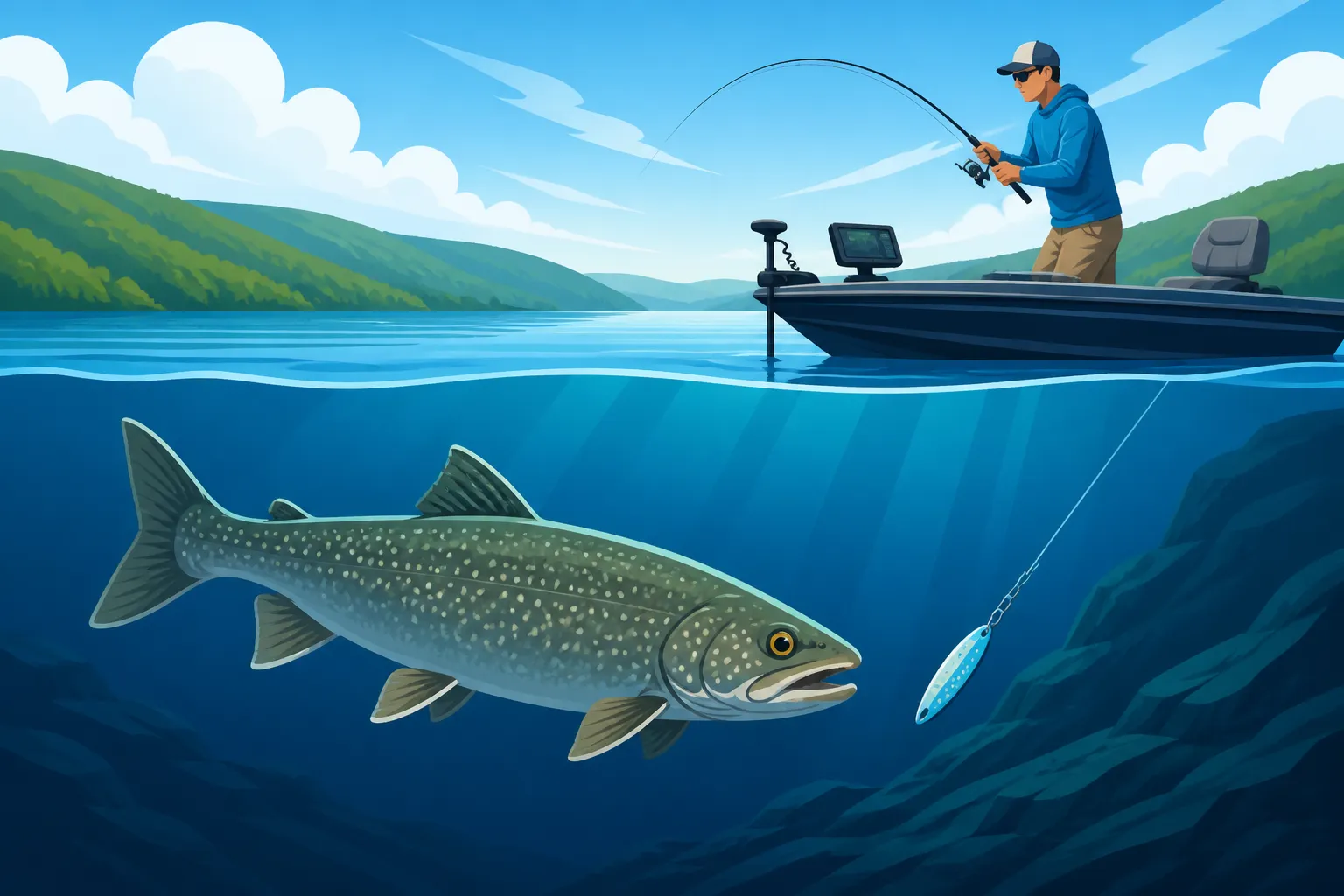
If you're serious about fishing for deepwater lake trout, a downrigger is your best friend. This mechanical device allows you to present a lure at an exact, predetermined depth, far below the surface. A downrigger uses a heavy cannonball weight, attached to a strong cable, to pull your fishing line down. Your main line, with its lure, is clipped to the downrigger cable using a release clip. When a fish strikes, the line pops free from the clip, allowing you to fight the fish directly without the weight of the cannonball.
Operating a downrigger takes a bit of practice. You need to learn how to properly attach the release clip, set your trolling depth, and then reel in the slack in your main line so the rod tip has a nice arc, indicating the lure is running true. Some anglers will run multiple downriggers off their boat, staggering the depths to cover more of the water column, perhaps one at 70 feet and another at 90 feet. Having a reliable system is key, and you can find various models and accessories, from manual to electric, to suit your needs on sites like Amazon. Don't cheap out on your downriggers; they are truly essential for effective deepwater trolling.
Sonar and Electronics: Your Underwater Eyes
In deepwater lake trout fishing, your fish finder is more than just a gadget; it's your primary tool for understanding the underwater world. A good sonar unit will not only show you the depth of the water but, more importantly, it will reveal the thermocline, schools of baitfish, and even individual lake trout. You'll want a unit with a clear, high-resolution display and strong transducer to penetrate those deep waters. Look for arches or distinct marks near the bottom or hovering just above bait schools.
Beyond just finding fish, your electronics help you identify underwater structure, like ledges, drop-offs, or submerged points, which often hold concentrations of lake trout. Many modern units also come with GPS mapping, which is invaluable for marking productive spots, tracking your troll paths, and navigating safely, especially on larger bodies of water like the expansive Seneca Lake. Learning to read your sonar effectively is a skill that develops with experience, but it’s a non-negotiable part of deepwater lake trout success.
Rods, Reels, and Line for Deepwater Battles
When you hook into a sizable lake trout from the depths, you'll appreciate having the right tackle. You need rods that can handle the stress of downrigger fishing, which means they need enough backbone to keep the line taught in the release clip but enough flexibility in the tip to telegraph subtle bites. Typically, a medium-heavy action rod, around 7 to 8.5 feet long, is a good choice for trolling. Look for rods specifically designed for downrigger use, often labeled as "downrigger rods."
For reels, a sturdy level-wind baitcasting reel or a robust spinning reel with a smooth, powerful drag system is essential. Lake trout are strong, and they'll make powerful runs, especially once they feel that hook. Capacity is also important; you’ll be letting out a lot of line, so a reel that can hold 250-300 yards of monofilament or braided line is ideal. For your main line, many anglers prefer a good quality monofilament between 15-20 lb test, especially for its stretch which can absorb some of the shock of a strike. However, some opt for braided lines for their strength and no-stretch sensitivity, often pairing them with a fluorocarbon leader for stealth. Whatever your choice, ensure it’s fresh and regularly inspected for nicks and abrasions, as a lost fish due to line failure after a long fight is incredibly frustrating.
Mastering Deepwater Techniques for Lake Trout
Finding lake trout is one thing; consistently catching them is another. It requires a combination of precise presentation, patience, and a bit of finesse. These techniques are your bread and butter for summer lake trout in the Finger Lakes.
Precision Trolling with Downriggers
Trolling is, without a doubt, the most effective method for covering water and finding active lake trout in the summer. Once you’ve located the thermocline or potential fish on your sonar, the goal is to present your lures at or just above that depth. Start by experimenting with different depths around where you see baitfish or structure. Many anglers will set one lure slightly above the thermocline and another right in it, or even a few feet below it, to see where the fish are most active on that particular day.
Your trolling speed is also critical. Generally, lake trout prefer a slower presentation, often between 1.5 to 2.5 miles per hour, but sometimes faster or slower speeds can trigger strikes. Pay attention to how your lure is performing at different speeds; most trolling lures have an optimal action at a specific speed range. Don't be afraid to make subtle turns and S-curves with your boat; these changes in speed and lure action can often be the trigger for a lethargic lake trout to strike. Keeping an eye on your speed, depth, and lure action will dramatically increase your chances. For more on this, check out our guide on Trolling Techniques for New York's Lakes.
Vertical Jigging for Suspended Lunkers
While trolling covers vast areas, vertical jigging can be incredibly effective when you’ve precisely marked a school of lake trout on your sonar, or you're fishing a deep structure. This technique involves dropping a heavy jig or spoon directly down to the depth where the fish are holding, then working it with an up-and-down motion. The key here is boat control; you need to stay directly over the fish, which can be challenging in wind or current. A good electric trolling motor with GPS "spot-lock" or a sea anchor can be invaluable for maintaining position.
Once your lure reaches the target depth, impart a varied retrieve: sharp jerks, subtle lifts, pauses, and drops. Many strikes occur on the fall, so pay close attention to your line. Sometimes a more aggressive approach works, while other days a subtle jigging motion is key. The beauty of vertical jigging is its directness; when you see those fish on the screen, you can present your lure right in their face. This is particularly useful when fishing over deep humps or rock piles where lake trout are known to congregate.
Choosing the Right Lures and Baits
Lake trout are predators, and they respond well to lures that imitate their natural prey. For deepwater trolling, a variety of spoons are perennial favorites. Brands like Sutton, Michigan Stinger, and Northern King offer excellent options that have proven themselves for generations. These spoons flutter and wobble enticingly, mimicking an injured baitfish. The size and color often depend on the specific lake and the forage base. Generally, brighter colors can work well on overcast days or in deeper, darker water, while more natural patterns are effective in clearer conditions.
Stickbaits and crankbaits that dive deep can also be very effective, especially when pulled behind a downrigger. These lures mimic minnows and other small fish and their erratic action can be irresistible. Additionally, some anglers have success with flasher-fly combinations, where a large rotating flasher attracts attention and a small fly trails behind it. Whatever your choice, having a diverse selection is wise, as lake trout can be finicky. Remember, presentation is everything, so make sure your lure is running true and at the correct depth. Many anglers stock up on these versatile lures through online retailers like Amazon to ensure they have the perfect option for any condition.
Finger Lakes Specifics: Where and How Deep
New York's Finger Lakes are a truly unique and diverse fishery. While general principles apply, understanding the nuances of individual lakes can give you a distinct advantage when targeting lake trout.
Key Finger Lakes for Summer Lake Trout
When it comes to deepwater lake trout in the summer, certain Finger Lakes stand out. Seneca Lake is often considered the king for lake trout, being the deepest of the Finger Lakes and boasting a robust population. Its sheer depth and ample cold water provide ideal habitat all year round. Anglers here often find success along the steep drop-offs and over deep flats. You can learn more about specific depths in our article on Best Depth for Lake Trout in Summer on New York's Seneca Lake.
Cayuga Lake, another deep and expansive Finger Lake, also offers fantastic summer lake trout fishing. Similar to Seneca, targeting the thermocline and areas with good baitfish concentrations is key. Its unique shape and various deep bays provide plenty of structure for lake trout to relate to. Then there’s Keuka Lake, known for its excellent water quality and healthy fish populations, including some very respectable lake trout. While not as deep as Seneca or Cayuga, it still offers plenty of cold, oxygenated water for summer lakers. Don't forget to check out our broader guide on New York's Finger Lakes Fishing Guide for more insights into these incredible bodies of water.
Depth Strategies for Different Lakes
The exact depths at which you’ll find lake trout can vary not only from lake to lake but also week to week within the same lake, depending on weather patterns and the movement of bait. However, here’s a general table to help you get started:
| Finger Lake | Typical Summer Lake Trout Depth Range | Primary Forage (General) | Notes for Anglers |
|---|---|---|---|
| Seneca Lake | 60-120 feet | Alewives, Smelt | Deepest lake, often find them suspended over 150-200+ feet. |
| Cayuga Lake | 50-100 feet | Alewives, Smelt, Sculpin | Large, often target points and steep drop-offs. |
| Keuka Lake | 40-90 feet | Alewives, Smelt | Clear water, subtle presentations can be key. |
| Canandaigua Lake | 30-70 feet | Smelt, Alewives | Shallower than some, but good laker population in summer. |
| Skaneateles Lake | 40-80 feet | Smelt | Very clear water, early morning/late evening bites can be strong. |
Always consult your sonar to pinpoint the thermocline and baitfish schools, as these are the ultimate indicators of where the lake trout will be on any given day.
When fishing these depths, you're looking for subtle changes. A slight bump on your rod tip, a momentary dip, or a surge of your line in the clip could all signal a strike. Don’t be afraid to adjust your depths by just a few feet; sometimes that makes all the difference. For example, if you're trolling at 70 feet and marking fish at 75 feet, drop your lure a bit deeper. Conversely, if you're marking bait at 65 feet, raise your lure to present just above them. Remember that lake trout are often looking up to feed, so sometimes positioning your lure just above a school of bait or a fish you mark can be more effective than going right into the middle of them.
Ultimately, cracking the code of deepwater lake trout in the Finger Lakes during summer is a rewarding challenge. It takes specialized gear, an understanding of fish behavior, and a willingness to adapt. But with these techniques in your arsenal, you'll be well on your way to battling some of New York's most impressive freshwater fish. Tight lines!
Disclaimer
This article is for general informational purposes only and does not constitute professional advice. Laws, prices and regulations vary by location and change over time. Consult a qualified professional for guidance on your specific situation.