Best Moon Phase for Fishing in New York
It's happened to all of us: you plan a perfect fishing trip, conditions seem ideal, but the fish just aren't biting. You start wondering if there's some secret element you're missing. Many anglers believe that the moon, with its powerful gravitational pull, plays a significant role in fish activity. This guide will dive into the fascinating world of lunar fishing theories, exploring how different moon phases might influence your success on the water across New York State, and what you can do to leverage this ancient wisdom.
Understanding the Moon's Influence on Fish Behavior
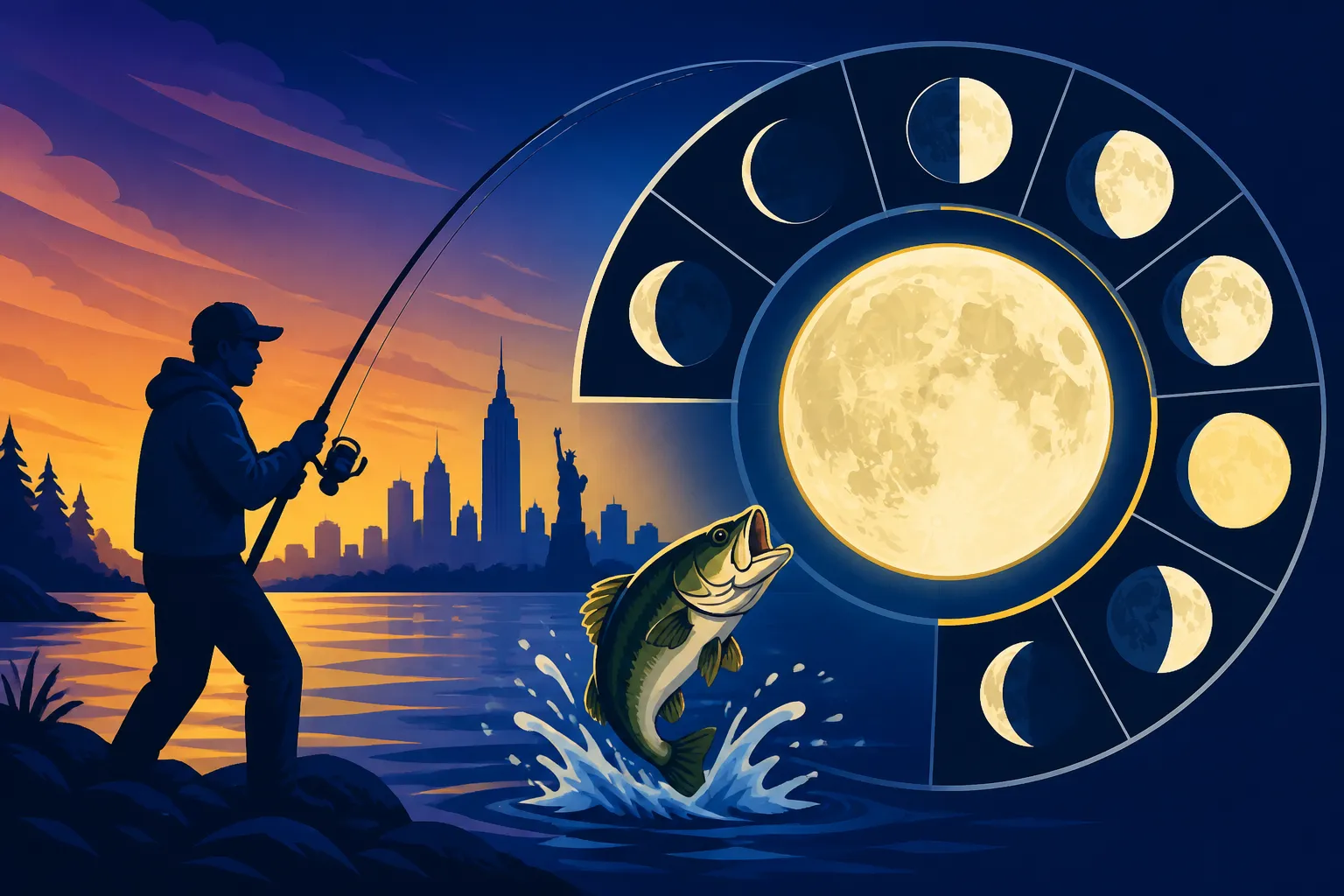
For centuries, anglers and hunters alike have looked to the moon for clues about animal activity. It's not just folklore; the moon exerts a powerful gravitational force that dictates the ocean's tides, and many believe it has subtler effects even in freshwater. While scientific studies often yield mixed results, a vast number of seasoned anglers swear by the moon's power, particularly when it comes to predicting peak feeding times. The idea is that the moon's pull influences not just the water, but also the internal rhythms and feeding cycles of fish, making certain days or times more productive than others.
The challenge, of course, is that fish behavior is a complex puzzle with many pieces. Water temperature, oxygen levels, available forage, barometric pressure, light penetration, and even fishing pressure all play huge roles. So, while we talk about the moon, remember it’s often just one ingredient in a much larger recipe for a successful day out. Don't throw out your entire plan if the moon phase isn't "perfect," but understanding these theories can add another layer to your angling strategy.
The Science (and Speculation) Behind Lunar Cycles
The most obvious and undeniable impact of the moon is on tidal waters. In coastal areas, like Long Island Sound or even the Hudson River which experiences tidal fluctuations far inland, the moon's gravity directly causes the ebb and flow of tides. Fish in these environments are highly attuned to these changes. Moving water often concentrates baitfish, creates current seams, and triggers feeding frenzies as predators ambush their prey. High tides can bring fish closer to shore or into shallower feeding grounds, while outgoing tides might pull them out to deeper channels. You'll often hear saltwater anglers timing their trips not just by the clock, but by the tide charts, which are directly tied to the moon's position.
In freshwater, the connection isn't as direct, but many believe the moon still plays a role through subtle barometric pressure changes, increased light penetration at night, or even through an innate biological clock within the fish themselves, known as a solunar theory. This theory suggests that fish and wildlife activity peaks during new and full moon phases, and at the moon's "rise" and "set" times each day. While it's harder to prove with definitive scientific studies, countless anglers report more active bites during these periods. It's a bit like watching for a specific weather pattern; sometimes the fish just seem more eager to eat when the moon is right.
How Light Levels Influence Fish
Beyond gravity, the moon's illumination is another factor to consider, especially for nocturnal feeders or in environments with clear water. A bright full moon can illuminate the water's surface, affecting species that prefer low light conditions. Some fish might feed more aggressively under the cover of darkness, while others might become more active when a bright moon helps them spot prey. For example, walleye are known to be particularly active at night, and a bright moon can sometimes extend their feeding window or make them more visible to anglers using light-colored lures. Conversely, on a new moon, with very little ambient light, some species might be more daring to venture out from cover during the day, knowing the night will offer profound darkness.
Think about how you'd hunt for bugs in your backyard pond at night. A bright flashlight changes everything, making prey easier to spot but also making you more visible. Fish experience a similar phenomenon. Whether you're fishing a quiet Adirondack lake or one of New York's major waterways like the St. Lawrence River, understanding how light impacts your target species can make a real difference.
The Major Moon Phases and Their Fishing Implications
Let's break down the four main moon phases and what they might mean for your next fishing adventure across New York. Remember, these are general theories, and local conditions always play a huge role. What works for striped bass on the Hudson might be different for trout in a Catskills stream.
New Moon: The Dark Secret Weapon
The new moon is when the moon is positioned directly between the Earth and the sun, making it invisible to us from Earth. This results in the darkest nights of the lunar cycle.
- Impact on Tides: New moons create what are known as "spring tides." This means higher high tides and lower low tides, leading to stronger currents and more significant water movement. For saltwater anglers, this can be a golden opportunity. The increased tidal flow stirs up bait, creates clearer feeding lanes, and often concentrates predators.
- Freshwater Theory: With very little ambient light at night, many freshwater fish might feed more aggressively during daylight hours. The theory is that they feel safer moving about and foraging when the night offers minimal visibility for their own predators. This can lead to increased activity during sunrise and sunset periods during the new moon phase.
- Angler Strategy: For saltwater, target those strong current lines and deeper channels during peak tidal movement. For freshwater, focus on early morning and late evening bites. This is a great time to experiment with more aggressive presentations during the day, as fish might be actively hunting. You might also find fish holding closer to cover.
Full Moon: Bright Nights and Active Bites
The full moon, when the entire face of the moon is illuminated, bathes the landscape in light, sometimes making night almost feel like twilight.
- Impact on Tides: Like the new moon, the full moon also creates spring tides, resulting in strong currents and significant tidal fluctuations. Again, saltwater anglers often look forward to these powerful movements for enhanced feeding opportunities.
- Freshwater Theory: The bright nights of a full moon are often considered a prime time for nocturnal feeders. Fish like walleye, catfish, and even some large bass might be more active at night under the bright lunar glow, feeling confident enough to roam and hunt. This can mean slower daytime fishing in some areas, as fish might have fed heavily overnight. Conversely, some species might use the increased light to their advantage, making them more visible to predators, so they might seek deeper water or denser cover during the day.
- Angler Strategy: Consider night fishing for species known to be active after dark. Using glow-in-the-dark lures or those with rattles can be effective. During the day, you might need to fish deeper or closer to heavy cover where fish might be resting after their nocturnal feasts. Pay close attention to early morning and late evening "crepuscular" feeding times, which can still be very strong even after a night of full-moon activity. Best Time of Day to Fish in New York could offer some additional insights.
Quarter Moons: Stable and Predictable
First quarter and third quarter (or last quarter) moons occur when the moon is half-illuminated. These phases represent a balance in the lunar cycle.
- Impact on Tides: During quarter moons, we experience "neap tides." This means less extreme high and low tides, and generally weaker currents. While this might sound less exciting for saltwater, it can lead to more predictable fishing conditions. Fish might hold in specific areas longer, rather than being constantly on the move with stronger currents.
- Freshwater Theory: Many solunar fishing charts suggest that activity during quarter moons is more moderate compared to the new and full moons. Fish might exhibit more consistent feeding patterns, but without the intense peaks often associated with the other two phases.
- Angler Strategy: This can be a great time for steady, consistent fishing. Focus on typical feeding times (dawn, dusk, and midday), and don't expect dramatic bursts of activity. It's a good time to stick to your tried-and-true techniques and locations. Fish might be less scattered with the calmer conditions, making them easier to pinpoint.
Crescent and Gibbous Moons: The In-Between Periods
The crescent and gibbous phases are the transitional periods between the new and quarter moons, and the quarter and full moons, respectively. The moon is either less than half-lit (crescent) or more than half-lit (gibbous).
- Impact on Tides: Tidal strength during these phases gradually increases or decreases, moving from neap tides towards spring tides (as it approaches full or new moon) or vice versa. The currents will be moderate, offering a middle ground between the extreme movements of spring tides and the calmer conditions of neap tides.
- Freshwater Theory: Fishing activity during these phases is often seen as building towards the peak activity of the new or full moon, or gradually declining from it. There's a gradual shift in how fish respond to light and gravitational pull.
- Angler Strategy: This is a time to be adaptable. If you're approaching a full or new moon, expect activity to increase. If you're coming off one, it might slowly taper off. These phases are excellent for observing patterns and seeing how fish react to the subtly changing conditions. It's a great time to experiment with different depths and presentations.
Integrating Moon Phases into Your New York Fishing Strategy
So, how do you actually use this information when you're planning a trip to one of New York's beautiful fishing spots, whether it's a Finger Lake, the Great Lakes tributaries, or a quiet stream? It’s about combining lunar knowledge with all the other factors that influence fish.
Don't Forget the Weather and Water Conditions
While moon phases are compelling, they rarely override significant weather events or adverse water conditions. A perfect full moon won't help you much if a massive cold front just moved through, dropping water temperatures drastically and sending fish into a funk. Similarly, high, muddy water after heavy rains can shut down a bite regardless of what the moon is doing. Always prioritize safety and consider How Weather Affects Fishing in New York before anything else.
- Barometric Pressure: Often linked to weather fronts, changes in barometric pressure are widely believed to affect fish feeding. Falling pressure often precedes a storm and can trigger a feeding spree, while stable or rising pressure can lead to more consistent, but perhaps not as frenzied, action.
- Water Temperature: This is arguably the most critical factor. Every fish species has a preferred temperature range for feeding and comfort. If the water is too hot or too cold, the moon phase will likely be irrelevant.
- Clarity and Depth: How clear the water is, and how deep you're fishing, will influence how much moonlight penetrates the water and how fish perceive their environment.
Combining Moon Phases with Time of Day
The solunar theory doesn't just look at the overall moon phase, but also the daily moon "rise" and "set" times, and the moon's overhead and underfoot positions. These are often referred to as "major" and "minor" feeding periods.
- Major Periods: These are said to occur when the moon is directly overhead or directly underfoot. These periods typically last an hour or two and are often considered the strongest feeding windows of the day, regardless of the overall moon phase.
- Minor Periods: These occur when the moon is rising or setting. They are generally shorter and less intense than major periods but can still offer good fishing.
Many fishing apps and online calendars provide daily solunar tables. If you're planning a long day on the water, checking these can give you a heads-up on potential peak activity times. It's like having a little extra nudge to be extra focused during those windows.
Where to Find Moon Phase Information
It's easier than ever to track the moon's cycles. You can find detailed moon phase calendars in many fishing magazines, on dedicated weather and astronomy websites, or through various fishing apps available on your smartphone. Many anglers also use specialized solunar tables or apps that predict peak activity times based on the moon and sun's positions. Even general weather apps often include moon phase information. A quick search on Amazon for "fishing solunar calendar" or "moon phase fishing guide" will show you a plethora of resources, from detailed books to simple charts you can laminate and keep in your tackle box.
Practical Tips for Fishing New York's Waters During Different Moon Phases
Let's get down to some actionable advice, keeping New York's diverse fisheries in mind.
Saltwater Fishing (Long Island Sound, Hudson River, etc.)
- New/Full Moon (Spring Tides): These are prime times. Focus on areas where currents accelerate, like inlets, jetties, and channel edges. Use heavier sinkers if needed to hold bottom. Live bait or artificial lures that can be worked effectively in strong currents are key. Think about targeting striped bass or bluefish, which thrive in active water. Striped Bass Fishing on New York's Hudson River is hugely influenced by these tidal swings.
- Quarter Moon (Neap Tides): The calmer tides can make sight fishing or fishing lighter tackle more effective. Fish might be more spread out but could be more predictable in their movements around structure. Consider targeting species like fluke in calmer bays or backwaters, or even blackfish around rocky structures where less current might make them more willing to bite. You might also find that deeper, slower moving stretches of the Hudson become more active as the strong currents lessen.
Freshwater Fishing (Finger Lakes, Great Lakes Tributaries, Adirondack Lakes)
- New Moon (Dark Nights): Focus on daytime fishing. Fish shallower areas or edges of weed beds where bass and panfish might be more active. If targeting walleye, the early evening into twilight can be strong before the deepest darkness sets in. Consider covering more water during the day.
- Full Moon (Bright Nights): This is your cue for night fishing, especially for walleye, channel catfish, or even large smallmouth bass that might patrol shallower areas under the lunar glow. Use dark-colored lures or those with strong silhouettes against the moonlit sky. During the day, fish might retreat to deeper water or dense cover, so slow your presentation and target structure. How to Ice Fish for Walleye in New York or How to Jig for Walleye can be particularly effective tactics during these conditions.
- All Phases (Solunar Peaks): Regardless of the general phase, keep an eye on those daily major and minor solunar periods. Even if it's a slow day, a 90-minute window around a predicted major feeding time can turn the whole trip around. Be ready with your best bait or lure during these windows. This often means having your line in the water and being actively engaged, rather than taking a snack break!
Don't Forget Your Tackle and Preparation
The moon phase isn't a magic bullet, but it's another piece of the puzzle. Just like you wouldn't go salmon fishing on Lake Ontario without the right gear, you shouldn't ignore the importance of being well-prepared. Make sure your lines are fresh, your hooks are sharp, and you have a variety of lures and baits. If you're planning on night fishing during a full moon, a reliable headlamp from Amazon or your local tackle shop is essential, as is knowing the regulations for nighttime angling in your specific location.
Also, remember the importance of a valid New York fishing license! Always check the current regulations for the specific waters you plan to fish, as season dates and catch limits can vary wildly across the state, especially for different species. For instance, New York Freshwater Fishing Rules are different from New York Saltwater Fishing Registration Guide. Don't get caught unaware, or your moon-phase advantage will be the least of your worries!
The Takeaway: A Tool, Not a Rule
Ultimately, the best moon phase for fishing in New York, or anywhere else, is the one that gets you out on the water. While many anglers swear by solunar theories and moon phase predictions, they are best used as a tool to enhance your understanding and planning, not as an unbreakable rule. Don't let a "bad" moon phase keep you home if the weather is good and you have a window of opportunity. The simple act of fishing is often its own reward, and sometimes, the fish will surprise you regardless of what the moon is doing.
Consider the moon's influence as another factor to weigh in your fishing equation, right alongside water temperature, barometric pressure, time of day, and bait availability. Pay attention to your own experiences on the water; keep a fishing log to see if you notice patterns related to the moon. You might find that for your local spots and target species, the moon truly does play a consistent role. Happy fishing, and may the moon be ever in your favor!
Disclaimer
This article is for general informational purposes only and does not constitute professional advice. Laws, prices and regulations vary by location and change over time. Consult a qualified professional for guidance on your specific situation.