New York’s Panfish Species Explained
Many anglers, especially beginners or those looking for a relaxing day on the water, often overlook some of the most accessible and enjoyable fish New York has to offer: panfish. These smaller species, while not always the biggest fighters, provide endless fun, fantastic table fare, and are often found in abundance, making them perfect for family outings or a quick fishing fix. This comprehensive guide will dive deep into the diverse world of New York's panfish species, helping you identify them, understand their habits, and master the techniques to catch them consistently.
Understanding New York's Panfish: More Than Just "Small Fish"
When we talk about "panfish" in New York, we're really talking about a collection of smaller freshwater fish species that are generally sized perfectly to fit in a frying pan – hence the name! They might not offer the same trophy-hunting thrill as a massive lake trout or a hard-fighting muskie, but what they lack in size, they more than make up for in sheer numbers, availability, and their willingness to bite. For many of us, catching panfish was our very first introduction to fishing, sparking a lifelong passion.
Why Panfish Are So Popular with Anglers
Panfish are the unsung heroes of New York's freshwater fisheries. They're incredibly widespread, inhabiting almost every pond, lake, and slow-moving river throughout the state. This accessibility means you don't need a fancy boat or expensive gear to target them; a simple rod, some basic tackle, and a worm are often all it takes. This makes them ideal for kids, new anglers, or anyone who just wants to enjoy the peace and quiet of fishing without the pressure of chasing a behemoth. Their abundance also means more bites, which translates to more excitement, especially for impatient young anglers.
Beyond the thrill of the catch, panfish are also celebrated for their culinary value. Species like yellow perch and crappie are highly regarded for their delicate, flaky white meat, making them a delicious reward for a successful outing. Their smaller size makes them easy to clean and prepare, perfect for a fresh-caught meal. And let's be honest, there's nothing quite like frying up a batch of fresh panfish after a day on the water.
Common Misconceptions About Panfish Fishing
A common misconception is that panfish fishing is only for beginners or that it's too simple to be engaging. While it's true that panfish are often easier to catch than larger, more elusive species, seasoned anglers know that truly mastering panfish techniques can be incredibly rewarding. There are subtle nuances in presentation, bait selection, and understanding their seasonal movements that can turn a "good" day into an "epic" one. For instance, knowing when to switch from a worm to a tiny jig, or how to work a school of crappie suspended over deep water, requires skill and experience.
Another misconception is that panfish don't put up a fight. While they won't spool your reel like a salmon, a feisty bluegill on an ultralight rod can be a surprisingly spirited battle. The light tackle allows you to feel every head shake and run, amplifying the experience. Plus, catching dozens of fish in a single outing often outweighs the singular thrill of a much larger, but less frequent, catch.
The Ubiquitous Bluegill: A Childhood Favorite
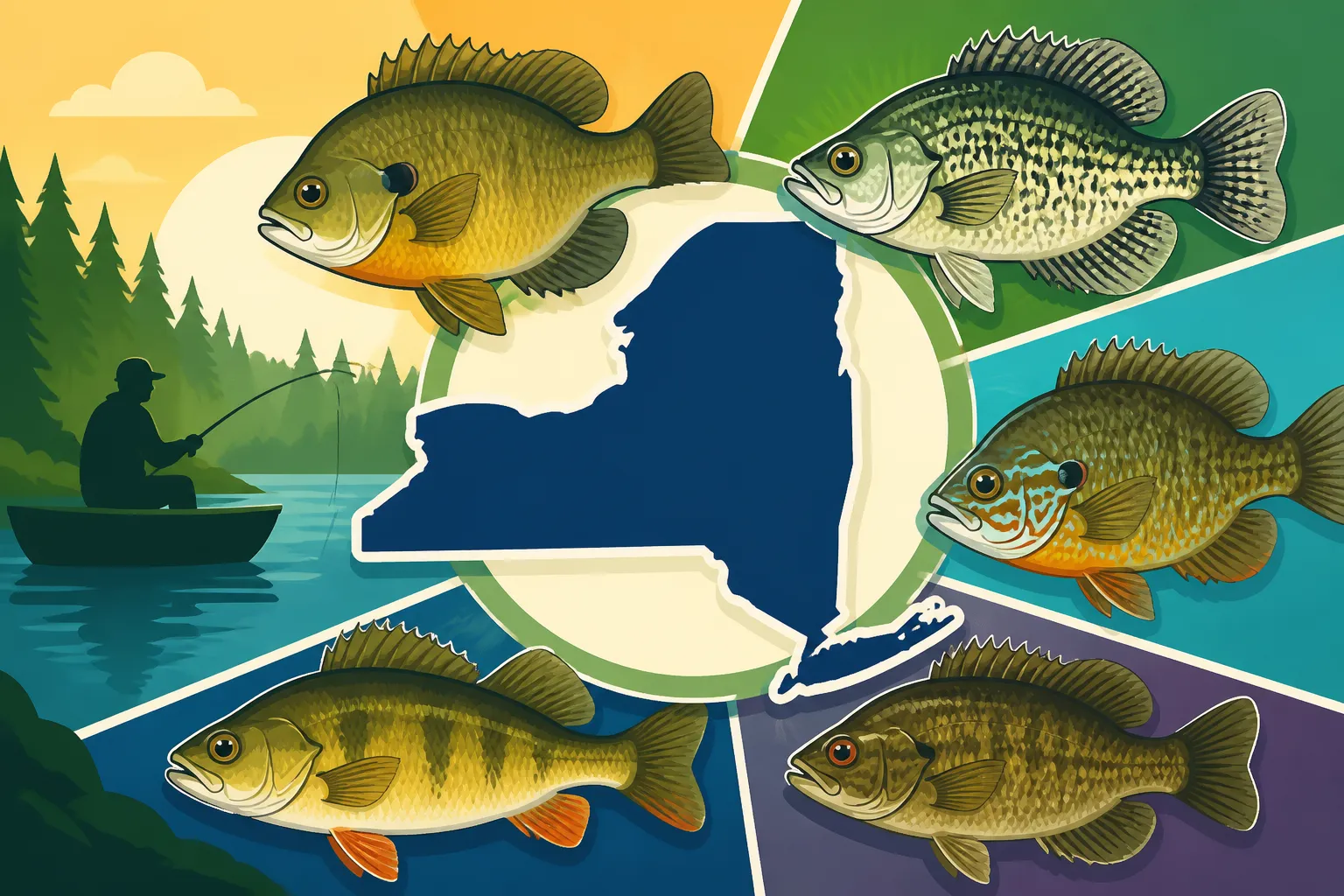
Ah, the bluegill! For many New York anglers, the bluegill (often just called a "sunny" or "bream") was the very first fish they ever caught. These vibrant, eager biters are a staple in ponds, lakes, and slow-moving rivers across the state, providing endless enjoyment for anglers of all ages. They're recognized by their distinct deep, compressed body, small mouth, and the dark spot on the gill cover, which often has a "bluegill" iridescent sheen, especially in males.
Identification and Characteristics of New York Bluegill
Bluegill are quite distinctive once you know what to look for. They typically have an olive-green back that fades into lighter sides with a yellowish or orange belly, sometimes with faint vertical bars. The most obvious identifying mark is that dark, almost black "ear flap" on the rear edge of their gill cover. This spot can be entirely black or have a bluish rim, giving them their common name. They possess a small mouth that doesn't extend past the front of the eye. While they generally grow to a length of 6-8 inches, some larger specimens in nutrient-rich waters can reach impressive sizes of 10 inches or more, often weighing over a pound.
Their fins are usually olive to dusky in color, with the dorsal and anal fins often sporting a small, dark blotch near the base. Males tend to be more brightly colored, especially during spawning season, with vivid orange bellies. You might notice slight differences in coloration depending on the water clarity and diet of the bluegill in a particular lake, but that classic "gill flap" is almost always a dead giveaway.
Preferred Habitat and Behavior
Bluegill are incredibly adaptable and thrive in a wide variety of freshwater environments, but they particularly love clear, warm waters with plenty of aquatic vegetation. You'll find them schooling around weed beds, submerged logs, lily pads, and docks – anywhere they can find cover from predators and ambush insects or small aquatic invertebrates. They prefer shallower waters during warmer months, especially during spawning, and will retreat to deeper areas as the water cools.
During the spring and early summer, bluegill actively construct saucer-shaped nests in shallow, sandy, or gravelly bottoms. You can often spot these "bluegill beds" as clusters of circular depressions. Males guard these nests aggressively, making them easy targets for anglers during this period. They are primarily insectivores, feasting on aquatic insects, larvae, and small crustaceans, but they won't hesitate to munch on smaller minnows or fish eggs when the opportunity arises. Understanding their preference for cover and their spawning habits is key to consistent success.
Best Fishing Techniques and Baits for Bluegill
Catching bluegill is often as simple as it gets, making it perfect for teaching kids How to Fish With Kids in New York. A light or ultralight spinning rod and reel combo, spooled with 4-6 pound test monofilament, is ideal. For bait, nothing beats a small piece of a nightcrawler or a red worm presented under a bobber. The bobber helps suspend the bait at the right depth and signals even the most subtle bites. Crickets, grasshoppers, and even corn kernels can also be effective.
For those who enjoy artificial lures, tiny jigs (1/32 or 1/64 ounce) tipped with a small plastic grub or a wax worm can be incredibly productive. These can be fished under a bobber or slowly retrieved without one. Fly fishing for bluegill with small poppers, nymphs, or wet flies on a light fly rod is also a blast, offering a delicate challenge. When you find a school of bluegill, the action can be non-stop, making it one of the most exciting experiences for new anglers. Many excellent ultralight rod and reel combos for panfish are readily available through retailers like Amazon, often bundled at a great price. You'll find that these smaller fish put up a surprisingly good fight on such light gear.
Pumpkinseed Sunfish: A Splash of Color
If the bluegill is the friendly neighbor, the pumpkinseed sunfish is the flamboyant relative with a tropical flair. These incredibly beautiful fish share many similarities with bluegill but stand out with their vibrant, intricate coloration and unique markings. They are another beloved panfish species found throughout New York, offering a visually stunning catch alongside a spirited fight on light tackle.
Identification and Characteristics of New York Pumpkinseed
The pumpkinseed sunfish is arguably one of New York's most visually striking freshwater fish. They have a deep, laterally compressed body much like the bluegill, but their coloration is a kaleidoscope of greens, oranges, yellows, and blues, often with iridescent spots and wavy blue lines on their cheeks and gill covers. The most distinguishing feature, and what truly sets them apart from bluegill, is the bright orange or red spot on the rear edge of their black "ear flap." This small, vivid splash of color is almost always present and makes identification easy.
Their mouths are also small, not extending beyond the front edge of the eye, similar to bluegill. Pumpkinseeds typically don't grow as large as bluegill, usually topping out around 6-7 inches, though larger specimens are certainly caught. Their fins are generally clear to dusky, complementing their vibrant bodies. Each fish can have slightly different patterns, making every pumpkinseed a unique and beautiful catch.
Preferred Habitat and Behavior
Pumpkinseed sunfish share a similar preference for habitat with bluegill, often being found in the same waters. They thrive in clear, vegetated lakes, ponds, and slow-moving rivers. Look for them around aquatic plants, submerged timber, rocky shorelines, and docks. They are particularly fond of dense weed beds where they can hide from predators and ambush their prey. While they can tolerate a range of conditions, they seem to prefer areas with slightly less turbidity than some other panfish.
Like bluegill, pumpkinseeds are primarily insectivores, feeding on a diet of aquatic insects, snails, small crustaceans, and sometimes larval fish. Their small, protractile mouths are perfectly adapted for picking small organisms off vegetation or the bottom. They are also nest builders, creating depressions in shallow, soft bottoms, often in close proximity to bluegill nests. They are active throughout the day, making them an excellent target for casual anglers anytime the sun is shining.
Best Fishing Techniques and Baits for Pumpkinseed
Fishing for pumpkinseed is very similar to fishing for bluegill, which is great news because you'll often catch both species in the same spots using the same methods. Ultralight spinning gear with 2-4 pound test line is perfect for maximizing the fun. Small hooks (size 8-12) baited with a tiny piece of nightcrawler, a red worm, or a wax worm are highly effective. You can rig these under a small bobber, allowing the bait to drift naturally near cover or over a known bluegill/pumpkinseed bed.
Tiny artificial lures such as micro-jigs (1/64 to 1/80 ounce) tipped with plastic grubs, maggots, or even scented soft plastics can also draw strikes. Fly anglers can have a blast using small dry flies, wet flies, or tiny poppers that imitate insects struggling on the surface. Because pumpkinseeds are often found in numbers, once you locate a school, you can expect steady action. Remember to check local New York Freshwater Fishing Rules for any specific regulations, although panfish are generally quite lenient.
Crappie: The Delicious Duo of Black and White
Crappie, both black and white, are perhaps the most sought-after panfish in New York, revered by anglers for their aggressive bites and, especially, their exceptional table quality. Known for their "slab" sides, these fish can grow to respectable sizes, offering a more substantial fight and a truly delicious fillet. They often school in large numbers, making for incredibly productive fishing when you locate them.
Black Crappie: Identification and Characteristics
The black crappie is a beautiful fish, typically sporting a silvery body adorned with irregular, dark black speckles and blotches that look like someone splattered paint on them. This pattern is often random and covers their entire body, distinguishing them from their white crappie cousins. They have a deep, compressed body, giving them that classic "slab" look. One key identification feature is their dorsal fin, which typically has 7 or 8 spines (usually 7). Their mouth is relatively large for a panfish, extending beyond the middle of the eye.
Black crappie in New York can grow quite large, with 10-12 inch fish being common in good habitats, and true "slab" crappie exceeding 14 inches and weighing over a pound not uncommon. Their eyes are large, hinting at their preference for low light conditions and predatory nature. They are a staple of many New York lakes and provide fantastic angling opportunities.
White Crappie: Identification and Characteristics
White crappie share the same deep, compressed body shape as their black crappie relatives, but their markings are quite different. Instead of irregular speckles, white crappie typically have 5 to 10 distinct vertical bars or stripes along their silvery sides. These bars are usually more pronounced and evenly spaced. The other crucial identifying factor is their dorsal fin, which almost always has 6 spines (rarely 5 or 7, but 6 is the norm). Their mouth is similar to the black crappie, extending past the middle of the eye.
White crappie also grow to impressive sizes, often reaching and exceeding the dimensions of black crappie. While both species exist in New York, white crappie tend to prefer slightly more turbid (murky) water than black crappie, though they can often be found in the same systems. The vertical bars and the dorsal fin spine count are your best bet for telling them apart on the spot.
Preferred Habitat and Behavior of Both Crappie Species
Both black and white crappie are schooling fish, and finding one often means finding many. They are highly structure-oriented and will congregate around submerged timber, brush piles, docks, bridge pilings, and weed lines. Black crappie tend to favor clearer water with abundant vegetation, while white crappie often tolerate more turbid conditions, which is why you might find them more prevalent in some larger rivers and impoundments.
During the warmer months, crappie will often suspend themselves in open water, particularly over deeper humps or channels, chasing schools of baitfish. In spring, they move into shallow waters to spawn, creating nests in submerged vegetation or soft bottoms. This shallow-water presence makes them highly accessible. As winter approaches, they often move to deeper, warmer waters, congregating in large schools, which is a prime time for ice fishing. Knowing their seasonal movements and preference for structure is paramount for consistent crappie success. Many of New York's Best Lakes for Fishing are renowned for their crappie populations.
Best Fishing Techniques and Baits for Crappie
Crappie fishing is incredibly fun, especially when you hit a school. A light or ultralight rod with 4-6 pound test line is perfect. The most popular technique involves using small jigs, typically 1/16 to 1/8 ounce, tipped with small plastic grubs, tubes, or curly-tail baits. These can be cast and slowly retrieved, or suspended under a bobber. Tipping a jig with a live minnow or a wax worm can make it even more irresistible. Many anglers use crappie rigs with two hooks, doubling their chances of a bite.
Live minnows are also incredibly effective, either fished under a bobber or slowly trolled. In deeper water, vertical jigging with small spoons or blade baits can be very productive, especially when crappie are suspended. For those venturing out on the ice, small teardrop jigs tipped with spikes or wax worms, fished in brush piles or over deeper structure, will often fill a bucket. Crappie are generally willing biters, but their soft mouths require a gentle touch when setting the hook to avoid tearing out. Stock up on small jigs, bobbers, and hooks, which are readily available through retailers like Amazon.
Yellow Perch: The Striped Delicacy
The yellow perch is another beloved panfish in New York, instantly recognizable by its distinctive vertical stripes. These incredibly popular fish are prized by anglers not only for their cooperative nature and widespread availability but, perhaps most importantly, for their absolutely delicious, flaky white meat. A stringer of fresh yellow perch is a truly fantastic reward after a day on the water.
Identification and Characteristics of New York Yellow Perch
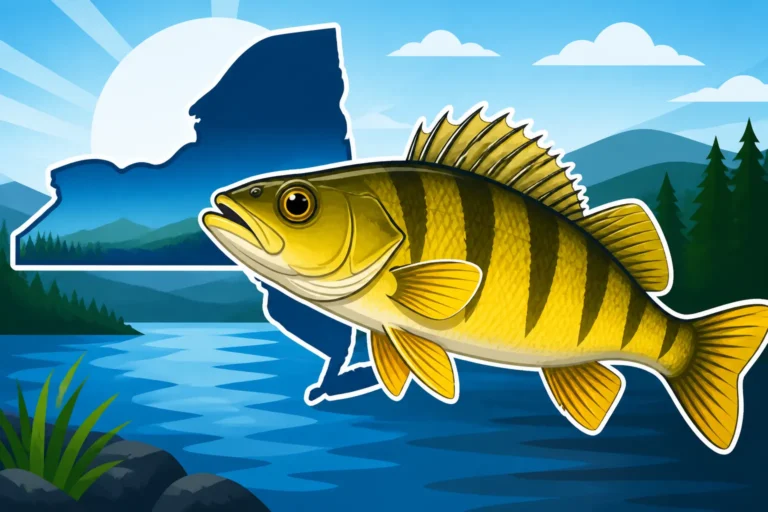
Yellow perch are easily identified by their striking appearance. They possess an elongated, somewhat compressed body, typically ranging from a bright yellow to golden-brown color on their sides, fading to a lighter, often white, belly. Their most prominent feature is the 6-8 dark, vertical bars that run down their sides, giving them a distinctly "striped" look. Their dorsal fins are separated, with the front dorsal fin being spiny and the rear one soft-rayed. The lower fins (pelvic, anal, and caudal) are often tinged with orange or red, especially during spawning season, adding to their vibrant coloration.
Yellow perch typically grow to lengths of 6-10 inches in New York, with larger specimens reaching 12-14 inches and weighing over a pound. These "jumbos" are highly sought after. They have a moderately sized mouth and tend to congregate in schools, making them a prime target for anglers, particularly during the ice fishing season.
Preferred Habitat and Behavior
Yellow perch are incredibly widespread and can be found in almost every major lake, pond, and slow-moving river system throughout New York. They prefer cool, clear waters with moderate vegetation and some open areas for schooling and feeding. You'll often find them associating with structure such as weed lines, drop-offs, submerged timber, and rocky bottoms. They are particularly abundant in the Great Lakes (Lake Erie and Lake Ontario) and the larger Finger Lakes.
Perch are schooling fish and are often found in large aggregations, sometimes numbering in the hundreds. They are opportunistic feeders, primarily consuming aquatic insects, crustaceans (like crayfish and scuds), and the eggs and fry of other fish species, including their own. Their schooling behavior makes them a fantastic target for anglers, as once you find a school, you can often catch multiple fish in short order. During winter, they remain active, making them a premier ice fishing target. Best Time to Fish for Walleye in New York might cover some shared habitats with perch.
Best Fishing Techniques and Baits for Yellow Perch
Yellow perch are not particularly picky eaters, which makes them a joy to catch. Light spinning gear with 4-6 pound test line is perfect for their size. When it comes to bait, live options are often superior. Small pieces of nightcrawler, red worms, wax worms, spikes (maggots), and small minnows are all highly effective. These can be fished under a small bobber, especially in shallower waters, or on a simple bottom rig with a small sinker and a hook.
Artificial lures can also be very productive. Small jigs (1/32 to 1/8 ounce) tipped with a soft plastic grub, tube, or a minnow imitation are excellent. Small spoons, especially those designed for ice fishing, can also trigger bites when jigged vertically. For ice fishing, small teardrop jigs tipped with a maggot or wax worm, actively jigged just off the bottom or suspended at various depths, is a go-to technique. The key is often to locate the schools; once you do, steady action usually follows. For those who want to learn more, How to Catch Yellow Perch on New York's Lake Erie provides specific details for one of the best perch fisheries.
Rock Bass: The Feisty Bottom Dwellers
The rock bass, sometimes colloquially known as a "redeye" due to its distinctive red eyes, is another feisty and often overlooked panfish species in New York. While not as widely distributed or as popular for the table as crappie or perch, rock bass offer a surprisingly aggressive fight for their size and are a fun target, particularly in rocky, clear-water environments.
Identification and Characteristics of New York Rock Bass
Rock bass have a robust, somewhat chunky body that is less compressed than sunfish or crappie, giving them a more "bass-like" profile, though they are still very much a panfish. Their coloration typically ranges from olive-brown to brassy green, often with dark, irregular mottling or spots along their sides. The most distinctive feature, and the reason for one of their nicknames, is their prominent red or reddish-orange eyes. This unique eye color sets them apart immediately.
They possess a relatively large mouth that extends back to about the middle of the eye, broader than a bluegill's but not quite as large as a largemouth bass. Their dorsal fin is continuous, not separated like a perch's. While they don't grow to huge sizes, a common rock bass ranges from 6-10 inches, and anything larger is considered a trophy. They are known for their hardy nature and willingness to bite.
Preferred Habitat and Behavior
True to their name, rock bass absolutely love rocky habitats. You'll find them predominantly in clear, cool-to-warm waters of lakes, ponds, and streams that feature plenty of rocky structure, rip-rap, boulders, and submerged logs. They are less common in soft-bottomed, weedy environments preferred by some other sunfish species. They often hide in crevices, under rocks, or in the shadows of submerged timber, waiting to ambush prey. Many of New York's Adirondack lakes and streams, with their rocky bottoms and clear waters, are prime rock bass territory.
Rock bass are opportunistic predators, with a diet consisting of aquatic insects, crayfish, small minnows, and the fry of other fish species. They are less likely to suspend in open water like crappie and tend to stick close to the bottom and structure. They are active during the day and can be quite aggressive, often striking at baits that are nearly as big as they are. This aggressive behavior makes them a fun target, especially for beginners or those seeking consistent action.
Best Fishing Techniques and Baits for Rock Bass
Catching rock bass is usually not a difficult task, as they are notoriously aggressive feeders. Again, light or ultralight spinning gear with 4-6 pound test line is your best friend. For bait, live options are excellent: a lively minnow, a plump nightcrawler, or even a crayfish imitation are all highly effective. These can be fished on a simple jig head, under a bobber, or on a light bottom rig.
Artificial lures also work wonders. Small spinners, inline spinners (like Mepps or Rooster Tail), small crankbaits, and jigs tipped with soft plastic grubs are all proven rock bass magnets. They aren't shy about hitting larger baits, so don't be afraid to try something a bit more substantial than what you'd use for a bluegill. Focus your efforts around rocky shorelines, submerged rock piles, and points, casting your lure or bait close to the structure. When fly fishing, small streamers or wet flies that imitate minnows or crayfish can be very productive.
Other Notable Panfish Species in New York
While bluegill, pumpkinseed, crappie, yellow perch, and rock bass are the main stars of New York's panfish show, the state's waters are home to a few other species that fall under the general "panfish" umbrella. These might be less common or popular in certain areas but still contribute to the diverse angling opportunities available and are well worth knowing about.
Green Sunfish: The Hybridizer
The green sunfish is another member of the sunfish family found in New York, though often less abundant than bluegill or pumpkinseed. They have a slightly more elongated body than their common cousins, with a larger mouth that extends beyond the front of the eye. Their coloration is typically a dark olive to emerald green, often with iridescent blue or green spots on their body and fins, and wavy blue lines on their cheeks. The dark "ear flap" on their gill cover is often rimmed with orange or white, but it lacks the distinct red spot of the pumpkinseed.
Green sunfish are extremely hardy and tolerant of poor water quality, making them common in smaller ponds, ditches, and slow-moving streams where other fish might struggle. They are also notorious for hybridizing with other sunfish species, particularly bluegill, which can make identification a bit tricky sometimes! They respond well to similar baits and techniques used for bluegill and pumpkinseed, favoring small worms and jigs fished near cover.
Warmouth: The Sunfish with a Bass Mouth
The warmouth, another lesser-known sunfish in New York, truly lives up to its name with a mouth that's notably larger and more bass-like than most other sunfish. Their body is robust, not as compressed as a bluegill, and they typically have a mottled olive to brown coloration. You might see faint vertical bars or irregular blotches, and they often have red or orange spots on their operculum (gill cover). Their eyes are usually reddish.
Warmouth prefer warm, often murky waters with heavy vegetation, brush, or submerged timber. They are more predatory than bluegill, often feeding on small minnows, crayfish, and large aquatic insects. They don't typically grow very large in New York, usually 6-8 inches, but they are aggressive fighters. Target them with small minnows, worms, or small jigs and spinners fished in dense cover. They are a rarer find than other panfish but a welcome surprise for any angler.
White Perch: A Marine Invader Turned Freshwater Resident
While technically not a "true perch" (they are more closely related to striped bass), white perch are a common panfish target in New York, particularly in brackish and freshwater systems connected to the Atlantic Ocean. They are an invasive species in many of New York's freshwater lakes and rivers, having migrated or been introduced from their native brackish habitats. They have a silvery, somewhat elongated body with a slightly humped back and lack the distinct vertical bars of the yellow perch. Their dorsal fins are separated.
White perch are voracious feeders and can quickly outcompete native species. They are often found in large schools, and once located, they can provide fast action. They respond well to small minnows, worms, and tiny jigs or spoons, especially when suspended in open water or near structure. While not as highly prized for the table as yellow perch, they are still decent eating, especially the smaller ones. Always check New York Freshwater Fishing Rules regarding any specific regulations or invasive species warnings related to white perch.
Targeting Panfish: General Tips for Success
Whether you're after bluegill, crappie, perch, or any other panfish, there are some fundamental strategies that will significantly increase your success rate in New York's waters. Panfish are generally cooperative, but a little planning and understanding of their habits can make all the difference between a few bites and a full stringer.
Essential Gear and Tackle for Panfish
You don't need a massive investment to get into panfishing. The beauty of these species is their accessibility. A lightweight or ultralight spinning rod (4-6 feet long) paired with a small spinning reel (500-1000 size) is ideal. Spool it with light monofilament or fluorocarbon line, typically 2-6 pound test. This light setup makes even a small bluegill feel like a trophy fish and allows for delicate presentations. You can find excellent value combos designed for panfish that perform wonderfully. For specific setups, consider How to Set Up a Rod for Panfish.
Your tackle box should include:
- Hooks: Small hooks, sizes 6-12, are perfect. Baitholder hooks are good for worms.
- Bobbers: Small, sensitive bobbers are crucial for detecting subtle bites. Slip bobbers are excellent for fishing deeper water.
- Sinkers: Tiny split shots or small bullet weights to get your bait down.
- Jigs: A variety of small jigs (1/32 to 1/8 ounce) in different colors, tipped with small plastic bodies (grubs, tubes, curly tails) or live bait.
- Live Bait Container: Keep your worms or minnows fresh.
For those venturing into ice fishing for panfish, a short, sensitive ice rod, a small jigging reel, an auger, and a selection of small teardrop jigs and spoons are essential. Even specialized ice fishing gear for panfish, like tip-ups and small jigs, is easily purchased on Amazon.
Locating Productive Panfish Waters and Spots
Panfish are abundant throughout New York, but finding the best spots takes a bit of observation. Look for waters known for their healthy panfish populations, often found in New York's smaller lakes, farm ponds, and slow-moving rivers. For larger bodies of water, consult local fishing reports or bait shops. Best Fishing Spots in New York can offer some excellent starting points.
Once you're at the water, identify areas with cover and structure:
- Weed beds and lily pads: These provide shelter and food sources.
- Submerged timber and brush piles: Excellent hiding spots for all panfish.
- Docks, piers, and bridges: Man-made structures attract fish.
- Drop-offs and ledges: Especially for crappie and perch, these transition areas can hold schooling fish.
- Spawning beds: In spring, look for clusters of circular depressions in shallow, sandy areas for bluegill and pumpkinseed.
Using polarized sunglasses can help you spot structure or even schools of fish in clear water. A portable fish finder can also be invaluable, especially for locating crappie and perch suspended in open water or identifying submerged brush piles.
Seasonal Strategies and Timing for Panfish
Panfish can be caught year-round in New York, but their behavior and location will shift with the seasons.
- Spring: This is prime time as panfish move shallow to spawn. Look for them in bays, coves, and along shorelines with emerging vegetation. They'll be aggressive and relatively easy to catch.
- Summer: As waters warm, panfish might move a bit deeper, especially during the heat of the day, seeking cooler water and denser cover. Early morning and late evening bites can be best. They'll still be in and around weed beds and docks.
- Fall: As water temperatures drop, panfish begin to school up more tightly and move toward deeper structure. This can be a fantastic time for crappie and perch, as they feed heavily before winter.
- Winter (Ice Fishing): Panfish remain active under the ice, often congregating in large schools over deeper humps, channels, or brush piles. Ice fishing for panfish is incredibly popular in New York. Understanding New York Ice Fishing Rules is crucial for safe and legal angling.
Always pay attention to the New York Fishing Season Dates and Catch Limits for specific species, as well as any special regulations for the body of water you're fishing.
Conservation and Enjoying Your Panfish Catch
Panfish are generally abundant, but responsible angling practices are still crucial to ensure healthy populations for future generations. Enjoying your catch, whether you're releasing it or bringing it home for dinner, is part of the joy of fishing.
Practicing Catch and Release for Panfish
While many anglers keep panfish for the table, practicing catch and release, especially for larger specimens, can help maintain healthy populations and improve the overall size structure of the fish in a given water body. Big crappie, perch, and sunfish are important for passing on strong genetics.
If you plan to release fish:
- Handle with care: Minimize handling time and keep the fish wet.
- Use appropriate tools: A pair of small pliers or hemostats can help quickly remove hooks without causing excessive damage to the fish's mouth.
- Barbless hooks: Consider using barbless hooks, which make release much easier and less traumatic.
- Revival: If a fish seems sluggish, gently hold it in the water, facing into any current, until it swims away on its own.
- For more detailed guidance, refer to New York Catch-and-Release Trout Fishing Rules, as many principles apply broadly to all fish species.
Preparing and Cooking Your Panfish
One of the greatest rewards of panfishing is bringing home a fresh meal. Panfish, particularly yellow perch and crappie, are renowned for their delicate, flaky white meat. Bluegill and pumpkinseed also make excellent eating, especially when filleted.
Here's a basic overview:
- Cleaning: The most common method is to fillet the fish. A sharp fillet knife makes this process quick and easy. You can also scale and gut smaller panfish to cook them whole.
- Rinsing: Rinse the fillets or whole fish thoroughly under cold water.
- Seasoning: A simple seasoning of salt, pepper, and perhaps some garlic powder or paprika is often all you need.
- Cooking Methods:
- Frying: The classic method. Dredge fillets in seasoned flour, cornmeal, or a fish fry batter and fry in hot oil until golden brown and flaky.
- Baking: Place seasoned fillets on a baking sheet with a pat of butter or a drizzle of olive oil. Bake at 375-400°F (190-200°C) until cooked through.
- Grilling: Larger fillets can be grilled, especially in a fish basket, to prevent them from falling apart.
Don't be afraid to experiment with different recipes. Fresh panfish is truly one of the best eating experiences you can have from New York's waters, rivaling even Best Eating Fish From Lake Ontario.
Panfish Limits and Regulations
Before you head out, always make sure you're familiar with the current New York Fishing Regulations Explained. While panfish generally have generous bag limits compared to other species, these can vary by water body and species. For instance, there are often specific Panfish and Sunfish Limits in New York that anglers must adhere to.
Always carry your valid New York fishing license with you, and review the New York State Department of Environmental Conservation (DEC) regulations guide. These rules are in place to ensure sustainable fishing and protect New York's precious aquatic resources for everyone to enjoy. Understanding and following these guidelines is every angler's responsibility.
Comparing New York's Top Panfish Species
To help you keep track of these fantastic fish, here's a quick comparison of the main panfish species you're likely to encounter in New York.
| Feature | Bluegill | Pumpkinseed | Black Crappie | White Crappie | Yellow Perch | Rock Bass |
|---|---|---|---|---|---|---|
| Typical Size (inches) | 6-8 (up to 10+) | 5-7 (up to 9) | 10-12 (up to 14+) | 10-12 (up to 14+) | 6-10 (up to 14+) | 6-10 (up to 11) |
| Distinguishing Mark | Dark spot on gill cover, often bluish | Bright red/orange spot on gill flap | Irregular black speckles/blotches | 5-10 distinct vertical bars | 6-8 dark vertical stripes, often red fins | Prominent red/orange eyes, mottled body |
| Dorsal Fin Spines | 10-12 (spiny fin continuous) | 10-11 (spiny fin continuous) | 7-8 | 6 | 12-14 (spiny fin separated) | 11-12 |
| Mouth Size | Small (not past eye) | Small (not past eye) | Large (past middle of eye) | Large (past middle of eye) | Moderate | Large (to middle of eye) |
| Preferred Habitat | Clear, warm, vegetated lakes/ponds | Clear, warm, vegetated lakes/ponds | Clearer water, structure (brush, docks) | Turbid water, structure (brush, docks) | Cool, clear lakes, vegetation, structure | Rocky bottoms, clear streams/lakes |
| Best Baits | Worms, crickets, tiny jigs | Worms, wax worms, tiny jigs | Minnows, small jigs, tubes | Minnows, small jigs, tubes | Worms, minnows, spikes, small jigs | Minnows, worms, small spinners/crankbaits |
| Table Quality | Good | Good | Excellent | Excellent | Excellent | Fair to Good |
| Fight on Light Tackle | Very good, spirited | Good, persistent | Good, especially large ones | Good, especially large ones | Good, strong runs | Aggressive, hard-fighting |
This table serves as a quick reference, but remember that fish coloration and behavior can vary slightly based on their environment. The most important thing is to get out there, observe, and enjoy the incredible panfish diversity New York has to offer!
Disclaimer
This article is for general informational purposes only and does not constitute professional advice. Laws, prices and regulations vary by location and change over time. Consult a qualified professional for guidance on your specific situation.