Best Fishing Spots on the Oswego River in Downtown Oswego
Finding the perfect fishing spot in a bustling urban environment can feel like searching for a needle in a haystack, especially with a river as dynamic and celebrated as the Oswego. You know the fish are there, but navigating the concrete banks, understanding seasonal runs, and knowing where to drop your line for the best shot can be intimidating. This guide is designed to cut through the confusion, highlighting the absolute best fishing spots right in downtown Oswego, helping you connect with the incredible angling opportunities this unique city has to offer.
The Unique Allure of Fishing Downtown Oswego
The Oswego River isn't just any waterway; it's a vital artery connecting the vast expanse of Lake Ontario to a chain of inland lakes. This connection creates an incredible fishery, especially in the downtown Oswego stretch, where urban infrastructure meets wild migration routes. Anglers from all over flock here for good reason, drawn by the accessibility and the sheer variety of trophy fish that pass through.
Accessibility and Urban Fishing Experience
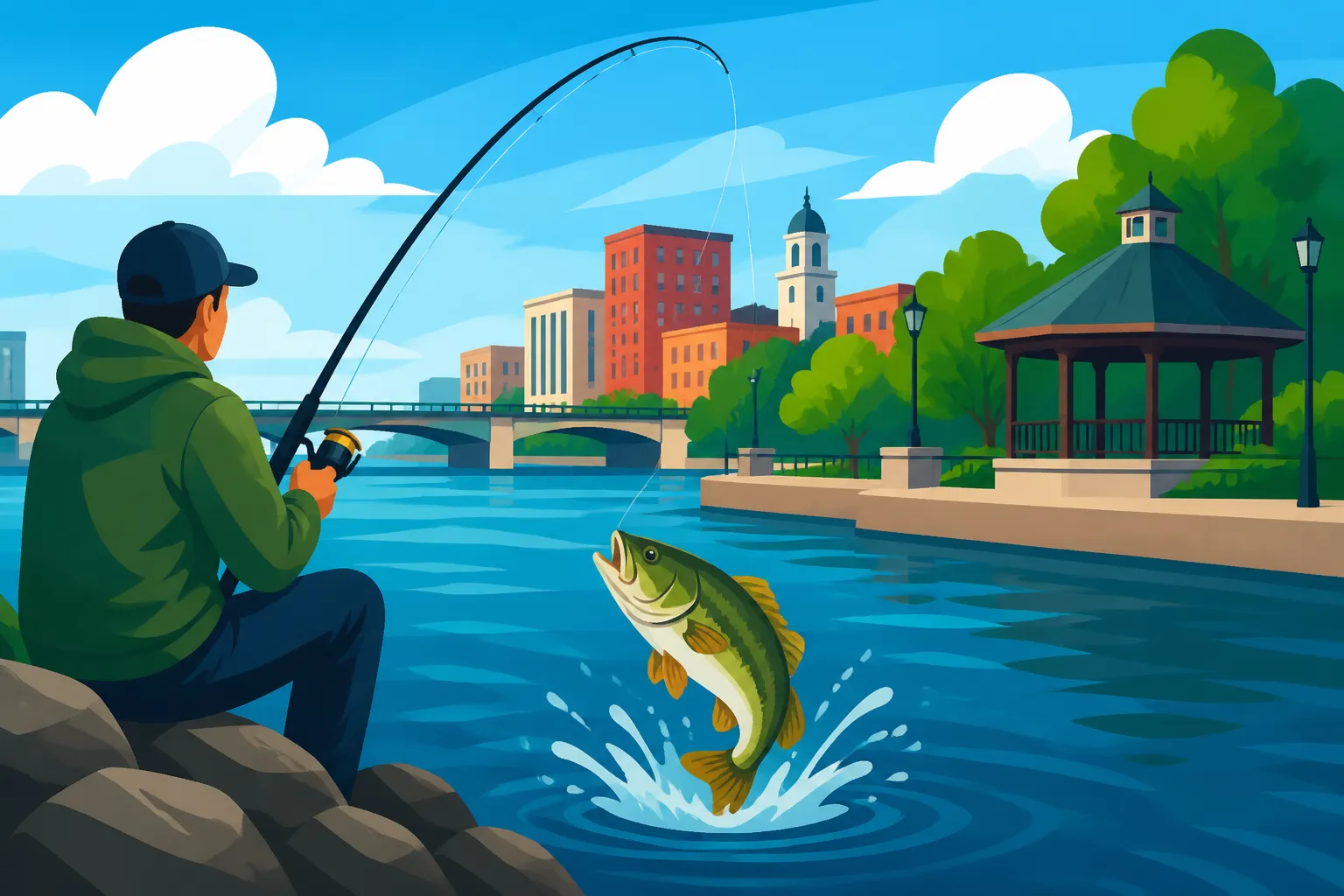
One of the biggest advantages of fishing in downtown Oswego is the sheer ease of access. You don't need a boat to have a fantastic day on the water; many prime spots are literally steps from parking, local shops, and restaurants. This urban setting means you're never far from amenities, which can make a long day of fishing much more comfortable. Imagine landing a trophy salmon and then celebrating with a hot meal just minutes away! It's a unique blend of hardcore angling and city convenience that you don't find everywhere. Plus, the atmosphere during peak runs, with anglers lining the banks, is a special kind of camaraderie. It's an experience that truly embodies the spirit of public fishing access.
Diverse Fish Species Migration
The Oswego River is a highway for a diverse range of fish species, especially those migrating between Lake Ontario and the freshwater system. Throughout the year, you can find different species making their way through the downtown corridor. In the fall, it's famous for its Chinook Salmon in New York and Coho salmon runs, followed by robust steelhead and brown trout action that can last well into spring. Come warmer months, the river holds excellent populations of smallmouth bass, walleye, and even pike. This constant flux means there's almost always something biting, depending on the season and your target species. It's truly a year-round fishing destination, each season bringing its own exciting opportunities.
Shoreline Hotspots: Where the Locals Cast Their Lines
When you're looking to fish from shore in downtown Oswego, there are a few go-to spots that consistently produce fish. These areas are popular for a reason: they offer good access, varied water conditions, and a strong chance of encountering migrating fish. Knowing where to set up can make all the difference, especially when the runs are in full swing and prime real estate is at a premium.
Linear Park and the East Side Bulkhead
On the east side of the Oswego River, you'll find Linear Park, which boasts a long, accessible bulkhead perfect for shoreline angling. This stretch offers relatively deep water close to shore, making it an excellent location for casting spoons, stickbaits, or drifting spawn sacs during the salmon and steelhead runs. The current here can be swift, so be prepared with enough weight to get your presentation down to where the fish are holding. Many anglers will "plunk" or use a three-way rig to keep their bait stationary on the bottom. In warmer months, this area is also good for casting for bass and walleye, especially near any submerged structure or current breaks. It's a very social spot, and you'll often find seasoned locals willing to share a tip or two if you're friendly.
Veterans' Memorial Park (West Side)
Across the river on the west side, Veterans' Memorial Park offers another fantastic opportunity for shore anglers. This park features both grassy areas and paved walkways leading to the river's edge, providing plenty of room to spread out. The fishing here can be particularly good during low light conditions or when fish are moving upstream towards the dam. You'll often see anglers casting large spoons or plugs for salmon and steelhead, particularly in the eddy currents and seams created by the river flow. During the spring and summer, it's also a popular spot for targeting smallmouth bass, which like to ambush prey along the rocky bottom and current lines. Don't be surprised to hook into a good-sized walleye here as well, especially as evening approaches.
The Breakwall and Harbor Area
While technically a bit north of the main downtown stretch, the breakwall protecting the Oswego Harbor offers excellent fishing opportunities, especially for those targeting Lake Ontario species before they enter the river. This robust stone structure extends into Lake Ontario and provides a unique fishing platform. You can target brown trout, lake trout, and even king salmon cruising the deeper waters of the harbor mouth. The harbor itself can also hold a surprising number of fish, especially if there's baitfish present. Pier fishing techniques, like casting spoons, heavy jigs, or using live bait under a float, can be highly effective here. It's a different kind of fishing experience than the river, but a fantastic option for broader species targeting, and often less crowded than the river banks during peak runs. If you're looking for a wider variety of targets, this area, accessible from the downtown core, is definitely worth exploring.
Navigating the Dam's Influence: Above and Below the Varick Dam
The Varick Dam is arguably the single most important structure on the Oswego River for anglers. It acts as a natural choke point and a migratory barrier, concentrating fish in specific areas. Understanding how to fish both above and below this dam is key to consistent success, as the conditions and target species can vary dramatically.
Upstream of Varick Dam (Above the Dam)
Above the Varick Dam, the river widens and slows down significantly, taking on more of a lake-like characteristic. This stretch, particularly as you move north towards the city, becomes prime habitat for warm-water species like largemouth bass, northern pike, and a substantial population of panfish. While the dramatic salmon and steelhead runs are primarily below the dam, fish that have successfully navigated the fish ladder or were stocked further upstream can be found here. This area is excellent for those who prefer calmer waters and perhaps a more relaxed fishing experience. Try casting crankbaits or spinnerbaits along weed lines for pike and bass, or drifting worms and small jigs for perch and bluegill. You might also encounter channel catfish in these deeper, slower sections. It's a completely different fishery than the fast-moving waters below the dam, offering a peaceful alternative.
Below the Varick Dam (The "Flats" and Tailwater)
This is the legendary section of the Oswego River, often referred to as the "flats" or the "tailwater," and it's where the most intense fishing action occurs, especially during the fall and spring runs. Fish migrating from Lake Ontario stack up here, unable to pass the dam until they can navigate the fish ladder. The turbulent, oxygen-rich water provides a perfect holding area. Anglers line the banks, drifting spawn sacs, beads, or small jigs for salmon, steelhead, and brown trout. The sheer number of fish in this area can be astounding, making it a truly world-class fishery.
However, fishing below the dam requires specific techniques due to the strong currents and concentrated fish populations. Fly fishing with nymphs or streamers, drift fishing with floats, or using heavier spinning gear to get your presentation down are common strategies. The "wall" sections just below the dam offer excellent deep holes and current breaks where fish often stage. It's also critical to be aware of New York Fishing Season Dates and Catch Limits here, as regulations can be very specific during the runs to protect the fishery. If you're looking for the heart-pounding action of large migratory fish, this is absolutely the place to be. Many seasoned guides, often found on platforms like FishingBooker, make their living teaching anglers how to navigate these challenging but rewarding waters.
Prime Fishing for Specific Species in Downtown Oswego
Knowing where to go is one thing, but knowing what to target and when to do it is another layer of expertise that will greatly increase your success. Downtown Oswego offers a fantastic multi-species fishery, but each species has its peak times and preferred locations.
Salmon and Steelhead Runs (Fall to Spring)
The Oswego River truly shines during its migratory runs. The fall brings the massive Chinook Salmon in New York and Coho salmon up from Lake Ontario, transforming the river into a spectacle of silver and bronze. These fish are driven by the urge to spawn and congregate heavily below the Varick Dam. During this time, you'll see countless anglers drifting brightly colored egg sacs, artificial salmon eggs, or large flies. Many rely on the insights of local guides, which you can often find through services like FishingBooker, to pinpoint the exact hot zones.
As winter approaches and then breaks into spring, the focus shifts to Steelhead Trout in New York and brown trout. These powerful fish follow the salmon, feeding on their eggs and then moving in for their own spawning cycles. Steelhead provide a thrilling fight on lighter tackle and can be caught throughout the colder months, especially during warmer spells or after a fresh rain. Techniques for steelhead often involve drifting small spawn sacs, beads, or jigs under a float, or fly fishing with nymph patterns. The deeper pockets and current seams below the dam are crucial holding areas. Understanding How to Fish for Steelhead in New York during these challenging conditions is key.
Walleye and Bass Hotspots (Spring to Fall)
While the migratory runs get a lot of attention, downtown Oswego also offers excellent fishing for resident species throughout the warmer months. Walleye in New York are a popular target, especially in the spring after ice-out and into early summer. They tend to prefer deeper, slower-moving sections of the river, often congregating near submerged structures, bridge pilings, or the edges of current breaks. Jigging with live bait like minnows or worms, or casting crankbaits and soft plastics, can be very effective. Evening and nighttime hours are often prime for walleye, as they become more active predators under the cover of darkness.
Smallmouth bass are abundant in the Oswego River and provide incredible action from late spring through fall. These feisty fish love rocky bottoms, current, and structure. You'll find them holding around bridge abutments, rocky shorelines, and any current seams throughout the downtown stretch, both above and below the dam. Casting tube jigs, swimbaits, small crankbaits, or topwater lures can lead to explosive strikes. The areas around Veterans' Memorial Park and Linear Park are particularly good for smallmouth. For those looking to refine their bass game, learning How to Fish for Smallmouth Bass in Rivers can be a game-changer.
Essential Gear and Techniques for Downtown Oswego
Having the right gear and understanding the appropriate techniques are paramount to success on the Oswego River. The river's varying currents, depths, and target species demand a versatile approach. Don't just show up with any old rod; consider what you're trying to catch and where.
Rods, Reels, and Line Choices
For the powerful salmon and steelhead runs, you'll want a medium-heavy to heavy spinning rod, typically 8 to 10 feet in length, with a fast action. This length helps with casting distance and managing line in the current. Pair it with a robust spinning reel spooled with 15-20 lb braided line, topped with a 10-15 lb fluorocarbon leader. The braid offers sensitivity and strength, while the fluorocarbon provides invisibility and abrasion resistance. For walleye and bass, a medium to medium-heavy spinning rod (6'6" to 7'6") with 8-12 lb fluorocarbon or monofilament line is often ideal, offering a good balance of power and finesse. If you're a fly angler, a 9-10 weight rod is standard for salmon, while a 7-8 weight is suitable for steelhead. For specific regulations on how many rods you can use, always check How Many Fishing Rods Can I Use at Once?.
Baits and Lures for Local Success
When targeting salmon and steelhead, egg sacs (often tied with cured salmon or trout eggs), artificial beads that mimic eggs, and brightly colored jigs (1/8 to 1/2 oz) are perennial favorites. Spoons like Little Cleos or Koho Killer spoons, and suspending stickbaits (e.g., Rapala Husky Jerks, Yo-Zuri Crystal Minnows) can also be highly effective, especially for fresh-run fish.
For walleye, jigs tipped with minnows or nightcrawlers, small crankbaits that dive to different depths, and soft plastic paddle tails are excellent choices. Local bait shops are invaluable resources for what's currently working. When it comes to bass, variety is key. Tube jigs, drop shots, Ned rigs, spinnerbaits, crankbaits, and topwater lures like poppers or walking baits can all produce. Matching the hatch for whatever baitfish are present is always a good strategy. Don't forget, when using bait for certain species like striped bass (if encountered, though less common here), Why Are Circle Hooks Required for Striped Bass Bait Fishing? might be relevant, so always check the latest regulations.
Oswego River Downtown Fishing Overview
| Fishing Spot | Primary Target Species | Best Time of Year | Recommended Techniques | Key Features / Access |
|---|---|---|---|---|
| Linear Park (East Side) | Salmon, Steelhead, Brown Trout, Bass | Fall, Winter, Spring, Summer | Drifting, Casting Spoons/Plugs | Accessible bulkhead, deep water close to shore |
| Veterans' Memorial Park (West Side) | Salmon, Steelhead, Brown Trout, Bass, Walleye | Fall, Winter, Spring, Summer | Casting Lures, Jigs, Live Bait | Grassy banks, paved access, current breaks |
| Oswego Harbor Breakwall | Brown Trout, Lake Trout, Salmon | Spring, Summer, Fall | Pier Fishing, Casting Spoons/Jigs | Extends into Lake Ontario, deep water, varied species |
| Above Varick Dam | Largemouth Bass, Pike, Panfish, Catfish | Spring, Summer, Fall | Casting, Live Bait, Trolling | Slower current, lake-like conditions, calmer waters |
| Below Varick Dam ("The Flats") | Salmon, Steelhead, Brown Trout | Fall, Winter, Spring | Drifting Egg Sacs/Beads, Fly Fishing | Turbulent water, concentrated migratory fish, intense action |
A Reminder About Regulations and Respect
Fishing in a vibrant system like the Oswego River means being keenly aware of and respecting the rules. New York State has detailed regulations for freshwater fishing, including specific size and creel limits for different species, particularly during the salmon and steelhead runs. You can find comprehensive details in the official New York DEC Fishing Regulations Guide. Always ensure you have a valid New York Fishing License Guide before casting a line; fishing without one can lead to significant penalties, as detailed in Fishing Without a License in New York: What Happens.
Beyond the official rules, practicing good angling etiquette is vital. This includes respecting fellow anglers' space, especially in crowded areas like below the dam, and properly disposing of all trash. Catch and release practices, especially for delicate species or those outside of legal harvest limits, should always prioritize the fish's health, following guidelines for Catch-and-Release Handling Rules. The Oswego River is a shared resource, and by adhering to regulations and showing respect for the environment and other users, we ensure its continued health and bounty for generations to come.
Disclaimer
The information provided in this guide is for general informational purposes only and is subject to change. Fishing conditions, regulations, and fish populations can vary. Always consult the most current New York State Department of Environmental Conservation (DEC) regulations and local advisories before engaging in any fishing activity.