How to Tell a Steelhead From a Brown Trout
It’s a common scenario on the water in New York: you hook into a strong, acrobatic trout, and for a moment, you’re just focused on the fight. But then it breaks the surface, and a question flashes through your mind – is this a wild brown trout, or have I tangled with a steelhead? Differentiating between these two magnificent species can be incredibly tricky, even for seasoned anglers, leading to potential confusion when it comes to adhering to specific regulations. This guide is here to walk you through the tell-tale signs, helping you confidently identify your catch and understand why it matters.
The Common Confusion Between Steelhead and Brown Trout
You're not alone if you've ever stared at a beautiful fish in your net, scratching your head trying to figure out if it’s a brown trout or a steelhead. Both are members of the Salmonidae family, both are often found in similar cold-water environments, and both can grow to impressive sizes, offering thrilling fights. This overlap in appearance and habitat is precisely why so many anglers struggle with identification, especially since both species display a wide range of color variations depending on their diet, environment, and reproductive stage.
Why Identification Matters Beyond Bragging Rights
While telling your fishing buddies about landing a trophy steelhead or a hefty brown trout is certainly part of the fun, the distinction goes far beyond bragging rights. In New York State, regulations for different fish species, even closely related ones like these, can vary significantly. You might find different daily creel limits, minimum size requirements, and even specific seasonal closures depending on whether you've caught a brown trout or a steelhead. Misidentification could inadvertently lead to violations, which no angler wants. For instance, the regulations around New York Statewide Trout Bag Limit can differ from those for migratory species. Understanding these nuances is crucial for responsible angling and preserving our cherished fisheries. Moreover, certain stretches of river might have special regulations for specific species, making local knowledge of New York Fishing Regulations Explained indispensable.
Understanding Their Origins and Life Cycles
To truly grasp the differences, it helps to understand a bit about their backgrounds. Brown trout (Salmo trutta) are originally native to Europe and Western Asia, introduced to New York waters over a century ago. They are incredibly adaptable and can thrive in a wide range of freshwater habitats, from small streams to large lakes. Steelhead, on the other hand, are an anadromous form of rainbow trout (Oncorhynchus mykiss). This means they are born in freshwater, migrate to larger bodies of water (like the Great Lakes or the ocean) to grow, and then return to freshwater to spawn. In New York, we primarily encounter Great Lakes steelhead, which migrate from Lake Ontario or Lake Erie into their tributary rivers. This migratory lifestyle is a key behavioral difference that often influences their appearance. Learning about Steelhead Trout in New York can give you a deeper appreciation for their incredible journey. Similarly, understanding the life cycle of Brown Trout in New York reveals their resilience and popularity among anglers.
Visual Cues: Spotting the Differences in the Hand
When you finally get that fish in the net, it’s time to put on your detective hat. While there can be variations, there are several key visual characteristics that can help you distinguish between a steelhead and a brown trout. Remember, no single feature is 100% definitive on its own; it’s often a combination of factors that tells the full story. Always try to observe as many details as possible.
Spotting Patterns and Body Coloration
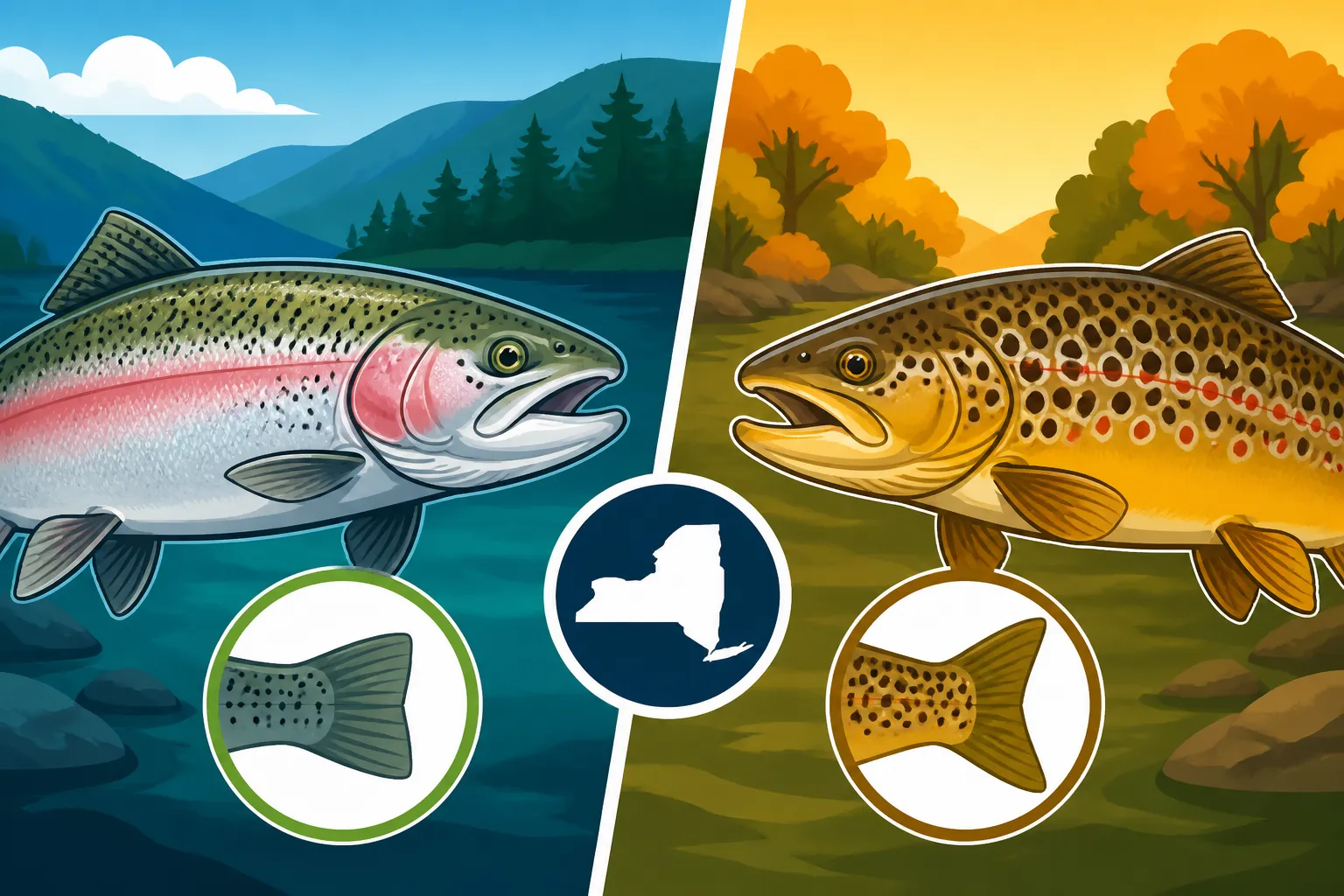
One of the most immediate things anglers notice is the spotting pattern. Steelhead typically have a more uniform, scattered pattern of small, dark spots that extend onto their dorsal fin and, crucially, onto their caudal (tail) fin. These spots are often evenly distributed across their silvery-gray or bluish body, which tends to be more elongated and torpedo-shaped, especially in migratory fish. The overall coloration of a steelhead is usually a vibrant chrome or silver, fading to white on the belly, with a prominent pink or red lateral stripe running along its flank, though this stripe can be less pronounced in fish that have recently entered freshwater.
Brown trout, in contrast, are characterized by larger, more irregular spots. These spots are typically dark brown or black, often surrounded by a lighter halo, giving them a distinct "target" appearance. What really sets them apart are the reddish-orange spots, often found along their sides, which are usually absent in steelhead. The spotting on a brown trout's tail fin is usually minimal or absent compared to a steelhead. Their body coloration is highly variable, ranging from olive-brown to golden-brown on the back, often fading to creamy yellow or white on the belly. Stream-dwelling brown trout might be darker and more mottled, while lake-dwelling browns can be much more silvery, sometimes making them a bit harder to distinguish from a true steelhead at first glance. However, the presence of those orange or red spots, even faint ones, is a strong indicator of a brown trout.
Tail Fin Shape and Mouth Structure
Beyond the spots and colors, pay close attention to the shape of the tail fin and the structure of the mouth. These subtle anatomical differences are often the most reliable identifiers.
A steelhead's caudal (tail) fin is typically square or only very slightly forked, and as mentioned, it will often have distinct spots running through it. This square or mildly forked shape, combined with the presence of spots, is a strong indicator. Their mouth, when closed, usually does not extend past the rear margin of the eye. Steelhead tend to have smaller heads relative to their body size compared to brown trout.
Brown trout, on the other hand, almost always have a noticeably forked caudal fin. While not as deeply forked as a salmon, it's definitely more pronounced than a steelhead's. Critically, the brown trout's tail fin will generally lack the distinct, evenly distributed spots found on a steelhead's tail. Their mouth is often larger, extending noticeably past the rear margin of the eye when closed. This larger mouth, sometimes referred to as a "gator mouth," is a classic brown trout characteristic. If you’re ever trying to get a better look at these features, a waterproof fishing identification guide, easily found on Amazon, can be a real lifesaver to have in your tackle box.
Here's a handy table summarizing the key visual differences:
| Feature | Steelhead (Oncorhynchus mykiss) | Brown Trout (Salmo trutta) |
|---|---|---|
| Spots | Small, numerous dark spots, evenly distributed on body, dorsal fin, and tail fin. No red/orange spots. | Larger, irregular dark spots, often with light halos. Distinct red/orange spots on sides. Spots usually sparse or absent on tail fin. |
| Body Color | Silvery-chrome, bluish-gray back, white belly. Often a pink/red lateral stripe (less prominent inland). | Olive-brown to golden-brown back, creamy yellow/white belly. Highly variable. |
| Tail Fin Shape | Square to slightly forked. Spots present. | Distinctly forked. Spots usually absent or very sparse. |
| Mouth Length | Upper jaw typically does not extend past the rear margin of the eye. | Upper jaw typically extends noticeably past the rear margin of the eye. |
| Overall Shape | More elongated, torpedo-shaped. | More robust, deeper body. |
Habitat, Behavior, and Environmental Clues
Beyond what you can see when the fish is in your hand, paying attention to where and how you caught the fish can also provide crucial clues for identification. Steelhead and brown trout, despite overlapping habitats, often exhibit distinct behavioral patterns and preferences.
Migratory vs. Resident Behavior
The most defining difference often lies in their life history. Steelhead are migratory, meaning they undertake significant journeys. In New York, this usually means they spend most of their adult lives growing large in the vast waters of Lake Ontario or Lake Erie, then return to their natal rivers and streams (like the Salmon River or the Niagara River) to spawn. You’ll typically encounter true steelhead during their "runs" – specific times of the year when they are migrating upriver from the Great Lakes. The Best Time to Fish for Steelhead on New York's Lake Ontario Tributaries provides insight into these seasonal movements. These fish are driven by instinct to move upstream, often congregating in deeper pools, runs, and faster currents. Their powerful, streamlined bodies are built for this journey.
Brown trout, conversely, can be either resident or migratory, but their migratory patterns are usually much shorter, often staying within the same river system or migrating between a lake and its immediate tributaries. Many brown trout are purely stream-dwelling, living out their entire lives in a relatively small stretch of water. They are less prone to the long-distance migrations of steelhead. If you're fishing a smaller, landlocked stream or a lake that has no direct connection to the Great Lakes, the chances are you're catching a brown trout. However, large lake-run brown trout from bodies like the Finger Lakes can also put on a stunning silver appearance, making the visual cues even more critical.
Preferred Water Types and Feeding Habits
While both are cold-water species, their preferences can vary. Steelhead, especially during their spawning runs, are often found in larger, faster-flowing rivers and tributaries connected to the Great Lakes. They prefer well-oxygenated water and can be quite aggressive, responding well to swung flies, drift-fished egg imitations, or brightly colored lures. When you're learning How to Fish for Steelhead in New York, you'll quickly realize their preference for these specific river conditions. Their diet in the Great Lakes consists of a wide variety of prey, including baitfish, insects, and crustaceans, contributing to their rapid growth and fighting prowess.
Brown trout are incredibly versatile. They can inhabit everything from tiny, brushy brooks to large, deep lakes. They are often found in slower-moving sections of rivers, undercuts, log jams, and around structure, preferring cover and ambush points. They are generally more tolerant of warmer water temperatures than brook trout but still prefer cool, clean water. Brown trout are opportunistic feeders, consuming a broad diet of insects (both aquatic and terrestrial), minnows, crayfish, and even small rodents. This wider dietary range contributes to their varied coloration and robust build. When you're trying to learn How to Trout Fish in New York in smaller streams, it’s almost always brown trout you’ll be targeting. Understanding these subtle differences in preferred habitat can significantly narrow down your identification challenge, especially if you're exploring the Best Fishing Spots in New York.
What Happens If You Get It Wrong? The Regulatory Side
Getting the identification right isn't just for academic interest or to impress your friends. It has real-world consequences, particularly concerning fishing regulations and conservation efforts. New York's Department of Environmental Conservation (DEC) publishes detailed guides precisely because these distinctions matter.
New York State Fishing Regulations and Species-Specific Rules
The New York DEC establishes specific regulations for different fish species, including trout and salmon. These rules are designed to manage fish populations sustainably, ensuring healthy fisheries for future generations. For example, there might be a different daily limit for brown trout in a particular stream compared to the general statewide limit for rainbow trout (which steelhead are a form of), or specific sections of rivers may have "special regulations" where catch-and-release is mandated for certain species during certain times.
If you mistakenly identify a steelhead as a brown trout, or vice-versa, you could accidentally exceed a bag limit, keep an undersized fish, or keep a fish during a closed season. These infractions, even if unintentional, can result in fines and other penalties. It’s always your responsibility as an angler to know what you’ve caught and to abide by the current rules. The official New York DEC Fishing Regulations Guide is the definitive source for these rules, and you should consult it regularly. Some specialized gear, like a high-quality fish scale and tape measure that you can find on Amazon, can help you ensure your catch meets all legal requirements before you decide to keep it.
The Importance of Conservation and Responsible Angling
Beyond the legal ramifications, accurate identification plays a vital role in conservation. Steelhead populations in the Great Lakes are often supported by stocking programs, and their natural reproduction can be vulnerable to habitat changes. Brown trout, especially wild, native strains, are also carefully managed. By correctly identifying and following regulations, you contribute directly to the health of these fisheries. If you’re unsure, the safest bet is always to release the fish unharmed, ensuring it can continue its life cycle.
Practicing careful catch-and-release techniques is paramount, especially when you're unsure of a species or if you plan to release your catch anyway. Always handle fish gently, minimize their time out of water, and use appropriate tools like needle-nose pliers for hook removal. This ensures that even if you misidentified the fish, it has the best chance of survival. Learning about the different Fish Species You Can Catch in New York and their specific needs will make you a more responsible and effective angler. Keeping an eye on the New York Trout Season Opening Day and closing dates for all species you might encounter is also crucial for compliance.
Disclaimer
The information provided in this guide is for general informational purposes only and is not intended as legal advice. Fishing regulations in New York State can change frequently and may vary by specific water body. Always consult the most current New York State Department of Environmental Conservation (DEC) fishing regulations guide or website before heading out to fish. The author and publisher are not responsible for any errors or omissions, or for any actions taken based on the information provided herein.