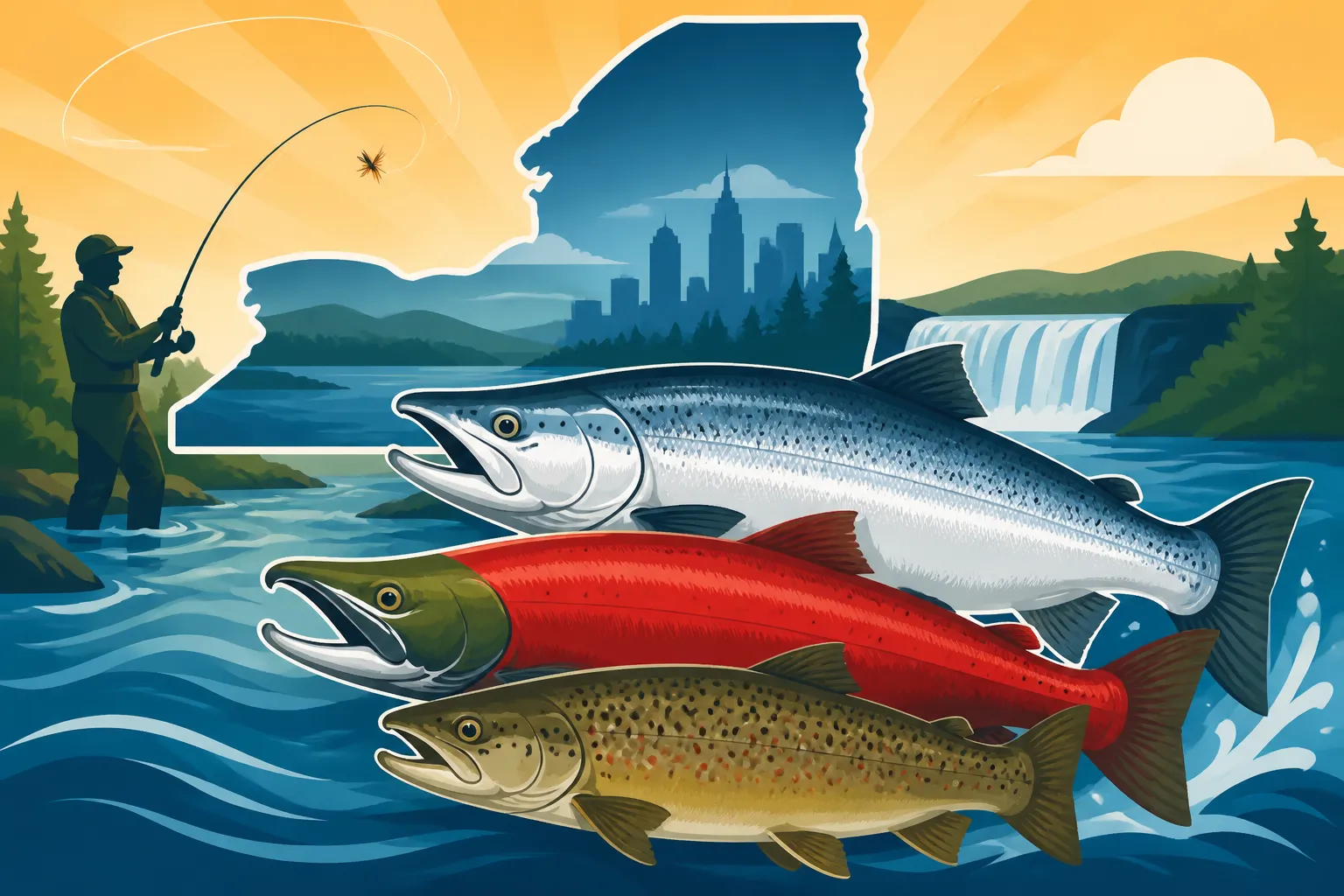
A Guide to New York’s Salmon Species
Anglers in New York are incredibly fortunate to have access to some of the most exciting salmon fishing opportunities in the country, but knowing which species to target, where to find them, and what techniques work best can feel like navigating a complex maze. This comprehensive guide is designed to demystify New York's incredible salmon species, helping you understand their unique characteristics, preferred habitats, and the most effective strategies to reel in these powerful fish.
The Allure of Salmon Fishing in New York
There's something truly primal and exhilarating about pursuing salmon. It's not just the size or the fight, although both are legendary; it's the quest, the anticipation, and the incredible beauty of these fish that draw anglers from all walks of life. In New York, we're spoiled with a diverse salmon fishery that offers different challenges and rewards depending on the species and the water.
Why Salmon Captivate Anglers in the Empire State
For many, the dream of hooking into a powerful salmon is what fuels their passion for fishing. These fish are renowned for their strength, their acrobatic leaps, and their relentless runs that can strip line from a reel in mere seconds. It's a true test of an angler's skill and equipment. The thrill isn't just in the catch, though; it's in the entire experience – from planning the trip, understanding the water, to the sheer adrenaline rush when a big one hits your line. It's a pursuit that demands patience, knowledge, and a little bit of grit.
What makes New York particularly special is the sheer variety of salmon experiences available. We're not just talking about one type of salmon; we have several distinct species, each with its own characteristics and preferred environments. This diversity means that whether you prefer casting in a river, trolling a vast lake, or even trying your hand at ice fishing, there's a salmon adventure waiting for you. It's an opportunity to connect with nature and engage in a truly challenging and rewarding sport.
However, let's be realistic: salmon fishing isn't always easy. These are intelligent, often finicky fish that can be incredibly challenging to locate and entice. The water conditions, the weather, and even the time of day can play a huge role in your success. It can be frustrating when you spend hours on the water without a bite, but that only makes the eventual reward even sweeter. That moment when your rod bends over and your reel screams is the payoff for all the effort and patience, a memory etched in your mind forever.
Ultimately, the captivating allure of salmon fishing in New York lies in this dynamic interplay of challenge and reward. It's a chance to pursue a magnificent creature in some of the most stunning natural environments the state has to offer. Whether you're chasing the behemoth Chinooks of Lake Ontario or the elusive Landlocked Atlantics of the Finger Lakes, each encounter is a story waiting to be told, a testament to the wild spirit of these incredible fish.
Where New York's Salmon Thrive: An Overview
New York State boasts an impressive array of habitats that support thriving salmon populations. When you think of salmon fishing in New York, your mind likely jumps straight to the Great Lakes, and for good reason. Lake Ontario, in particular, is a world-renowned destination for Pacific salmon, offering incredible opportunities for both Chinook and Coho salmon. Its vast, cold waters provide the ideal environment for these fish to grow to impressive sizes, feasting on abundant baitfish like alewives and smelt. The tributaries flowing into Lake Ontario, such as the famous New York's Salmon River Fishing Guide, the Oswego River, and the Genesee River, become absolute hotspots during the fall spawning runs, drawing thousands of anglers annually.
But the Great Lakes aren't the only game in town. New York's deeper, colder Finger Lakes also hold a special place for salmon enthusiasts. These glacially-carved lakes, with their incredible depths and pristine waters, are home to a unique population of landlocked Atlantic salmon. While perhaps not as numerous or as large on average as their Great Lakes cousins, the Atlantics of the Finger Lakes offer a distinct and equally thrilling angling experience. Lakes like Cayuga, Seneca, and Keuka are regularly stocked and managed to support these beautiful fish, and the fishing can be exceptional for those who learn their habits. You can learn more about Fishing New York's Finger Lakes: A Complete Guide in our detailed resource.
Beyond these major lake systems, some other river systems occasionally see salmonid movements, though often it's steelhead (rainbow trout) that are the primary draw in these areas. However, understanding the basic requirements for salmon – cold, well-oxygenated water, a reliable food source, and access to clean gravel beds for spawning – helps you identify potential hotspots. The health of these diverse ecosystems is paramount to the continued success of New York's salmon fisheries, making conservation efforts by the New York State Department of Environmental Conservation (DEC) and local angler groups incredibly important.
Whether you're exploring the expansive waters of Lake Ontario for an offshore battle or seeking the quiet challenge of a Finger Lake tributary, New York provides a rich tapestry of salmon fishing opportunities. Each location offers a different kind of adventure, demanding specific knowledge and techniques, but all promise the chance to connect with one of nature's most spectacular fighting fish.
Chinook Salmon: New York's King of the Waters
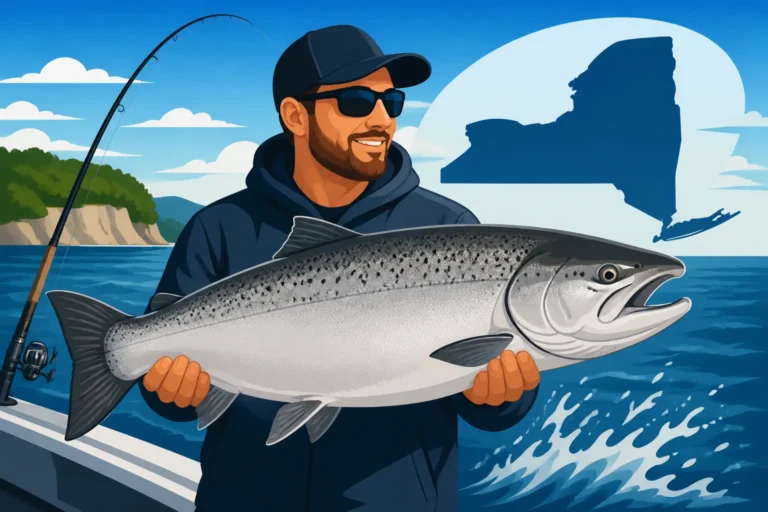
When anglers talk about "the big one" in New York's salmon fishing scene, they're almost always referring to the Chinook salmon, often affectionately called the "King" salmon. These powerful fish are the largest of the Pacific salmon species introduced to the Great Lakes, and they truly live up to their regal name. Hooking a mature Chinook is an experience every serious angler dreams of, offering an unparalleled test of strength and endurance.
Identifying the Mighty Chinook Salmon
The Chinook salmon (Oncorhynchus tshawytscha) is a formidable fish that stands out due to its sheer size and robust build. When you're trying to identify a Chinook, especially when it's mixed with other salmonids, there are a few key features to look for. Firstly, their mouths are characteristically dark, often appearing black, both on the roof and floor of the mouth, extending to the gumline. This "dark mouth" is a very reliable distinguishing trait that immediately sets them apart from other species like Coho salmon.
Beyond their mouth coloration, Chinooks typically have pronounced spots on their backs and, crucially, on both lobes of their tail fin. These spots can sometimes be faint, but they are generally present on both the upper and lower halves of the tail. Their body is generally silvery with a somewhat greenish-blue back when in open lake waters, but as they approach their spawning grounds, their coloration can shift dramatically to a darker, sometimes almost coppery or olive hue, and males will develop a distinctive hooked jaw, or "kype."
In terms of size, Chinooks are the largest salmon species in New York, with many mature fish in the Great Lakes easily reaching double-digit weights, and trophy specimens pushing well over twenty or even thirty pounds. Imagine the fight a fish of that magnitude puts up! Their bodies are deep and muscular, built for powerful runs and dives. While in the water, their sheer mass is evident, making them an unmistakable presence when you finally get one boatside or to the bank.
Compared to Coho salmon, Chinooks are generally much larger and possess a thicker caudal peduncle (the narrow part of the fish's body where the tail fin attaches). The combination of their dark mouth and spots on both tail lobes provides a confident identification, ensuring you know you've landed the true King of New York's salmon fishery. These visual cues become second nature after seeing a few, but in the heat of the moment, it's good to have them firmly in mind.
Life Cycle, Diet, and Spawning Habits
The life cycle of the Chinook salmon in New York's Great Lakes system is a fascinating testament to nature's drive. While technically "landlocked" within the Great Lakes basin, they mimic the anadromous (sea-run) behavior of their Pacific cousins. They begin their lives in the cold, clear gravel beds of New York's major tributaries, often the same rivers where their parents spawned. After hatching and spending a period as fry and smolts in the river, they migrate downstream to the vast waters of Lake Ontario or Lake Erie.
Once in the open lake, these young salmon spend several years growing rapidly, feeding voraciously on the abundant forage fish. Their diet primarily consists of alewives, smelt, and other small baitfish, which are rich in fat and protein, allowing them to pack on significant weight. This predatory lifestyle is why they are such powerful fish – they are apex predators in the lake's ecosystem, constantly on the hunt for their next meal. Their growth rate is impressive, turning small smolts into true "kings" over a few years.
As their biological clock winds down, typically after three to five years in the lake, the mature Chinook salmon begin their epic spawning migration. This journey usually starts in late summer, with fish staging near the mouths of their natal rivers, or the rivers they were stocked into. From late August through October, these incredible fish push upstream into rivers like the Salmon River, Oswego River, and Genesee River, driven by an instinct to reproduce. They navigate rapids, jump obstacles, and fight against strong currents, all to reach the shallower, gravelly stretches where they will dig redds (nests) and deposit their eggs.
This spawning migration is a one-way trip for Chinook salmon. Once they have completed their arduous journey and the act of spawning, their bodies, which have expended all their energy on reproduction, begin to deteriorate. They do not feed during the spawning run, relying solely on the fat reserves built up in the lake. Ultimately, all adult Chinook salmon die after spawning, completing a dramatic life cycle that fuels the next generation and provides a feast for scavengers in the river ecosystem. This incredible dedication to reproduction is what makes their journey so compelling for both naturalists and anglers.
Prime Locations and Effective Techniques for Chinook
For New York anglers, the absolute prime real estate for Chinook salmon fishing revolves around Lake Ontario and its major tributaries. During the summer months, from June through early September, the vast, deep waters of Lake Ontario are where you'll find the kings actively feeding. This is primarily a trolling game, requiring specialized boats equipped with downriggers, dipsy divers, and sometimes planer boards to get lures to the precise depths where these fish are holding. Popular techniques involve running a spread of spoons (like Michigan Stingers, Dreamweavers, or Northern Kings), J-plugs, and flasher-fly combinations. How to Fish for Salmon in New York covers some of these methods in detail. The key to success is covering water, monitoring your fish finder for baitfish and thermoclines, and adjusting your depth and speed until you find the sweet spot.
As late summer transitions into fall, the focus shifts dramatically from the open lake to the tributary rivers. From late August through October, the major rivers flowing into Lake Ontario, such as the Salmon River, the Oswego River, and the Genesee River, become world-famous destinations for their incredible Chinook salmon runs. Anglers line the banks and drift from boats, targeting these powerful fish as they push upstream to spawn. During this period, techniques shift to drift fishing with natural baits like egg sacs (often made from salmon roe, known as skein), or artificial imitations like large beads that mimic salmon eggs. Best Time to Fish for Chinook Salmon on New York's Lake Ontario highlights the peak windows for this exciting season. Fly anglers will often use large streamers, egg patterns, or even Stonefly imitations to entice strikes from aggressive, territorial salmon.
Successful river fishing for Chinook requires a delicate balance of stealth, presentation, and brute strength. These fish, while focused on spawning, can still be very aggressive and territorial. Light line might seem counter-intuitive for such large fish, but subtle presentations are often key. However, your rod and reel setup must be capable of handling their powerful runs and dives in strong current. Heavy-action spinning or baitcasting rods paired with robust reels spooled with strong braided or monofilament line are essential. Shore fishing can also be productive in certain areas, particularly near river mouths and harbors during low light conditions or after fresh pushes of fish enter the system. Regardless of method, patience and persistence are crucial when targeting these magnificent creatures.
Coho Salmon: The Silver Bullet of New York
While the Chinook salmon might wear the crown for size, the Coho salmon (Oncorhynchus kisutch) holds its own as a magnificent and highly sought-after game fish in New York. Known for their acrobatic fights and brilliant silver appearance, Cohos are often referred to as the "silver bullet" for their speed and agility in the water. They offer a slightly different, but equally thrilling, angling experience compared to their larger Chinook cousins.
Distinguishing Coho Salmon from Other Species
Identifying a Coho salmon in New York's waters, especially from a Chinook or a large steelhead, involves looking for a few key characteristics. Firstly, Coho salmon are generally smaller than Chinook, with mature fish typically ranging from 5 to 15 pounds, though larger specimens certainly exist. Their body shape is often more slender and streamlined, contributing to their reputation for speed and agility.
The most reliable distinguishing feature for Coho salmon is the color of their gums: they have white gums on the lower jaw, whereas Chinook salmon have entirely dark or black gums. This is a very consistent trait and often the first thing experienced anglers check when trying to differentiate between the two Pacific salmon species. In terms of spots, Coho salmon typically have spots primarily on the upper lobe of their tail fin, and fewer, smaller spots on their back compared to Chinooks. Their overall coloration in the lake is a brilliant, almost iridescent silver, with a blue-green back, which is where their "silver bullet" nickname originates.
As they move into rivers for spawning, their silver sheen gives way to darker hues, with males developing a more pronounced reddish or brownish coloration on their sides, and a distinct kype (hooked jaw). Females also darken but less dramatically. Despite these changes, the white gums on the lower jaw remain a reliable indicator. Their fight is also quite distinctive; while Chinooks are known for their powerful, head-down runs, Cohos often incorporate spectacular aerial displays into their battles, leaping clear out of the water multiple times.
Comparing them to steelhead, which share similar habitats, Cohos have a more defined fork in their tail and lack the distinct rainbow stripe found on steelhead. The size difference also helps, as a large steelhead can sometimes be mistaken for a Coho, but the distinct gum color remains the most foolproof method of identification. Knowing these small but critical differences ensures you can accurately identify your catch and adhere to specific regulations for each species.
Coho's Migratory Journey and Spawning Rituals
The migratory journey and spawning rituals of Coho salmon in New York's Great Lakes mirror those of Chinook in many ways, but with some notable differences that make them unique. Like Chinooks, Cohos are stocked into the tributaries of Lake Ontario and Lake Erie, where they hatch and spend their early lives before migrating to the vastness of the open lake. There, they embark on a period of intense growth, typically spending two to three years feeding and maturing.
In the lake, Coho salmon are aggressive predators, and their diet is similar to that of Chinooks, consisting primarily of alewives, smelt, and other abundant baitfish. They are efficient hunters, often found in slightly different depths or temperature preferences than Chinooks, sometimes preferring the upper portions of the water column. This slight difference in habitat preference can influence where and how anglers target them in the open lake.
As autumn approaches, usually starting in late September and extending into November, mature Coho salmon begin their instinctive migration back into the tributaries. While Chinooks might start their primary run a bit earlier in August, Cohos often follow, sometimes overlapping with the tail end of the Chinook run or continuing well into cooler weather. They are also driven by the primal urge to reproduce, seeking out the same gravelly stretches of river where they were born or released.
During their spawning run, Coho salmon, like Chinooks, largely cease feeding, relying on their stored energy reserves. However, they can still be incredibly aggressive and territorial, making them susceptible to lures and baits that provoke a strike rather than mimicking a food source. This aggressive nature is part of what makes them such a fun target for river anglers. Like all Pacific salmon species, adult Coho salmon die after they complete their spawning duties, contributing their nutrients back to the river ecosystem and ensuring the continuation of their species for future generations. This full circle of life and death is a powerful natural spectacle that plays out annually in New York's salmon rivers.
Where to Target Coho and Proven Fishing Methods
For anglers targeting Coho salmon in New York, the primary action centers around Lake Ontario and its feeder rivers. During the summer months, Coho are often found mixed in with Chinook salmon in the offshore waters of Lake Ontario. However, Cohos sometimes prefer slightly shallower depths or different thermoclines than Chinooks, making them a fantastic target for anglers who adjust their trolling depths. Trolling with smaller spoons (often in brighter colors like oranges, pinks, and greens), J-plugs, and flies behind dodgers or flashers is highly effective. They are known to hit lures with incredible force, often leading to spectacular surface strikes and acrobatic jumps.
As the fall spawning migration begins, usually from late September through November, the Great Lakes tributaries become the hotspots for Coho. Rivers like the Salmon River, Oswego River, and Oak Orchard Creek see significant runs of these silver bullets. River anglers will employ various techniques, often similar to those used for Chinooks but sometimes with a slightly lighter touch or smaller presentation. Drift fishing with egg sacs (from natural salmon or trout eggs), smaller beads, or even cured roe is very popular. Fly anglers will find success with egg patterns, bright streamers, and various nymph imitations, particularly when presenting them naturally in the current.
Coho salmon are often a bit more willing to chase and strike than the often-stubborn Chinooks in the river, especially during the early stages of their run. They can be found in a variety of river habitats, from slower pools to faster runs, often congregating behind obstacles or in deeper pockets. Their aggressive nature means that small spinners and brightly colored crankbaits can also be very effective, especially when fished through holding water. While they may not reach the same massive sizes as Chinooks, the sheer number of Cohos and their spirited fight make them a phenomenal target for both boat and shore anglers looking for consistent action during the fall salmon runs. Remember that understanding New York Fishing Seasons Explained is key to timing your trip.
Landlocked Atlantic Salmon: New York's Elusive Freshwater Gem
While the Pacific salmon species like Chinook and Coho dominate the Great Lakes, New York is also home to a truly special and elegant salmonid: the Landlocked Atlantic Salmon (Salmo salar). Unlike their Pacific cousins, these Atlantics spend their entire lives in freshwater, never venturing to the ocean. They represent a unique and challenging fishery, primarily found in the deeper, colder Finger Lakes, and are prized for their beauty, elusive nature, and tenacious fight.
How to Spot the Noble Landlocked Atlantic Salmon
The Landlocked Atlantic Salmon is often described as one of the most beautiful fish an angler can encounter, possessing a truly noble and streamlined appearance. Distinguishing them from other salmonids in New York, such as brown trout or even other salmon species, requires a keen eye. Atlantics typically have a more slender and torpedo-shaped body compared to the bulkier Pacific salmon. Their coloration is usually a silvery-gray with a darker back, often with a hint of blue or green.
One of the most defining characteristics of the Atlantic salmon is their spotting pattern. They typically have smaller, sparse spots that are often X- or Y-shaped, mainly concentrated above the lateral line. Crucially, they usually do not have spots on their tail fin, unlike Chinook or Coho salmon. Their tail is also distinctly forked, more so than a brown trout. Another subtle but important difference is their mouth: it's generally smaller and less pronounced than a Chinook's, and their gums are typically light or white, distinguishing them from the dark-mouthed Chinook.
As they near their spawning period in the fall, Landlocked Atlantics can take on stunning hues. Males, in particular, may develop a striking reddish or bronze tint along their flanks, especially on their bellies, and their heads can become darker. While they do develop a kype, it's generally less pronounced than that of a large male Chinook. Their overall graceful form and often understated spotting contribute to their elegant aesthetic, making them a truly prized catch.
When comparing them to brown trout (which they can sometimes be confused with), Atlantics will have a more deeply forked tail, a more streamlined profile, and their spots will typically lack the light halo that often surrounds the spots of a brown trout. Learning these visual cues is part of the joy of pursuing these magnificent freshwater residents, allowing you to appreciate the specific species you've connected with.
Habitat and Behavior in New York's Freshwater Systems
The habitat requirements for Landlocked Atlantic Salmon in New York are quite specific, reflecting their need for pristine, cold, and oxygen-rich environments. Unlike the Pacific salmon that utilize the vastness of the Great Lakes and then embark on their terminal spawning runs, these Atlantics live their entire lives within freshwater systems. Their primary strongholds in New York are the deep, oligotrophic (nutrient-poor and well-oxygenated) Finger Lakes, such as Cayuga Lake, Seneca Lake, and Lake Champlain, where conditions closely mimic their ancestral sea-run habitats. You can find detailed information on Fish Species Found in the Finger Lakes.
During the warmer summer months, Landlocked Atlantics will retreat to the deep, cool waters of these lakes, often holding in the thermocline where optimal temperatures and oxygen levels are found. They are highly sensitive to water temperature, making cold, deep water a critical factor for their survival and growth. Their diet in these lakes consists predominantly of available forage fish, with smelt and alewives being key food sources. They are active predators, constantly patrolling the open water for schools of baitfish, which contributes to their fast growth and strong fighting capabilities.
As fall approaches, mature Landlocked Atlantic Salmon begin their spawning migration. This involves moving from the main body of the lake into suitable feeder streams or rivers that flow into the lakes. These streams must have clean, gravelly bottoms and sufficient flow for successful egg deposition. This spawning activity typically occurs in October and November. A significant difference from Pacific salmon is that Landlocked Atlantics are not necessarily anadromous in the sense of dying after spawning. While they expend tremendous energy and some individuals may perish, many, especially younger males, can survive spawning and return to the lake to spawn in subsequent years. This resilience adds another layer of intrigue to their life cycle.
Their behavior in these freshwater systems is often described as cautious and elusive. They are not always easy to locate or trick, making them a true challenge for anglers. Understanding their preference for cold, clean water, their reliance on forage fish, and their spawning movements into tributaries is fundamental to successfully targeting these incredible, beautiful freshwater gems in New York.
Best Waters and Techniques for Catching Atlantics
If you're looking to tangle with New York's elusive Landlocked Atlantic Salmon, your sights should be set on the deeper, colder Finger Lakes. Lakes like Cayuga, Seneca, and Lake Champlain are considered premier destinations. New York's Cayuga Lake Fishing Guide offers specific tips for that particular body of water. During the summer, when the Atlantics are in the deeper, cooler parts of the lake, trolling is by far the most effective technique. Anglers use downriggers, lead core line, or dipsy divers to get their lures down to the thermocline where these fish reside. Spoons (often slender and silver, mimicking smelt), stickbaits (like Rapalas or Yo-Zuris), and sometimes flies trolled behind dodgers or flashers are highly successful. Precision in depth and speed is paramount, as these fish can be particular.
As the water cools in the fall and these noble fish prepare for their spawning run, they will stage near the mouths of their natal rivers or streams and eventually push upstream. This is when shore or river fishing can become productive, although Landlocked Atlantics in rivers are notoriously finicky and challenging to catch. Fly fishing is a popular method in these tributaries, with anglers using small streamers, nymphs, or egg patterns, presenting them subtly and naturally to entice a strike from these wary fish. The key here is often a very light touch, stealth, and perfect presentation, as Atlantics can be incredibly spooky.
Beyond open water and tributary fishing, there are also opportunities for ice fishing for Landlocked Atlantics during the winter months, particularly on lakes where they are abundant and where smelt, their primary food source, are also present. Using tip-ups with live bait (like emerald shiners) or jigging with small spoons or blade baits can be effective. Patience is crucial for ice fishing, as Atlantics are often solitary and cover a lot of ground. Remember that these are often wilder, more cautious fish than their Pacific cousins, making every successful catch a significant accomplishment.
No matter the season or location, targeting Landlocked Atlantic Salmon requires respect for their environment and their elusive nature. They are a testament to New York's diverse cold-water fisheries, offering a unique challenge and a beautiful reward to those who pursue them.
Comparing New York's Salmon Species
New York is a treasure trove for salmon anglers, offering a fascinating array of species that each present unique challenges and rewards. Understanding the differences between Chinook, Coho, and Landlocked Atlantic salmon is crucial for successful identification, appropriate angling techniques, and adherence to specific regulations. While all are incredible game fish, their distinct traits allow anglers to tailor their pursuits.
Key Differences in Size, Appearance, and Behavior
When comparing New York's salmon species, size is often the first and most obvious differentiator. Chinook salmon are the undisputed kings, regularly reaching double-digit weights, with many exceeding 20 or even 30 pounds in the Great Lakes. Coho salmon are generally smaller, typically ranging from 5 to 15 pounds, though they are still powerful fighters. Landlocked Atlantic salmon are usually somewhere in between, often in the 5 to 15-pound range, but they can grow larger in prime Finger Lakes.
Appearance offers several key identification points. The Chinook is characterized by its entirely dark mouth and numerous spots on both lobes of its tail fin. Its body is robust and deep. The Coho is known for its brilliant silver flanks, white gums on the lower jaw, and spots primarily on the upper lobe of its tail fin. It has a more streamlined body than the Chinook. The Landlocked Atlantic Salmon is arguably the most elegant, with a slender, torpedo-shaped body, sparse, small X- or Y-shaped spots mostly above the lateral line, and crucially, no spots on its deeply forked tail. Its mouth is smaller and lighter than a Chinook's.
Behavior in terms of fighting style also varies. Chinook salmon are renowned for their powerful, drag-screaming runs and deep dives, employing sheer brute force. Coho salmon are often more acrobatic, making spectacular leaps and putting on a spirited, flashy fight. Landlocked Atlantic salmon, while perhaps not as explosively powerful as a large Chinook, are known for their tenacious, sustained battles and their elusive nature, often requiring a more refined approach. Each species offers a distinct thrill on the end of your line.
Habitat Preferences and Diet Nuances
The different salmon species in New York also exhibit distinct habitat preferences and dietary habits, which directly influence where and how anglers target them.
Chinook and Coho Salmon are primarily found in the vast freshwater seas of Lake Ontario and Lake Erie, along with their major tributaries. These fish thrive in the open lake during their growth phase, constantly patrolling for large schools of baitfish. Their diet heavily relies on invasive species like alewives and smelt, which are abundant in these Great Lakes. When it comes time to spawn, they migrate into the larger, colder rivers flowing into these lakes, seeking out gravelly riffles to lay their eggs. These rivers become bustling hotspots during the fall runs.
Landlocked Atlantic Salmon, on the other hand, are exclusive residents of New York's deep, cold, and clean Finger Lakes, as well as Lake Champlain. They spend their entire lives within these freshwater systems, never venturing to the ocean. Their habitat is characterized by pristine water quality, ample depth to find cold temperatures in summer, and a healthy population of forage fish, predominantly smelt and alewives, which they actively pursue in the open water. While they do make spawning runs into the feeder streams of these lakes, they are generally found in different river systems and lake environments compared to the Pacific salmon. This distinction is critical for anglers, as fishing methods and prime locations will differ significantly between the two groups. Understanding these ecological niches is key to successfully targeting the specific salmon species you desire.
Here's a quick comparison table to help differentiate these fantastic New York salmon species:
| Feature | Chinook Salmon (King Salmon) | Coho Salmon (Silver Bullet) | Landlocked Atlantic Salmon |
|---|---|---|---|
| Average Size | Largest (10-30+ lbs) | Medium (5-15 lbs) | Medium (5-15 lbs, can be larger) |
| Mouth/Gums | Dark/Black gums and mouth | White gums on lower jaw | White/light gums, smaller mouth |
| Tail Spots | Spots on both upper and lower lobes of tail | Spots primarily on upper lobe of tail | No spots on tail |
| Body Shape | Robust, deep-bodied, powerful | More slender, streamlined, acrobatic | Elegant, torpedo-shaped, deeply forked tail |
| Primary Habitat | Lake Ontario, Lake Erie, and their major tributaries | Lake Ontario, Lake Erie, and their major tributaries | Deep, cold Finger Lakes (e.g., Cayuga, Seneca), Lake Champlain |
| Diet | Alewives, Smelt, other baitfish | Alewives, Smelt, other baitfish | Smelt, Alewives, other forage fish |
| Spawning | Fall, typically die after spawning | Fall, typically die after spawning | Fall, some may survive to spawn again |
| Fighting Style | Powerful, deep runs, brute force | Acrobatic jumps, spirited runs, fast | Tenacious, sustained fight, often subtle |
Essential Gear and Seasonal Strategies for Salmon Anglers
Successfully targeting salmon in New York requires more than just luck; it demands the right gear and an understanding of seasonal patterns. Whether you're battling a brute Chinook in a raging river or coaxing an elusive Atlantic from a deep lake, having the appropriate tackle and employing smart strategies will dramatically increase your chances of success.
Rods, Reels, Lines, and Terminal Tackle
The choice of rod and reel is paramount when salmon fishing, and it largely depends on the species you're pursuing and the method you're employing. For Chinook and Coho salmon fishing in the Great Lakes from a boat, particularly when trolling, you'll want heavy-action trolling rods, typically 7 to 10 feet long, capable of handling significant weight and the powerful surge of a big fish. These are usually paired with robust level-wind reels (like a Penn or Daiwa) spooled with braided line (30-50 lb test) or heavy monofilament (20-30 lb test), often with a heavy fluorocarbon or monofilament leader. The strength is needed to withstand the pull of downriggers and the fierce fight of a salmon.
When these Chinook and Coho move into the rivers for their fall spawning runs, a different setup is needed. Medium-heavy to heavy-action spinning or baitcasting rods, generally 8 to 11 feet long, are popular for drift fishing. These rods offer the necessary backbone to fight powerful fish in current, while still providing enough sensitivity to detect subtle bites. Reels should have a strong drag system and be spooled with 15-20 lb monofilament or fluorocarbon, or 20-30 lb braided line with a fluorocarbon leader of varying strength depending on water clarity and fish activity. Ensuring you have high-quality line is critical for Best Line Weight for New York Freshwater Fishing.
For Landlocked Atlantic Salmon, whether trolling in the Finger Lakes or stream fishing, a slightly more refined approach is often beneficial. For lake trolling, medium-light to medium-action rods are suitable, similar to those used for trout trolling, but with enough power to handle a spirited Atlantic. Reels with a smooth, reliable drag are a must. In streams, fly fishing is a popular and effective method, requiring 6 to 8-weight fly rods, paired with a matching reel and fly line (floating or sinking tip, depending on conditions) and a strong leader and tippet. A good quality fishing vest or pack to hold your flies and accessories, readily available on Amazon, can keep everything organized.
Finally, don't overlook terminal tackle. High-quality swivels, snap swivels, and leader material are essential to prevent line twist and withstand brutal fights. Heavy-duty hooks, whether for egg sacs or artificial lures, must be sharp and strong. Investing in quality components, easily found from various reputable brands on platforms like Amazon, means fewer lost fish and more successful outings.
Top Baits, Lures, and Flies for Each Species
Choosing the right bait or lure is critical for enticing a strike from New York's salmon. What works for one species or in one situation might be completely ineffective in another, so having a versatile tackle box is key.
For Chinook salmon, especially when trolling in the open waters of Lake Ontario, large spoons (like Michigan Stinger, Dreamweaver, or Northern King) in metallic finishes, glow patterns, or bright colors are perennial favorites. Large J-plugs and flasher-fly combinations (often with meat rigs or large artificial flies) are also incredibly effective at enticing aggressive strikes. In the rivers during the spawning run, natural baits like cured egg sacs (skein) or large roe bags are king. Artificial alternatives such as large beads, plastic eggs, or soft plastics resembling baitfish can also provoke strikes.
Coho salmon, while also hitting some of the larger Chinook offerings, often respond well to slightly smaller presentations. When trolling, medium to small spoons in bright colors (orange, pink, chartreuse) or classic silver/blue patterns are excellent. Small crankbaits and spinners can also be productive. In the rivers, smaller egg sacs, single beads, or brighter colored flies and small streamers (e.g., egg-sucking leeches, estaz eggs) often get their attention. Their aggressive nature means they're sometimes more willing to chase and strike at a moving lure than their Chinook cousins. Many anglers find great success stocking up on these varied lures and baits from diverse selections available on Amazon.
Landlocked Atlantic Salmon tend to prefer slender, baitfish-imitating presentations, especially when trolling in the Finger Lakes. Thin-profile spoons (such as Mooselook Wobblers, Suttons, or similar "flutter spoons") in silver, gold, or copper are highly effective. Small, elongated stickbaits and slender crankbaits can also draw strikes. For fly anglers in rivers, traditional salmon and trout streamers (e.g., Gray Ghost, Black Ghost), smelt patterns, and various nymph patterns are good choices. These fish can be very discerning, so presentation and realistic imitation are often key.
No matter the species, always carry a variety of options and be willing to experiment. Water clarity, light conditions, and fish activity can all dictate lure choice, so flexibility is your best friend on the water. Local tackle shops are also a fantastic resource for current hot patterns and colors.
Mastering Seasonal Approaches for Success
Understanding the seasonal movements and behaviors of New York's salmon species is paramount to consistent success. Each season offers distinct opportunities and demands different strategies.
Spring (April-May): As the ice melts and water temperatures begin to rise, opportunities for salmon fishing begin to pick up. Coho salmon often become active nearshore in the Great Lakes, pursuing baitfish that are moving into warmer waters. Landlocked Atlantics in the Finger Lakes also become more active, often found closer to the surface or near stream mouths as they shake off winter lethargy. This is a great time for boat anglers trolling nearshore or shore anglers casting spoons and stickbaits. New York Fishing Seasons Explained details these opening periods.
Summer (June-August): This is prime time for deep-water trolling for Chinook and Coho salmon in Lake Ontario and Lake Erie. As surface waters warm, these fish retreat to the cooler, oxygenated depths, typically holding near the thermocline. Anglers use downriggers and other depth-controlling devices to present a wide spread of spoons, J-plugs, and flasher-fly combos. For Landlocked Atlantics in the Finger Lakes, summer also means deep-water trolling, often targeting specific depths where smelt schools are present. Early mornings and late evenings are often the most productive periods during summer.
Fall (September-November): This is arguably the most famous season for salmon fishing in New York, as it marks the spectacular spawning runs of Chinook and Coho salmon into the Great Lakes tributaries. Rivers like the Salmon River become magnets for anglers. Fall Steelhead Run Timing in New York (while focused on steelhead, often overlaps with salmon runs in these same rivers). Drift fishing with egg sacs, beads, or fly fishing with egg patterns and streamers are the dominant techniques. Landlocked Atlantics also make their spawning runs into the feeder streams of the Finger Lakes during this time, offering a challenging but rewarding target for stream anglers.
Winter (December-March): While much of the open water freezes, winter still presents opportunities, primarily for ice fishing for Landlocked Atlantic salmon on the Finger Lakes. Anglers target deep pockets with tip-ups set with live bait or jigging spoons. Steelhead fishing in the Great Lakes tributaries continues strong, and occasionally a "drop-back" salmon might be encountered. Ice Fishing in New York: A Complete Guide provides a detailed look at this challenging but rewarding winter pursuit. Knowing the nuances of each season will allow you to adapt your approach and maximize your time on the water.
Conservation and Regulations for New York's Salmon Fisheries
New York's salmon fisheries are a precious resource, offering incredible angling opportunities that have been carefully managed over decades. To ensure these populations remain healthy and abundant for future generations, it's absolutely vital that every angler understands and adheres to the state's regulations and practices responsible angling. Ignoring these guidelines doesn't just put you at risk of fines; it jeopardizes the very future of the fishery we all cherish.
Navigating New York's Salmon Regulations
The New York State Department of Environmental Conservation (NYS DEC) is the governing body that sets the rules for fishing throughout the state, and salmon species are no exception. Regulations are put in place based on scientific research and management goals, designed to protect fish populations while still allowing for recreational harvest. The most crucial thing any angler can do before heading out is to check the current New York Fishing Regulations Explained. These rules can change annually or for specific water bodies, so relying on old information is a recipe for trouble.
Typically, salmon regulations will detail specific season dates when you are allowed to fish for a particular species, size limits (minimum or sometimes slot limits) to ensure fish have a chance to reproduce, and daily creel limits (the number of fish you can keep per day). For instance, regulations for Chinook and Coho salmon in Lake Ontario tributaries might differ from those for Landlocked Atlantic salmon in the Finger Lakes. There are often also specific rules regarding gear, such as the use of barbed hooks or the number of lines allowed.
It's also important to be aware of special regulations that apply to certain waters. Famous salmon rivers like the Salmon River or sections of the Oswego River often have unique rules that supersede general statewide regulations. These might include specific closed sections, "catch and release only" periods, or restrictions on bait or lure types. Consulting the official New York DEC Fishing Regulations Guide is not just a suggestion; it's a mandatory step for any responsible angler. Remember, ignorance of the law is never an excuse, and DEC environmental conservation officers are diligent in enforcing these rules to protect our natural resources.
Practicing Responsible Angling and Catch-and-Release
Beyond simply following the letter of the law, practicing responsible angling is a critical component of ethical salmon fishing. This includes minimizing stress on fish, particularly those you intend to release, and respecting the environment around you. Many anglers these days practice catch-and-release, especially for larger fish or during sensitive times like spawning runs, to help sustain fish populations.
When practicing catch-and-release, handling fish properly is key to their survival. Here are some best practices:
- Minimize handling: Keep the fish in the water as much as possible.
- Wet hands: Always wet your hands before touching a fish to protect its protective slime coat, which guards against disease.
- Barbless hooks: Consider using barbless hooks (or crimping down barbs on your hooks) to make removal easier and reduce damage.
- Quick release: Remove the hook as quickly and gently as possible. If the hook is deeply swallowed, cut the line as close to the hook as you can; attempting to remove it can cause more harm.
- Support the fish: If you must take a photo, support the fish horizontally with two hands, never by just the jaw or tail, and do so quickly, keeping it close to the water.
- Revive the fish: Hold the fish gently in the current, facing upstream, until it swims away under its own power. Do not release a fish that is struggling or disoriented.
Furthermore, respecting the natural environment is paramount. This means packing out all your trash, avoiding disturbing wildlife, and staying on designated paths to prevent erosion, especially along sensitive riverbanks. Always be mindful of other anglers and respect private property. A good pair of long-nosed pliers for hook removal and a net with rubberized, knotless mesh (easily found on Amazon) can greatly aid in safe and responsible fish handling, minimizing harm to your catch. By following these guidelines, you contribute to a healthy fishing environment for everyone. More tips can be found in our Catch-and-Release Handling Rules article.
The Future of New York's Salmon Fisheries
The vibrant salmon fisheries in New York are not a given; they are the result of ongoing efforts in stocking, habitat management, and conservation, and their future depends on continued vigilance and angler participation. Many of New York's salmon populations, particularly the Chinook and Coho in the Great Lakes and the Landlocked Atlantics in the Finger Lakes, are largely sustained by proactive stocking programs by the NYS DEC. These programs ensure a steady supply of fish, providing exciting opportunities for anglers year after year.
However, these fisheries face persistent challenges. Invasive species, like alewives (which are a primary food source but can also outcompete native species and impact salmon reproduction) and zebra mussels (which alter water clarity and nutrient cycles), continually impact the ecosystem. Habitat degradation, such as pollution or sedimentation in spawning tributaries, also poses a threat. Climate change, with its potential for warmer lake and river temperatures, could alter prime salmon habitat and stress fish populations.
The role of anglers in the future of New York's salmon fisheries cannot be overstated. When you purchase a New York Fishing License Guide, a portion of those fees directly supports fish stocking programs, habitat restoration projects, and enforcement efforts. Active participation in conservation organizations, volunteering for clean-up initiatives, and advocating for responsible environmental policies are all crucial ways to contribute. By educating ourselves and others, adhering to regulations, and practicing ethical angling, we can all help ensure that the thrilling pursuit of New York's salmon continues to thrive for generations to come. The future of these magnificent fish is in our hands, and it's a responsibility we must embrace with dedication.
Disclaimer
This article is for general informational purposes only and does not constitute professional advice. Laws, prices and regulations vary by location and change over time. Consult a qualified professional for guidance on your specific situation.