New York’s Bass Species Explained
Stepping into the world of New York fishing can feel like learning a whole new language, especially when it comes to "bass." Ask any angler what they're chasing, and you might hear "bass," but that single word actually encompasses a thrilling diversity of species, each with its own unique habitat, habits, and fight. It can be confusing trying to figure out if you're targeting a green monster in a lily pad field or a sleek silver torpedo in a raging tide. This guide is here to untangle that confusion, offering a deep dive into the fascinating bass species that call New York home, helping you understand their differences and, most importantly, how to catch them.
The Diverse World of Bass in New York Waters
When someone mentions "bass," it often conjures up an image of a green fish with a big mouth. And while that's certainly one of New York's most popular species, it's just scratching the surface. The term "bass" is actually quite broad, encompassing a variety of fish that range from our beloved freshwater brawlers to powerful saltwater giants. Understanding this diversity is key to becoming a more successful and knowledgeable angler in the Empire State. It’s not just about what lures to throw, but where and for which species.
Why "Bass" Isn't Always Just One Fish
Many anglers, especially those just starting out, might not realize that the word "bass" is applied to several different families of fish. In New York, we're fortunate enough to have both true freshwater bass (like largemouth and smallmouth) and formidable saltwater species (like striped bass). Plus, there are other fish that, while not true "black bass" by biological classification, are often referred to as bass due to their similar appearance or aggressive fighting style, such as white bass or rock bass. This can definitely lead to some head-scratching moments when you're trying to figure out local fishing reports or gear recommendations. It’s like saying you're going "bird watching" – are you looking for a robin in your backyard or an eagle in the mountains? The gear and location would be totally different!
The common thread uniting these "bass" species is often their predatory nature and the exciting fight they offer on a line. They are typically aggressive feeders, making them highly sought after by recreational anglers. But that's where the similarities often end. Their preferred diets, the structure they relate to, their spawning habits, and even the way they strike a lure can be vastly different. Knowing these nuances will not only improve your catch rate but also deepen your appreciation for New York's rich aquatic ecosystems.
Understanding the Habitat Divide: Freshwater vs. Saltwater
One of the most fundamental distinctions among New York's bass species is their habitat: freshwater or saltwater. This isn't just a minor detail; it dictates everything from where you'll find them to the type of boat you might need, or even if you need a boat at all!
Freshwater bass, primarily largemouth and smallmouth, are found throughout New York's vast network of lakes, ponds, rivers, and reservoirs. These fish are confined to inland waters and cannot survive in the salty ocean. Their world is one of lily pads, submerged timber, rocky shoals, and flowing currents. Chasing these fish often means navigating smaller craft, fishing from shore, or even wading into streams. You'll find them everywhere from the placid farm ponds in the Southern Tier to the massive Finger Lakes and the wild rivers of the Adirondacks. New York's Best Lakes for Fishing is a great resource if you're looking for specific spots.
On the flip side, saltwater bass, most notably the iconic striped bass, inhabit New York's extensive coastline, estuaries, and even extend far up tidal rivers like the mighty Hudson. These fish thrive in the brine, moving between coastal bays, open ocean, and brackish river sections throughout their lives. Their world is influenced by tides, currents, and ocean temperatures. Targeting them often involves larger boats, surfcasting from beaches, or fishing from piers and jetties. The sheer power and migratory habits of saltwater bass offer a completely different kind of challenge and reward. Understanding this habitat split is your first step in correctly identifying and successfully pursuing New York's diverse bass populations.
Largemouth Bass: New York's Freshwater Ambush Predator
Ah, the largemouth bass – the quintessential "green bass" that graces countless fishing magazine covers and is often the first "trophy" many anglers dream of catching. These fish are true gladiators of the freshwater world, known for their explosive strikes and powerful, acrobatic fights. If you've ever felt that heart-stopping thump on your line, followed by a frantic splash as a bucket-mouthed leviathan leaps from the water, you've likely tangled with a New York largemouth. They are a beloved species, offering incredible sport across the state.
Key Characteristics and Identification
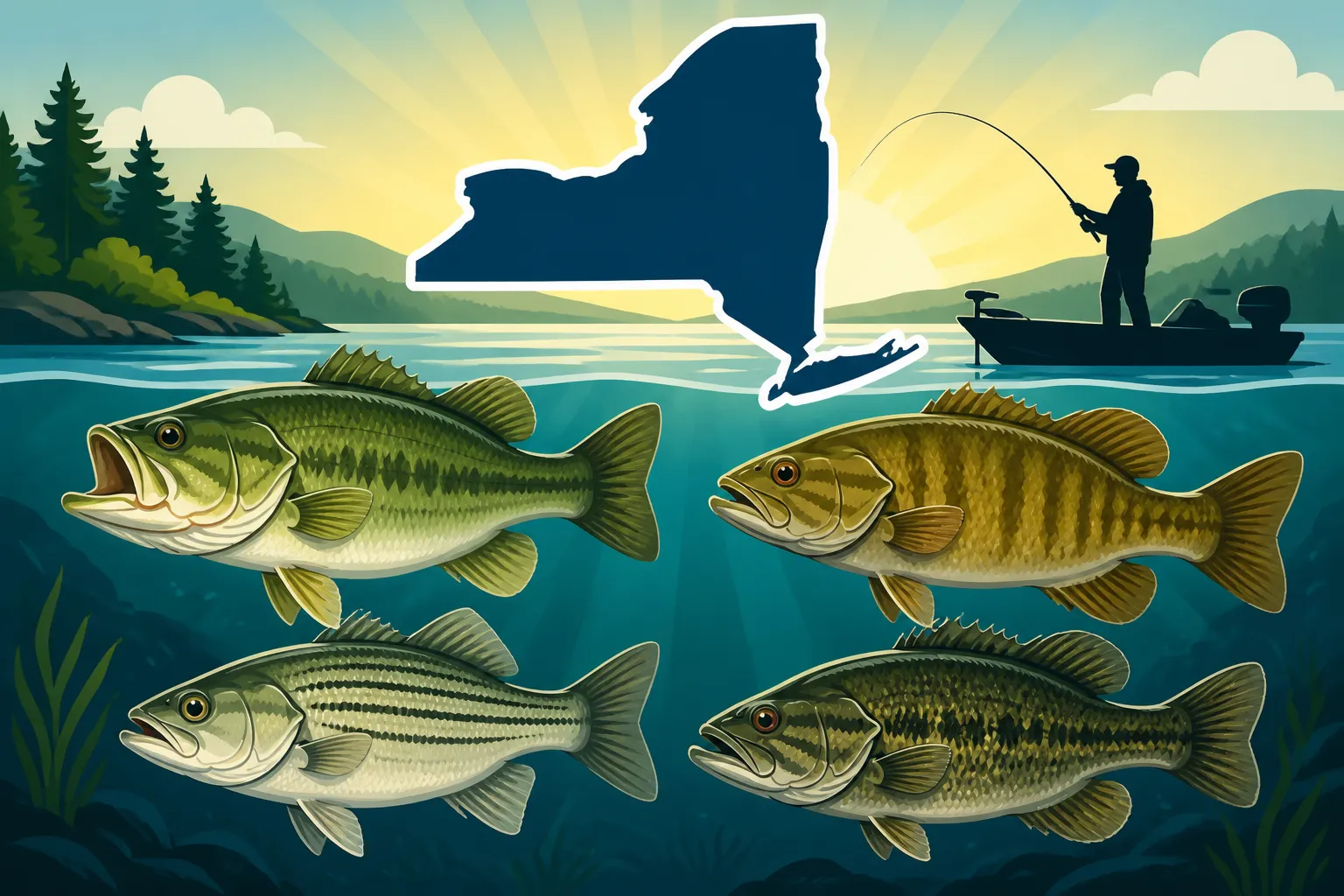
Identifying a largemouth bass is usually pretty straightforward once you know what to look for. The most obvious characteristic, and the one that gives them their name, is their mouth. The jaw of a largemouth bass extends noticeably past the back of its eye. If you catch one, gently hold it and observe that jawline; it's a dead giveaway. They also typically have a distinct, often irregular, dark lateral stripe or series of blotches running horizontally along their sides, which can vary in intensity depending on the water clarity and bottom composition of their habitat.
Their body shape is generally robust and stout, with a slightly deeper profile than their smallmouth cousins. Their coloration can range from a vibrant olive green to a much darker, almost blackish-green on the back, fading to lighter green or white on their belly. This camouflage allows them to blend seamlessly into the aquatic vegetation and shady areas where they prefer to hide. When you're fishing in a new lake, taking a moment to identify the species you're catching can really help you refine your techniques. New York's Most Popular Freshwater Fish often includes these beauties.
Where Largemouth Thrive: Lakes, Ponds, and Slow Rivers
Largemouth bass are habitat specialists, preferring warm, often shallower waters with abundant cover. Think weed beds, lily pads, submerged timber, docks, brush piles, and fallen trees. They are ambush predators, meaning they love to hide in these structures, waiting patiently for an unsuspecting baitfish, frog, or crawfish to swim by. This "structure-oriented" behavior is why understanding the underwater landscape is so crucial when targeting them. You won't find many largemouth schooling in open water; they're almost always relating to something.
In New York, you'll find healthy populations of largemouth bass in virtually every warmwater lake, pond, and slow-moving river. From the countless small, unnamed farm ponds across the state to larger bodies of water like Lake Oneida, Chautauqua Lake, and many of the Finger Lakes, largemouth are prolific. Even within larger river systems like the Mohawk or parts of the Hudson, you'll find backwater coves and oxbows that provide ideal largemouth habitat. New York Lakes Known for Largemouth Bass is a great place to start your search for specific spots. This preference for cover means that when you're scouting a new fishing spot, look for visual cues on the surface: patches of weeds, docks, or overhanging trees – these are prime largemouth haunts.
Top Techniques and Baits for Lunkers
Catching big largemouth bass is often about understanding their predatory instincts and presenting baits that either mimic their prey or trigger their aggressive territorial responses. Because they're ambush predators, fishing in the cover is paramount, and patience is often rewarded. One popular technique is flipping and pitching jigs or soft plastics into heavy cover. This allows you to drop your bait precisely into tight spots where a largemouth might be lurking. Another exciting method, especially in warmer months, is topwater fishing. Frogs, poppers, and walking baits thrown over lily pads or along weed edges can result in explosive, visual strikes that will make your heart pound.
Spinnerbaits and chatterbaits are excellent for covering water and working through lighter cover, imitating baitfish on the move. Crankbaits are also fantastic for exploring different depths and structure edges. For those looking for a versatile option, soft plastic worms, rigged Texas or Carolina style, are perennial favorites and can be deadly in a variety of conditions. You can find a vast array of these lures, from top brands to budget-friendly options, available on Amazon, ready to fill your tackle box. Remember to match your lure size and color to the prevalent forage in the water you're fishing. For more specific advice, check out guides like How to Fish for Largemouth Bass in Weeds or How to Fish a Topwater Lure for Bass.
Smallmouth Bass: The Hard-Fighting River and Lake Dweller
If the largemouth is the brawler of the lily pads, then the smallmouth bass is the agile, tenacious fighter of the rocks and current. Pound for pound, many anglers consider the smallmouth to be one of the hardest-fighting freshwater fish, often making spectacular leaps and long, powerful runs. Hook into a solid New York smallmouth, and you'll quickly understand why they're revered as true sport fish. They offer a different kind of challenge and a different kind of thrill than their largemouth cousins, inhabiting some of the state's most pristine and picturesque waters.
Spotting the Difference: Largemouth vs. Smallmouth
While both are "black bass" species and share some general characteristics, distinguishing a smallmouth from a largemouth is quite easy once you know the key markers. The most obvious difference lies, once again, in the mouth. Unlike the largemouth, the upper jaw of a smallmouth bass typically does not extend beyond the back of its eye. Their mouth appears smaller and more proportionate to their head.
Beyond the mouth, smallmouth bass tend to have a more streamlined, torpedo-shaped body compared to the bulkier largemouth. Their coloration is usually a bronze, golden-brown, or dark brown on the back, fading to a creamy white or yellowish belly. Instead of a distinct horizontal stripe, they often display subtle vertical bars or blotches along their sides, which gives them the nickname "bronze backs." Their eyes also tend to be larger and more prominent. Learning to quickly identify these differences helps you understand the specific behaviors and preferences of the fish you're targeting, allowing you to adapt your strategy on the fly. You might also find Largemouth Bass vs Smallmouth Bass: Key Differences helpful for a visual comparison.
Preferred Environments: Clear Water, Rock Structures, and Current
Smallmouth bass are lovers of cooler, clearer water and prefer environments with plenty of rock, gravel, and current. You won't typically find them buried deep in dense weed beds like largemouth. Instead, they relate to structures like rocky points, deep drop-offs, gravel bars, shoals, current seams, and submerged boulders. In rivers, they'll congregate around rapids, riffles, and eddy lines, using the current to their advantage to ambush prey. In lakes, look for them on offshore humps, rock piles, and deep structure.
New York is blessed with incredible smallmouth fisheries. The St. Lawrence River is legendary for its trophy smallmouth, as are the crystal-clear waters of many of the Finger Lakes, like Seneca, Cayuga, and Keuka. Lake Erie and Lake Ontario's rocky shores and offshore structures also hold incredible populations. Rivers like the Susquehanna, Delaware, and parts of the Allegheny also offer fantastic smallmouth action. These fish are often found deeper than largemouth, especially during the hotter months, so having a good understanding of lake contours and riverbeds is essential. A great place to explore specific spots is Best Smallmouth Bass Lakes in New York.
Effective Lures and Strategies for Smallmouth Success
When it comes to tempting smallmouth bass, it's often about finesse, speed, and mimicking their preferred prey: crawfish and minnows. Because they inhabit clearer water and often feed by sight, natural colors and lifelike presentations can be highly effective. One of the most classic and consistent smallmouth baits is a tube jig, fished by dragging or hopping it along the bottom, imitating a crawfish. You can find a wide selection of tube jigs in various colors on Amazon. Other soft plastics like grubs, swimbaits, and finesse worms also shine, especially on a drop shot rig or Ned rig.
Hard baits like crankbaits, jerkbaits, and topwater lures are also excellent choices, particularly when smallmouth are actively feeding. Crankbaits that dive to match the depth of rocky structures can trigger aggressive strikes, while jerkbaits excel at imitating injured baitfish. For river smallmouth, spinners and small inline spoons can be deadly, especially when fished in current seams. Fly fishing with streamers and crawfish patterns can also be incredibly productive and exhilarating. How to Fish for Smallmouth Bass in Rivers offers more specific tips for river fishing, while Best Smallmouth Bass Lures for Clear Water delves into lure selection for their typical clear-water habitats.
Striped Bass: The Estuary and Coastal Powerhouse
Now we venture into the salty realm! The striped bass, or "striper" as it's affectionately known, is arguably New York's most iconic saltwater game fish. These magnificent fish are known for their raw power, long runs, and sheer size, making them a top target for anglers up and down the Atlantic coast and deep into New York's tidal rivers. The thrum of a reel and the bent rod as a striper peels line off your spool is an unforgettable experience.
Distinctive Features and Migratory Habits
Striped bass are instantly recognizable. They possess a sleek, elongated, silver body with distinct dark horizontal stripes running from their gills to their tail. Typically, they have seven or eight prominent stripes, though smaller fish may have fewer or less defined markings. Their bodies are built for speed and power, enabling them to navigate strong currents and chase down prey. Their mouth is large and powerful, well-suited for engulfing baitfish.
What truly defines striped bass is their migratory nature. They undertake extensive annual migrations along the Atlantic Seaboard. In the spring, large schools move north, following warmer waters and abundant baitfish, often entering New York's coastal waters and tidal rivers, including the Hudson River, to spawn. Throughout the summer and fall, they can be found feeding voraciously in bays, nearshore ocean waters, and estuaries before heading south again as winter approaches. This migratory behavior means that understanding the seasons and local bait movements is paramount to consistent success when targeting stripers. For more on their movements, check out Striped Bass Lifespan Explained.
Prime Locations and Seasons for Stripers
New York offers incredible opportunities for striped bass fishing, with action spanning from early spring through late fall. The Hudson River is perhaps one of the most famous freshwater-influenced striped bass fisheries, serving as a critical spawning ground. Anglers flock to its waters from late April through June for the spring run. Further south, the vast expanse of Long Island Sound, the Great South Bay, and the open ocean waters off Montauk Point, Fire Island, and Jones Beach are prime striper territory throughout the warmer months.
During the spring, stripers are often found in shallower water, moving into estuaries and rivers. As summer progresses, they may move to deeper rips, rocky structures, and offshore bait concentrations. Fall sees another surge of activity, often referred to as the "fall run," as fish migrate south, feeding heavily along the coast. Fishing from shore, boat, or kayak are all viable options depending on the location and time of year. Knowing New York striped bass season dates will help you plan your trips effectively to maximize your chances during these peak times.
Tackle and Approaches for Saltwater Thrills
Catching striped bass often requires robust tackle and a variety of techniques, as these fish can range from schoolies (smaller fish) to genuine trophies. For boat anglers, trolling with bunker spoons, Mojos, or deep-diving plugs is effective, especially in open water or along channel edges. Live baiting with fresh bunker, herring, or eels is a highly productive method, particularly for larger fish. Many anglers swear by the effectiveness of live bunker fished on a circle hook. Best Live Bait for New York's Hudson River Striped Bass offers more details on this.
From shore, surfcasting with heavy spinning gear and artificial lures like poppers, pencils, darters, and bucktail jigs can be incredibly rewarding. Casting out into the surf during dawn or dusk, or under the cover of darkness, can lead to exhilarating strikes. Fly fishing for striped bass in shallow bays or rips is also gaining popularity, offering a challenging yet incredibly visual experience. No matter your chosen method, having a sturdy rod, a reliable reel with ample line capacity, and a tackle box stocked with a range of lures is crucial. You'll find a wide selection of saltwater tackle appropriate for stripers readily available on Amazon, from heavy-duty reels to a variety of proven plugs and soft plastics. For more specific insights on tackling these powerful fish, consider reading How to Fish for Striped Bass on New York's Hudson River.
Beyond the Big Three: Other Bass and Bass-Like Species
While largemouth, smallmouth, and striped bass tend to steal the spotlight in New York, our waters are also home to other fascinating fish that carry the "bass" moniker or are frequently mistaken for true bass. These species might not reach the same trophy sizes, but they offer fantastic sport, especially for casual anglers or those looking for consistent action. Understanding these additional species enriches your overall knowledge of New York's diverse aquatic life and can open up new fishing opportunities.
White Bass: Schooling Action in Inland Waters
White bass are a fantastic, often overlooked, schooling species found in various New York freshwater systems, particularly in the western and central parts of the state, often associated with the Great Lakes and their tributaries. They are smaller than their largemouth and smallmouth cousins, typically weighing under a pound, but what they lack in size, they make up for in aggression and numbers. When you find a school of white bass, it can be non-stop action, with multiple hookups common.
Visually, white bass are silvery-white with several faint, horizontal dark stripes running along their sides. They have a deeper body profile than a striped bass, and their dorsal fins are distinctively separated. They are voracious feeders, often chasing schools of baitfish to the surface, creating visible "boils" or feeding frenzies that are exciting to target. Look for them in large reservoirs, deep lakes, and slower river sections. Light tackle is perfect for these feisty fighters, and small spoons, spinners, and jigs are usually all you need. They are an excellent target for family outings or when you just want to bend a rod a lot.
Rock Bass: A Smaller, Feisty Panfish
The rock bass, sometimes colloquially referred to as "rock perch" or "red-eye bass," is another delightful freshwater species common throughout New York. While not a "true" black bass like largemouth or smallmouth, it's a member of the sunfish family, like crappie and bluegill, but shares enough characteristics to often be grouped with "bass" by anglers. They are small, typically ranging from 6 to 10 inches, but they are incredibly feisty for their size and can be found almost everywhere.
Rock bass are easily identified by their reddish eyes (hence "red-eye bass"), a stocky, perch-like body, and dark mottled patterns or rows of spots on their sides. They have a relatively large mouth for their size. As their name suggests, they love rocky areas – riprap, boulder fields, submerged logs, and docks in lakes, ponds, and rivers. They are not shy and will readily hit small baits and lures. Worms, crickets, tiny spinners, and jigs are all effective. They're a perfect target for kids or when you're looking for consistent bites, often found alongside bluegill and perch.
The "Black Bass" Family: Crappie and Sunfish Connection
It's worth a quick mention that when people talk about "bass," sometimes they're also vaguely referring to other members of the Centrarchidae family, which includes largemouth and smallmouth bass, but also crappie and various sunfish (like bluegill and pumpkinseed). While crappie and sunfish are not "bass" in the traditional sense, they share similar habitats with largemouth and smallmouth and provide excellent light-tackle fishing. Crappie are often called "calico bass" or "strawberry bass" in some regions, which can add to the confusion!
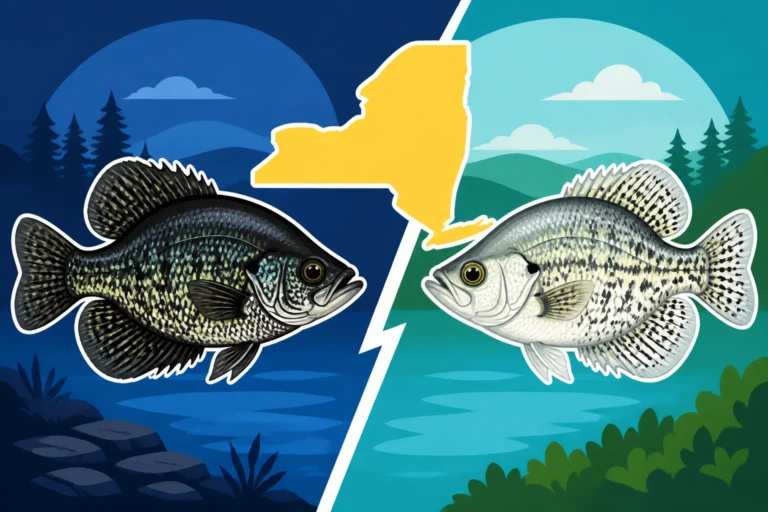
Crappie, both black and white, are fantastic panfish known for their delicious white meat and schooling behavior. They love submerged timber, brush piles, and weed edges. Sunfish are the quintessential beginner fish, found nearly everywhere and always eager to bite. While they don't offer the same brute strength as a striper or the aerial acrobatics of a largemouth, these species provide endless fun, especially for new anglers. Knowing that these are distinct species, even if they share some common characteristics or names, helps clarify the diverse fishing opportunities New York offers.
Navigating New York's Bass Fishing Regulations
Understanding the regulations governing bass fishing in New York isn't just about avoiding a fine; it's about protecting these incredible resources for future generations. The New York State Department of Environmental Conservation (DEC) sets specific rules for each species, which can vary by water body and region. Ignorance of the law is never an excuse, so taking the time to familiarize yourself with the current regulations before you head out is absolutely essential. This is where your pre-trip homework pays off.
Understanding Season Dates, Size, and Bag Limits
For each bass species, the DEC establishes specific season dates during which they can be legally harvested. Outside of these dates, fishing may be catch-and-release only, or entirely prohibited. For example, New York Bass Season Dates are clearly defined, and these can differ between largemouth and smallmouth, and even vary from general statewide rules in certain "special regulations" waters. This is particularly true for freshwater bass.
In addition to season dates, there are minimum or maximum size limits (often referred to as "slot limits" for some species) and daily creel (bag) limits. These regulations are designed to ensure that enough fish survive to spawn and maintain healthy populations. For instance, a common regulation might be "5 bass, 12-inch minimum length," meaning you can keep up to five bass, but each one must be at least 12 inches long. For striped bass, regulations can be more complex, sometimes involving slot limits to protect breeder fish and different rules for various water bodies or times of the year. Always consult the official New York Fishing Regulations Explained or the DEC's current fishing guide for the most up-to-date and specific information for the waters you plan to fish. You can often pick up a printed copy at any tackle shop or DEC office, or download it from their website.
| Species | General Season Dates | Minimum Size (approx.) | Daily Limit (approx.) |
|---|---|---|---|
| Largemouth Bass | Mid-June to Nov. 30 (Open) | 12 inches | 5 fish |
| Smallmouth Bass | Mid-June to Nov. 30 (Open) | 12 inches | 5 fish |
| Striped Bass | May to Dec. 15 (Open) | 28-31 inches (slot) | 1 fish |
| White Bass | Year-Round | No minimum | 25 fish |
| Rock Bass | Year-Round | No minimum | 50 fish |
Note: These are general examples. Always verify current regulations with the NYS DEC before fishing, as rules can change and vary by water body.
The Importance of Conservation and Responsible Angling
Beyond simply following the rules, responsible angling practices are crucial for bass conservation. Catch-and-release is a cornerstone of maintaining healthy fisheries, especially for trophy-sized fish or during sensitive periods like spawning seasons. When practicing catch-and-release, it's vital to handle fish gently, minimize their time out of water, and use proper de-hooking tools. Avoid excessive handling, especially by the gills, and release fish quickly and carefully to maximize their survival chances. Barbless hooks can also make catch-and-release easier and less stressful for the fish.
Another aspect of conservation is being mindful of invasive species. Cleaning your boat, waders, and tackle thoroughly between fishing trips in different water bodies helps prevent the spread of aquatic invasive species that can harm native bass populations and their habitats. Participating in local clean-up efforts or reporting unusual observations to the DEC also contributes significantly to the health of New York's aquatic ecosystems. Every angler has a role to play in protecting these precious resources. Following guidelines like those found in New York Freshwater Fishing Rules helps keep our waters vibrant and full of fish.
Essential Gear for Your New York Bass Adventures
Stepping out onto the water, whether it's a tranquil lake or a bustling estuary, with the right gear can make all the difference between a frustrating day and an unforgettable one. While you don't need to break the bank to get started, having tackle that's appropriate for the species you're targeting and the conditions you're fishing in will significantly enhance your experience and success. Think of it as having the right tools for the job – you wouldn't use a screwdriver to hammer a nail, right? The same goes for fishing gear.
Rods, Reels, and Line: Matching Your Tackle to the Target
Choosing the right rod, reel, and line combination is foundational to effective bass fishing. For largemouth and smallmouth bass, a medium-heavy spinning rod or baitcasting rod (6'6" to 7'6" in length) is generally a versatile choice. Spinning gear is often preferred for lighter lures and finesse techniques, especially for smallmouth, while baitcasting setups excel at accurately delivering heavier lures and provide more power for pulling largemouth out of dense cover. Match your reel size to your rod's power – a 2500-3000 size spinning reel or a standard baitcasting reel for most freshwater bass. For line, 8-15 pound test monofilament or fluorocarbon is a good all-around choice, with braided line (often 20-30 lb test) being excellent for strength and sensitivity, especially in heavy cover.
For striped bass, you'll need to step up your gear considerably. Saltwater stripers demand heavier tackle capable of handling larger fish and stronger currents. A medium-heavy to heavy spinning or conventional rod (7' to 10' for boat/surf) paired with a robust reel (4000-8000 size spinning or a comparable conventional reel) is essential. Spool your reel with 30-65 pound braided line, often with a fluorocarbon leader of 30-50 pounds. This setup provides the power to cast heavy lures and battle powerful fish. You'll find durable options for all types of fishing on Amazon, whether you're looking for a beginner combo or a high-performance setup. If you're wondering about specific choices, a piece like Best Line Weight for New York Freshwater Fishing might give you some ideas.
A Well-Stocked Lure Box for Every Bass Scenario
Your lure box is your arsenal, and a well-stocked one can adapt to changing conditions and fish preferences. For largemouth bass, having a variety of soft plastics (worms, creature baits, flukes), jigs (flipping, pitching, swim jigs), spinnerbaits, crankbaits (shallow, medium, deep divers), and topwater lures (frogs, poppers) is a great start. Experiment with colors, but always have natural baitfish colors, crawfish colors, and some bright, attention-grabbing options.
Smallmouth bass anglers should focus on tube jigs, small grubs, finesse worms (often on a drop shot), small crankbaits, jerkbaits, and inline spinners. Colors like green pumpkin, brown, smoke, and natural baitfish patterns are often highly effective in clear water. For striped bass, your lure box will look quite different. Stock up on heavy bucktail jigs, soft plastic swimbaits, large swimming plugs, poppers, and metal spoons or casting jigs. Different colors and sizes are crucial to match the varied baitfish stripers feed on throughout their migration, from bunker and herring to squid and sand eels. Don't forget an assortment of hooks, swivels, and sinkers appropriate for your chosen species and fishing method. Remember, the fish don't always bite the same thing, so variety is key!
Disclaimer
This article is for general informational purposes only and does not constitute professional advice. Laws, prices and regulations vary by location and change over time. Consult a qualified professional for guidance on your specific situation.