New York’s Seneca Lake Fishing Guide
Oh, the majestic Seneca Lake! If you've ever stood on its shores, gazing out at its vast, dark waters, you know it's a place of incredible beauty and mystery. But that sheer size can be daunting, right? It's easy to feel overwhelmed, wondering where on earth to even begin trying to find fish, let alone catch them. That's a completely valid frustration. Seneca Lake isn't just another pond; it's a deep, complex ecosystem. This guide is here to cut through that confusion, giving you the insider tips and comprehensive rundown you need to tackle Seneca Lake with confidence and, most importantly, with a bent rod!
Seneca Lake: The Deep Gem of the Finger Lakes
Seneca Lake isn't just big; it's the deepest of all the Finger Lakes, plunging to over 600 feet in some spots. This incredible depth, combined with its sheer volume, creates a unique fishing environment that offers opportunities for a diverse range of species, from cold-water titans to feisty warm-water game fish. Understanding the lake's specific characteristics is the first step to unlocking its angling potential.
Understanding Seneca Lake's Unique Characteristics
Seneca Lake stretches approximately 38 miles long and up to 3 miles wide, making it the second-longest and largest by volume among the Finger Lakes. But it's that depth that truly sets it apart. The average depth hovers around 290 feet, and its deepest point reaches a staggering 618 feet. This immense depth, coupled with its relatively consistent water quality, allows for a robust cold-water fishery that thrives year-round. The lake rarely freezes completely, even in the harshest winters, providing open-water opportunities when other lakes are locked up tight.
The depth also plays a crucial role in thermal stratification, especially during the warmer months. As summer progresses, the lake forms distinct layers: a warm surface layer (epilimnion), a transitional layer with rapid temperature change (thermocline), and a cold, deep layer (hypolimnion). Fish like lake trout and salmon will retreat to the cooler, oxygen-rich waters below the thermocline, often suspending over deep basins. Knowing how to locate and target these temperature breaks is absolutely critical for success, especially during July and August. On the flip side, the vast shallow areas along the shores, particularly at the north end near Geneva, warm up faster, creating excellent early-season opportunities for bass and panfish.
Key Access Points and Marinas
Accessing a lake the size of Seneca requires knowing the best points of entry, whether you're launching a boat, casting from shore, or looking for a full-service marina. Luckily, Seneca Lake is surrounded by charming towns that offer a variety of options.
On the northern end, the city of Geneva is a primary hub, offering multiple public boat launches, marinas, and plenty of shoreline access at places like Seneca Lake State Park. This is a great starting point, especially if you're targeting the shallower bays for bass or looking to access the northern reaches of the lake. Moving south along the western shore, you'll find smaller towns like Lodi and Romulus, which have more limited but still valuable public access points, often maintained by the DEC or local municipalities. These can be fantastic for quieter shore fishing or launching smaller boats.
The southern tip of the lake is home to Watkins Glen, another major entry point known for its picturesque setting and excellent facilities. Watkins Glen State Park provides public access and a marina, putting you in prime position to explore the deeper southern basin and the challenging but rewarding fishing opportunities there. On the eastern shore, towns like Dresden and Ovid offer more secluded launch sites. Many private marinas and campgrounds also dot the shoreline, providing additional services like fuel, bait, tackle, and transient slips for visiting anglers. Before heading out, it's always a good idea to check the New York State Department of Environmental Conservation (DEC) website for specific launch details, fees, and current conditions.
Target Species: What You'll Catch in Seneca Lake
Seneca Lake boasts an incredibly diverse fishery, truly offering something for every angler. From the powerful, deep-dwelling trout and salmon that challenge even experienced hands to the abundant bass and panfish that provide fantastic action closer to shore, you're spoiled for choice. Knowing what species lurk beneath the surface and where to find them is key to a successful trip.
Thriving Trout and Salmon Populations
Seneca Lake is perhaps best known as a premier cold-water fishery, particularly for its fantastic trout and salmon populations. These species thrive in the lake's deep, cool, and oxygenated waters.
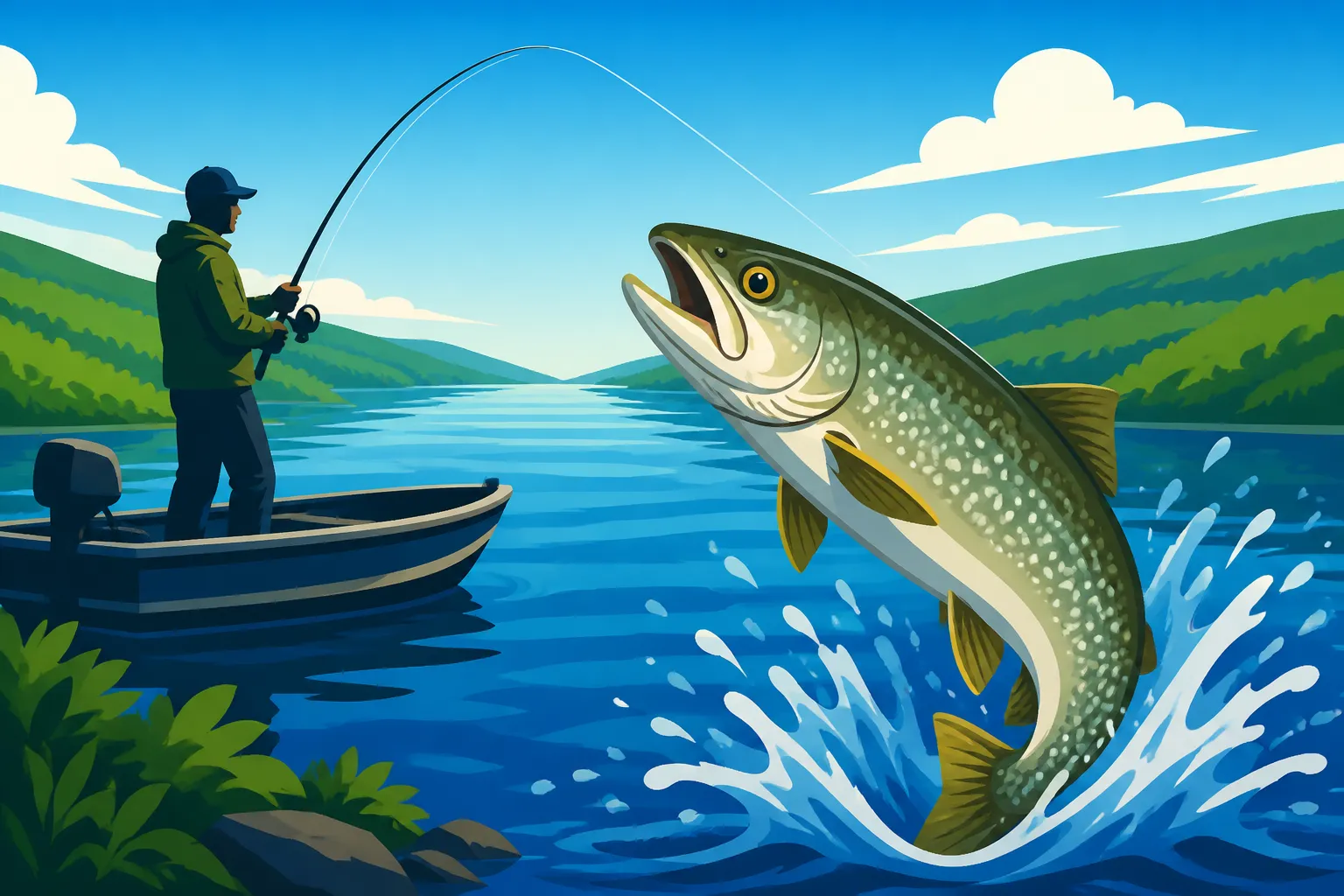
The undisputed king of Seneca Lake's cold-water fishery is the Lake Trout. These powerful, long-lived fish are native to the Finger Lakes and are present in high numbers. They are deep dwellers, often found hugging the bottom in 80 to 200 feet of water, especially during the warmer months. However, in spring and fall, they will move shallower, sometimes even within casting distance of shore in certain areas. Lake trout are aggressive predators, and catching a Seneca Lake laker, with its dark, mottled skin and powerful fight, is a true angling achievement. For more detailed information, check out our guide on Lake Trout in New York.
Brown Trout are another popular target, heavily stocked by the DEC. While they can be found throughout the lake, they often prefer shallower, cooler water than lake trout, particularly near drop-offs and structure where they can ambush baitfish. Browns are known for their strong runs and acrobatic jumps, making them a thrilling catch. They are often targeted by trollers in the top 50 feet of the water column, especially during spring and fall when they cruise the nearshore areas. Learn more about these formidable fish in our guide to Brown Trout in New York.
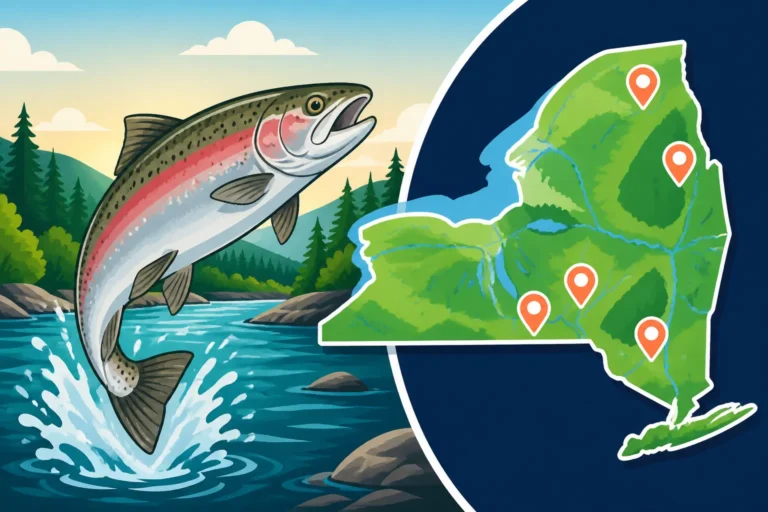
Rainbow Trout, also stocked, offer a similar challenge to brown trout but are often even more spirited fighters. Like browns, they are often found in the upper water column and near shore, especially during the cooler seasons. Their iridescent colors make them a beautiful catch, and they are a favorite among anglers who enjoy light-tackle trolling or casting from shore near tributaries.
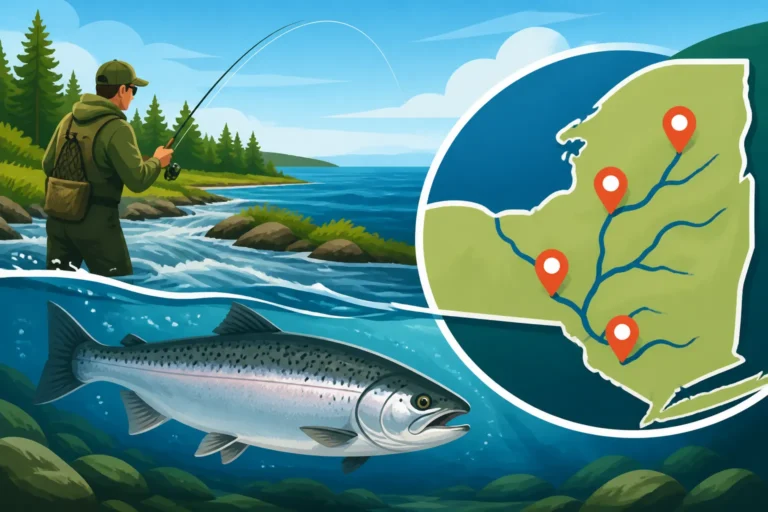
Finally, Seneca Lake is home to a robust population of Landlocked Atlantic Salmon. While not native, these "landlocked" versions of their oceanic cousins have adapted well to the deep, clear waters. They are often found suspending in the mid-water column, feeding on alewives, their primary forage. Landlocked salmon are incredibly fast and put up a spectacular fight, characterized by blistering runs and aerial displays. Many anglers consider a Seneca Lake landlocked salmon to be one of the most prized catches in the region. Our comprehensive guide on Landlocked Atlantic Salmon in New York offers even more insights into these magnificent fish.
Bass and Panfish: Nearshore Action
While the deep-water species get a lot of the spotlight, Seneca Lake also offers fantastic opportunities for warm-water species, particularly bass and panfish, which provide exciting action closer to shore and are excellent targets for families or anglers using lighter tackle.
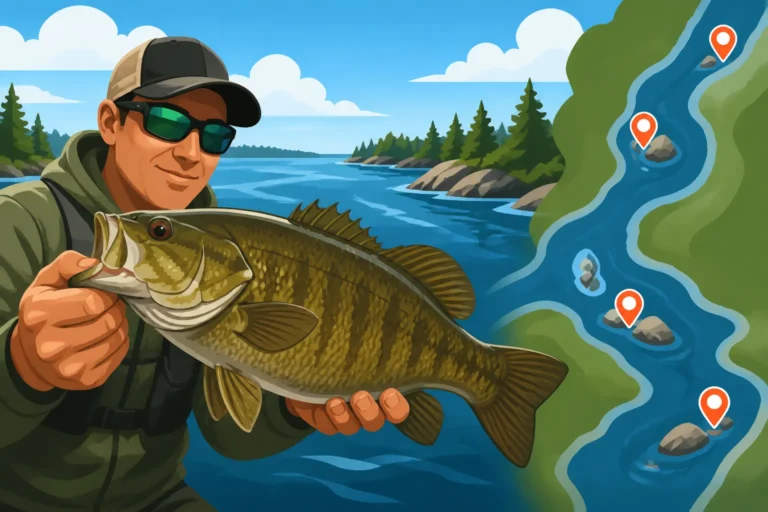
Smallmouth Bass thrive in Seneca Lake's clear, rocky environments. These hard-fighting fish are true bronzebacks, known for their incredible strength and willingness to strike a variety of lures. You'll find them congregating around rocky points, shoals, submerged humps, and steep drop-offs throughout the lake. In the spring, they move into shallower water to spawn, offering exceptional sight-fishing opportunities. During summer, they might retreat to deeper rock piles, but they remain active. For more tips on targeting these feisty fish, see our guide on Smallmouth Bass in New York.
Largemouth Bass, though less dominant than smallmouths, are also present, especially in the shallower, weedy bays and protected coves. These fish prefer areas with extensive submerged vegetation, docks, and fallen trees, which provide excellent cover for ambushing prey. While you might not find the sheer numbers of largemouths as in some other New York lakes, Seneca Lake can produce some impressive bucketmouths for those who know where to look.
For consistent action and family-friendly fishing, Yellow Perch and various Panfish (like bluegill and sunfish) are abundant. Perch are especially plentiful in Seneca Lake and can be caught throughout the year, including through the ice if conditions allow. They tend to school up, so once you find one, you're likely to find many more. Look for them in areas with moderate depth, often near weed lines or submerged structure. Panfish are also common in the shallower, warmer sections of the lake, particularly around docks, lily pads, and brush, making them perfect targets for kids or those simply looking for a relaxing day with a bobber and a worm.
Essential Techniques for Seneca Lake Success
Fishing a lake the size and depth of Seneca requires a diverse set of skills and specialized gear. You can't approach it like a small pond, especially when targeting the deep-dwelling giants. Mastering specific techniques will dramatically increase your chances of success.
Mastering Trolling for Deepwater Species
When it comes to consistently catching lake trout, brown trout, rainbow trout, and landlocked salmon in Seneca Lake, trolling is often the most effective method. These fish are constantly on the move, chasing baitfish like alewives, and covering water efficiently is key.
Trolling involves dragging lures behind a moving boat at specific depths and speeds. For deepwater species like lake trout, downriggers are indispensable. These mechanical devices allow you to precisely control the depth of your lure, dropping it down to 80, 100, or even 200 feet where the lakers often reside, especially during the summer. By monitoring your fish finder for bait balls and temperature breaks (the thermocline), you can present your lure right in the strike zone. Another popular method for reaching moderate depths is lead core line, a specialized line that sinks at a predictable rate based on its color segments and your boat speed. It's fantastic for targeting fish in the 20-60 foot range, often used for brown trout and rainbows in the spring and fall.
Beyond depth control, lure selection is critical. Spoons like Michigan Stinger, Dreamweaver, or Sutton spoons are incredibly popular for all trout and salmon species, mimicking fleeing baitfish. Stickbaits (Rapalas, J-Plugs, Warrior Lures) are also effective, particularly in spring and fall when fish are shallower. Color patterns should match the forage, with silver, blue, green, and chartreuse being consistent producers. Pay attention to your trolling speed; generally, 2.0 to 3.0 mph is a good starting point, but subtle changes can often trigger strikes. Trolling along depth contours, over deep basins, or near prominent points can be highly effective. For more advanced strategies, our article on Trolling Techniques for New York's Lakes dives deeper into the nuances of this method. If you're specifically after those deep lake trout, you'll find our guide on How to Downrig for Lake Trout to be an invaluable resource.
Casting and Jigging for Bass and Panfish
While trolling dominates the deepwater game, casting and jigging are your go-to techniques for the active nearshore populations of bass and panfish. These methods offer a more interactive and often more accessible way to fish Seneca Lake.
For smallmouth bass, casting lures to rocky points, shoals, and breaklines is highly effective. Soft plastics, such as tube jigs (white, green pumpkin, or brown are excellent choices) and grub-style baits rigged on a jig head, are perennial favorites. Work them slowly along the bottom, mimicking crayfish or gobies (an invasive species that smallmouths readily feed on). Small crankbaits and jerkbaits, retrieved with an erratic stop-and-go motion, can also trigger aggressive strikes, especially when bass are actively feeding. In the spring, when smallmouths move into shallower rocky areas to spawn, sight-fishing with jigs or small soft plastics can be incredibly exciting. During the summer, look for them holding on deeper rock piles and steep drop-offs, where vertical jigging with blade baits or heavy spoons can be productive.
Largemouth bass will require a different approach, focusing on areas with heavier cover. Flipping and pitching jigs or Texas-rigged plastic worms into weed mats, alongside docks, or into submerged brush is key. Topwater lures like poppers and walk-the-dog baits can create explosive strikes during low-light conditions in summer. Spinnerbaits and chatterbaits are also excellent for covering water and enticing largemouths from cover.
For yellow perch and panfish, simplicity is often best. A light spinning rod with 4-6 lb test line, a bobber, and a small hook tipped with a live worm, minnow, or piece of corn will catch plenty. Small jigs, tipped with a bit of scented soft plastic or a live grub, are also highly effective, especially when fished around weed lines or structure. Ice fishing for perch, when conditions allow, involves similar techniques, using small jigs and baits through drilled holes. Look for schools of perch on your fish finder, often suspending a few feet off the bottom or near the edges of weed beds.
Seasonal Fishing Strategies on Seneca Lake
Understanding the seasonal movements and behaviors of Seneca Lake's diverse fish populations is paramount to consistent success. Each season brings unique opportunities and challenges, dictating specific tactics and locations.
Spring: Awakened Waters
Spring on Seneca Lake is a time of awakening, as water temperatures begin to rise and fish become increasingly active after the long winter. This is a fantastic time to target many species, as they move into shallower waters for feeding and spawning.
As the ice retreats (if it formed at all), the first fish to really get going are often the brown trout and rainbow trout. They will cruise the upper portions of the water column and nearshore areas, particularly around tributary mouths where warmer water and new food sources enter the lake. Trolling spoons and stickbaits in the top 30-50 feet of water, often within a quarter-mile of shore, can be incredibly productive. Focus on areas with good baitfish concentrations. Early spring also sees lake trout moving shallower, sometimes to depths of 40-60 feet, before the summer thermocline sets in. They can often be caught by trolling or even casting from shore in certain deep access points.
Smallmouth bass also become highly active in the spring. As water temperatures climb into the 50s Fahrenheit, they'll begin moving from their deeper wintering holes to rocky points, shoals, and shallow flats to feed. This pre-spawn period offers some of the best smallmouth action of the year, as they are aggressive and readily strike jerkbaits, swimbaits, and tube jigs. Once temperatures reach the low 60s, they'll move onto beds to spawn, offering opportunities for sight fishing in clear, shallow areas. Remember, during the spawn, practicing catch and release is highly encouraged to protect the future of the fishery. Even though you might be eager to get out there, always consult the New York Fishing Season Dates and Catch Limits to ensure you're compliant with regulations.
Summer: Deepwater Pursuits and Early Morning Bites
Summer on Seneca Lake brings warm weather and sunshine, but it also signals a shift in fishing tactics, especially for the cold-water species. The formation of the thermocline pushes trout and salmon into deeper, cooler zones.
During July and August, the lake trout will retreat to the deep, cold waters, often suspending over basins or clinging to the bottom in 80 to 200+ feet. This is where downriggers become absolutely essential for precise depth control. Targeting the cold-water side of the thermocline, or just above it, is often where you'll find active fish. Similarly, landlocked salmon, brown trout, and rainbow trout will hold in the cooler water, often suspending higher in the water column than lakers, but still well below the surface. Trolling with spoons and flies behind flashers or dodgers at various depths (using downriggers or lead core) will be your best bet. Our specific guide, Best Depth for Lake Trout in Summer on New York's Seneca Lake, offers invaluable insights for this season.
For bass, summer means early morning and late evening bites are often the most productive. The scorching midday sun can push them into deeper cover or make them less active. Smallmouths will be found on deeper rock piles, humps, and steep drop-offs, where vertical jigging or slow-rolling tube jigs can be effective. Largemouths will be tucked deep into thick weed beds or under shady docks. Topwater lures at dawn and dusk can be incredibly exciting, and flipping jigs into heavy cover during the day can still yield results. Yellow perch and other panfish are abundant during the summer and can be caught throughout the day in moderate depths near weed lines or submerged brush, making them a great option for steady action.
Fall: Trophy Season and Spawning Runs
Fall is arguably one of the most exciting times to fish Seneca Lake. As water temperatures begin to cool, many fish species become incredibly active, feeding aggressively in preparation for winter or their spawning runs.
The cooling waters of autumn draw lake trout, brown trout, and rainbow trout back into shallower depths. This is often considered prime time for trophy browns and rainbows, as they feed heavily. Trolling spoons and stickbaits in the top 50 feet, especially near points, drop-offs, and tributary mouths, can be phenomenal. The fall also marks the beginning of the landlocked salmon spawning run. While Seneca Lake doesn't have major tributary runs like some other salmon rivers, the fish will stage near the mouths of creeks, providing excellent opportunities for anglers trolling or casting in those areas. This is often considered the Best Season for Landlocked Salmon on New York's Finger Lakes.
Bass fishing in the fall can also be spectacular. Smallmouths will be gorging on baitfish, moving onto shallower rock piles and flats during warm spells, or holding on deeper breaks when a cold front pushes through. Crankbaits, jerkbaits, and swimbaits are highly effective for these aggressive feeders. Largemouths will similarly be feeding heavily in preparation for winter, often found concentrating on remaining green weed lines or around available structure. Topwater action can still be good on warmer days, but lipless crankbaits and jigs become more prominent. The entire lake comes alive with feeding activity, making fall a truly special time to be on the water.
Winter: Ice Fishing Opportunities (When Safe)
While Seneca Lake rarely freezes over completely due to its immense depth and the influence of deep currents, certain shallower bays and the extreme northern and southern ends can develop safe ice in colder winters. When conditions allow, ice fishing offers a unique way to experience the lake's bounty.
Ice safety is paramount. Always check local conditions and ice thickness reports from the DEC or reputable bait shops before venturing out. Never assume the ice is safe, especially on a large, deep lake like Seneca where conditions can vary dramatically even within short distances. Typically, the extreme northern end near Geneva and some of the shallower coves might offer ice fishing opportunities first. For comprehensive information on ice safety, please consult a guide like How to Read Ice Thickness for Safe Ice Fishing.
When safe ice is present, yellow perch are the primary target, often schooling in good numbers. Small jigs tipped with spikes, wax worms, or a piece of minnow will be highly effective. Finding the schools with a fish finder is key. Lake trout can also be targeted through the ice, though it requires more specialized tactics and often thicker ice over deeper water. Vertical jigging with heavy spoons or large tube jigs, often tipped with a minnow head, is the preferred method. You'll need an ice auger capable of drilling through thick ice and a good understanding of where the lakers are holding, which can be challenging without advanced electronics. For those interested, our guide on Ice Fishing in New York: A Complete Guide provides more detailed information on techniques and safety.
Regulations, Licenses, and Responsible Angling
Before you even think about casting a line into Seneca Lake, it's absolutely crucial to understand the rules of the game. Fishing without the proper credentials or disregarding regulations can lead to fines and legal trouble, and frankly, it undermines the very health of the fishery we all love.
Navigating New York's Fishing Regulations
New York State has a comprehensive set of fishing regulations, and Seneca Lake, as part of the Finger Lakes, has specific rules that apply. These regulations cover everything from open seasons for particular species to size limits, daily creel limits (how many fish you can keep), and tackle restrictions.
For instance, while there are statewide general fishing regulations, many Finger Lakes, including Seneca, have special regulations for certain species like lake trout, brown trout, and landlocked salmon, which may differ from other parts of the state. These differences often relate to length minimums, daily bag limits, and even tackle types (e.g., single hooks vs. treble hooks in certain areas or seasons). These specific rules are designed to protect vulnerable populations, manage fish stocks, and ensure sustainable fishing for future generations.
It's your responsibility as an angler to be familiar with these rules. The most up-to-date and accurate information can always be found in the current New York State Freshwater Fishing Regulations Guide, which is published annually by the DEC. You can pick up a physical copy at most bait and tackle shops, DEC offices, or view it online. Neglecting to check the latest regulations is a common pitfall that can easily be avoided. A great starting point is our comprehensive overview of New York Freshwater Fishing Rules.
Securing Your New York Fishing License
This might seem obvious, but it's astonishing how many people overlook this fundamental requirement. If you are 16 years of age or older, you absolutely need a valid New York State fishing license to fish in Seneca Lake, or any other public waterbody in the state. No exceptions, unless it's a designated free fishing day.
There are various types of fishing licenses available, catering to residents and non-residents, and offering annual, 7-day, or 1-day options. For most regular anglers, an annual license is the most cost-effective. Seniors (70 years and older) often qualify for discounted rates, and special provisions exist for disabled anglers and military veterans.
Getting your license is easy these days. You can purchase one online through the NYS DEC website, which is incredibly convenient and allows you to print a temporary license at home. Alternatively, you can buy one in person at hundreds of license issuing agents across the state, including most Walmart stores, sporting goods shops like Dick's Sporting Goods, and many town clerk offices. Always keep your license with you while fishing – either a physical copy or a digital version on your phone – as you'll need to present it if requested by an Environmental Conservation Officer. To get a full understanding of your options, read our New York Fishing License Costs and Options or learn How to Buy a Fishing License Online in New York.
Conservation and Sustainable Fishing Practices
Beyond the legal requirements, responsible angling on Seneca Lake means adopting conservation-minded practices that help protect the environment and ensure the health of the fishery for generations to come.
One of the most impactful practices is catch and release, especially for species like lake trout, landlocked salmon, and larger bass. If you're not planning to eat your catch, or if you've already met your daily limit, release the fish carefully to minimize stress and maximize its survival chances. Use appropriate handling techniques: wet your hands before touching the fish, use barbless hooks or crimp down barbs to facilitate easy removal, and support the fish horizontally when unhooking. Avoid excessive air exposure, especially during warm weather.
Preventing the spread of invasive species is another critical responsibility. Seneca Lake, like many Finger Lakes, has battled invasives such as zebra mussels, quagga mussels, and round gobies. These species can devastate native ecosystems. Always inspect and clean your boat, trailer, and fishing gear (including waders and nets) thoroughly after leaving the water. Drain all water from your livewell, bilge, and engine. Dry your gear completely before using it in another waterbody. This "Clean, Drain, Dry" protocol is crucial.
Finally, practice "leave no trace" principles. Pack out everything you pack in – and then some. Don't leave behind fishing line, bait containers, food wrappers, or any other trash. Respect private property and public access points. By being good stewards of the environment, we contribute to a vibrant and healthy Seneca Lake fishery for everyone.
Planning Your Seneca Lake Fishing Adventure
Embarking on a fishing trip to Seneca Lake, especially if it's your first time or you're aiming for a specific trophy, benefits immensely from careful planning. From deciding whether to go with a guide to making sure you have the right gear, a little foresight goes a long way.
Choosing a Fishing Charter or Guide
For many anglers, especially those new to Seneca Lake's vastness or targeting challenging species like lake trout and salmon, hiring a fishing charter or guide can be an absolute game-changer.
The biggest benefit is tapping into local expertise. A good guide spends hundreds of hours on Seneca Lake each season, intimately knowing the best spots, the current fish patterns, and the most effective techniques. They have high-end electronics, specialized gear (like multiple downriggers and a full spread of lures), and a boat perfectly suited for the lake's conditions. This means you can often skip the learning curve, increase your chances of success, and learn valuable tips and tricks that would take years to acquire on your own. For those interested, our guide to New York's Finger Lakes Fishing Guides offers more specific advice.
When choosing a charter, look for captains who are licensed by the US Coast Guard (for larger vessels) and insured. Ask about their experience on Seneca Lake specifically, what species they target, and what's included in the price (e.g., tackle, bait, fish cleaning). Online platforms like FishingBooker can be an excellent resource for finding reputable guides, reading reviews from previous clients, and comparing prices and offerings. They often list captains operating out of Geneva, Watkins Glen, or other Seneca Lake access points, specializing in everything from salmon and trout to bass trips. Don't hesitate to call a few different services to discuss your goals and comfort level before booking.
Gear Essentials and Local Shops
Whether you go with a guide or venture out on your own, having the right gear is fundamental. Seneca Lake's diverse fishery means your tackle box might need a few specialized additions.
For trolling for trout and salmon, you'll typically need medium-heavy to heavy action trolling rods, equipped with line counter reels spooled with at least 20-30 lb monofilament or braid. An assortment of spoons (e.g., Michigan Stinger, Dreamweaver, Sutton), stickbaits (Rapala, J-Plug), and perhaps some flasher/fly combos will be crucial. Downriggers are practically a necessity for deep lake trout fishing.
For bass and panfish, a medium-light to medium action spinning rod with 6-10 lb fluorocarbon or braided line will cover most situations. Your tackle box should include an array of jigs (tube jigs, football jigs), soft plastics (worms, creature baits), crankbaits, jerkbaits, and topwater lures. For panfish, lighter line (4-6 lb test), small hooks, bobbers, and live bait like worms or minnows are always a safe bet.
Don't forget the essentials: a good pair of polarized sunglasses to spot structure and fish, sunscreen, a hat, rain gear (the weather can change quickly on a big lake), a cooler for your catch, and a reliable fish finder/GPS unit if you're on your own boat.
Visiting local bait and tackle shops around Seneca Lake is highly recommended, even if you think you have everything. Shops in Geneva or Watkins Glen are invaluable resources. They not only stock region-specific lures and baits but also provide up-to-the-minute local advice on what's biting, what depths fish are holding at, and any recent changes in regulations or conditions. They are often run by passionate local anglers who love to share their knowledge, and they are usually the best places to pick up your New York Fishing License Guide or learn about New York Freshwater Fishing Rules.
Disclaimer
Always check the latest New York State Department of Environmental Conservation (DEC) regulations before fishing, as rules and seasons can change. This guide provides general information and recommendations, but it is the angler's responsibility to comply with all current laws.