How to Identify Fish Species in New York
Ever hooked into something amazing in New York's incredibly diverse waters, only to stare at it, scratching your head, wondering exactly what species it is? It's a universal angler's dilemma, and let's be honest, sometimes it feels like a pop quiz on the water. Knowing your catch isn't just about sharing a cool photo or impressing your buddies; it's absolutely crucial for following regulations, practicing responsible angling, and truly appreciating the natural world around you. This comprehensive guide will equip you with the essential knowledge and practical tools to confidently identify the vast array of fish species you'll encounter across the Empire State, whether you're casting in a tranquil Adirondack pond or battling a behemoth in the Atlantic.
Why Accurate Fish Identification Matters
Fishing in New York is a privilege, and with that comes a responsibility to understand and respect the aquatic ecosystems we enjoy. Misidentifying a fish can lead to a lot more than just a momentary lapse in judgment; it can have serious repercussions, both for you and for the fish populations themselves. It's a cornerstone of ethical angling.
Legal Compliance and Regulations
Let's face it, nobody wants a ticket when they're out enjoying a peaceful day on the water. New York State has incredibly specific fishing regulations, and these often vary significantly by species, waterbody, and even time of year. For instance, the daily creel limit for brown trout might be completely different from that for brook trout, even if you caught them in the same stream. Similarly, minimum size limits for striped bass in the Hudson River can differ from those for fluke on Long Island Sound. Imagine catching what you think is a legal-sized smallmouth bass, only to find out later it was a protected juvenile walleye. Understanding these distinctions is not just a suggestion; it's the law. The New York Freshwater Fishing Rules are extensive, and knowing your fish is step one in adhering to them. Without accurate identification, you might inadvertently keep an undersized fish, exceed a daily limit, or even retain a species that is currently out of season or protected. This can lead to hefty fines and a ruined fishing trip.
Conservation and Ethical Angling
Beyond the legal aspect, accurate fish identification is a cornerstone of responsible conservation. Every angler has a role to play in protecting New York's valuable fisheries for future generations. When you can correctly identify your catch, you're better equipped to make informed decisions about whether to keep or release it, especially if you're practicing catch-and-release fishing. For example, knowing the difference between a native brook trout and a stocked rainbow trout might influence your decision, particularly if you're trying to minimize impact on wild populations. Proper handling for catch-and-release also depends on the species; some are more delicate than others. Furthermore, being able to identify invasive species is critical. If you accidentally catch something like a round goby or snakehead, knowing what it is allows you to take appropriate action, such as not releasing it back into the water, and reporting it to the DEC, helping prevent its spread. This proactive approach supports the long-term health and balance of New York's aquatic environments.
Personal Satisfaction and Learning
Let's not forget the pure joy and knowledge that come with being able to identify your catch! There's a profound satisfaction in knowing exactly what you've landed, understanding its biology, its habits, and its place in the ecosystem. It transforms fishing from just catching fish into a deeper, more engaging interaction with nature. Being able to distinguish between a Chinook Salmon in New York and a coho salmon, or a Steelhead Trout in New York from a resident rainbow trout, adds layers to your angling experience. It enriches your appreciation for the subtle differences in fin structure, coloration, and even behavior. This knowledge allows you to learn more about the specific species you're targeting, refine your techniques, and become a more skilled and observant angler overall. Plus, it makes those fishing stories you tell even better when you can confidently name the star of the tale!
Essential Identification Features: What to Look For
Identifying fish isn't just a guessing game; it's a systematic process of observation. Think of it like being a detective, looking for clues. When you pull a fish from the water, take a moment before you release it or place it in your cooler. You'll want to quickly assess several key features that are unique to each species. Having a good, waterproof field guide in your tackle box or a reliable app on your phone can make this process much easier. You can often find excellent, detailed regional fishing guides on Amazon that cover the specific fish you're likely to encounter in New York.
Body Shape and Fin Placement
The overall shape of a fish's body is one of the first and most obvious clues. Is it long and slender like an eel or a pike? Deep-bodied and compressed like a sunfish? Or more torpedo-shaped like a trout or salmon? Consider the position and number of its fins.
- Dorsal Fin: Some fish have one continuous dorsal fin (like a walleye), while others have two distinct dorsal fins (like a perch) or even a deeply notched single dorsal fin that appears almost like two (like a bass). Look closely at the number of spines in the anterior (front) dorsal fin versus soft rays in the posterior (rear) dorsal fin. This is a critical identifier for many species.
- Adipose Fin: This small, fleshy fin located on the back between the dorsal and caudal (tail) fins is a tell-tale sign of trout and salmon species, including Lake Trout in New York, Brown Trout in New York, and Rainbow Trout in New York. If it has one, you're likely looking at a member of the salmonid family. Bass, perch, and most saltwater species lack this fin.
- Caudal Fin (Tail): Is it forked deeply like a salmon, slightly forked like a walleye, or rounded like some panfish? The shape of the tail can be a significant clue, especially when differentiating between similar species.
- Pectoral and Pelvic Fins: Note their size and placement. Are they high on the body or low? Some species, like fluke, are flat and have very different fin arrangements compared to round-bodied fish.
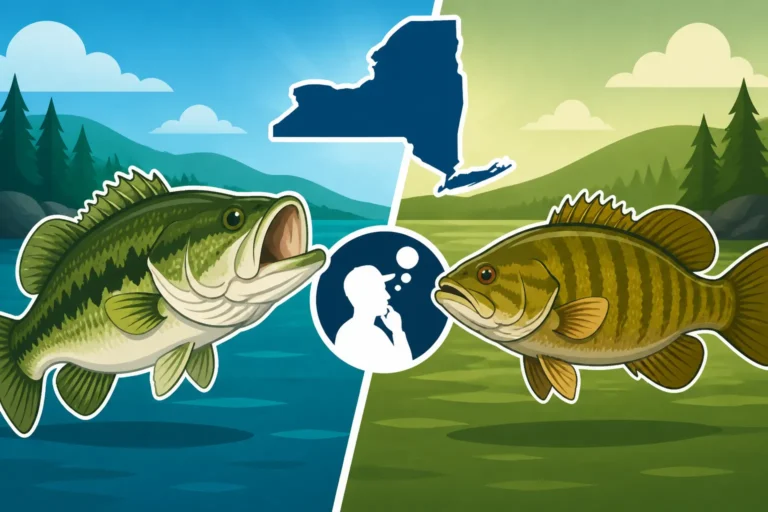
For example, when comparing a Largemouth Bass in New York to a Smallmouth Bass in New York, the dorsal fin is key. A largemouth has a very deep notch in its dorsal fin, making it look almost like two separate fins, whereas a smallmouth has a more shallow, continuous dorsal fin. These subtle differences in fin placement and structure are often the defining characteristics.
Mouth, Jaw, and Tooth Structure
The mouth of a fish tells you a lot about its diet and how it feeds, making it an excellent identification feature.
- Jaw Extension: Does the upper jaw extend past the eye? For example, a largemouth bass's jaw extends well past the eye, while a smallmouth's typically ends right under or before the eye. This is one of the most reliable ways to differentiate between these two popular bass species.
- Tooth Presence and Type: Are there sharp, needle-like teeth like a pike or muskellunge? Small, sandpaper-like teeth? Or perhaps no teeth at all, like a carp? A fish's dentition reveals its predatory nature or its preference for grinding vegetation. Many salmonids have small, sharp teeth, but they are often less formidable than those of a pike.
- Mouth Position: Is the mouth upturned (superior), indicating it feeds on surface insects, or downturned (inferior), suggesting it's a bottom feeder? A terminal mouth, positioned at the very front of the head, is common for opportunistic feeders. For instance, the walleye has a terminal mouth with prominent canine teeth, designed for catching prey in open water.
Careful observation of the mouth can even help distinguish between closely related species like Muskellunge in New York and northern pike. While both have formidable teeth, there can be differences in the shape of their jawlines and the pattern of pores on their lower jaw.
Coloration, Patterns, and Markings
Color can be tricky because it can vary greatly based on habitat, water clarity, diet, and even the fish's mood. However, consistent patterns and distinct markings are often reliable identifiers.
- Spots and Splotches: Are there red spots surrounded by blue halos (classic brook trout)? Dark spots with light halos (brown trout)? Or small, irregular black spots (rainbow trout)? The size, shape, and distribution of spots are crucial for trout identification. Some salmon, like the Coho Salmon in New York, have spots only on the upper lobe of their tail, while others like the chinook have spots on both lobes.
- Bars and Stripes: Many bass species have distinct horizontal stripes or vertical bars. The distinct lateral stripe on a largemouth bass, for instance, or the vertical bars often seen on a smallmouth. Striped Bass in New York are named for their prominent dark horizontal stripes.
- Worm-like Markings (Vermiculations): Look for these intricate patterns, particularly on the back and dorsal fins of species like brook trout. These "worm tracks" are a key identifier for this beautiful native New York fish.
- Eye Color: While not always the primary identifier, the color of a fish's eye can sometimes offer a subtle clue, particularly in low-light conditions or when comparing very similar species. Walleye, for example, get their name from their large, somewhat opaque eyes, adapted for seeing in dim light.
Remember, fresh coloration is always best for identification. A fish that's been out of water for a while or in a cooler will often lose some of its vibrant colors, making patterns a more reliable feature.
Scale Characteristics and Lateral Line
While not as immediately obvious as body shape or color, examining scales and the lateral line can provide definitive identification points, especially for confusing species.
- Scale Size and Texture: Are the scales large or small? Smooth or rough to the touch? Some fish, like catfish, have no scales at all, possessing a smooth, leathery skin. Carp, on the other hand, have very large and prominent scales.
- Lateral Line: This is a sensory organ that runs along the side of a fish, typically from the gill cover to the tail. It appears as a distinct line of pores. Its completeness, shape (straight, curved), and position can be an identifier. Some species, like the white bass, have multiple distinct lateral lines. Pay attention to whether the lateral line is continuous or broken, and how many scales are above and below it, which can be a count used in field guides.
- Cheek Markings: In some fish, like pike and muskellunge, the scale patterns on their cheeks and gill covers are crucial for differentiation. Pike typically have scales covering the entire cheek and upper half of the gill cover, while muskellunge usually only have scales on the upper half of both. This is a subtle but very reliable difference that expert anglers use.
Taking a quick photo of these features, particularly the mouth, fins, and lateral line, can be incredibly helpful for later verification or if you need to consult a reference. Many excellent fishing apps even allow you to upload photos for AI-assisted identification.
Freshwater Giants: Identifying New York's Popular Game Fish
New York is a freshwater angler's paradise, offering an incredible diversity of game fish. From the roaring tributaries of Lake Ontario to the quiet ponds of the Catskills, knowing your freshwater species is essential.
Trout and Salmon Species
The trout and salmon family (salmonids) are among the most sought-after fish in New York, prized for their beauty and fighting spirit. However, identifying them can sometimes be tricky due to variations and stocking practices.
- Brook Trout: New York's official state fish and a true native. Look for the distinct worm-like markings (vermiculations) on their backs and dorsal fins, along with vibrant red spots surrounded by blue halos on their sides. Their lower fins often have a white leading edge followed by a black line, then reddish or orange. They thrive in cold, clear, highly oxygenated water.
- Brown Trout: Easily recognizable by their larger, irregular dark spots with lighter halos (often reddish or orange). They generally have a more yellowish or brownish body color compared to the more vibrant brook trout. Their tails are usually square or slightly forked. They are a hardy, introduced species that can tolerate warmer water than brook trout.
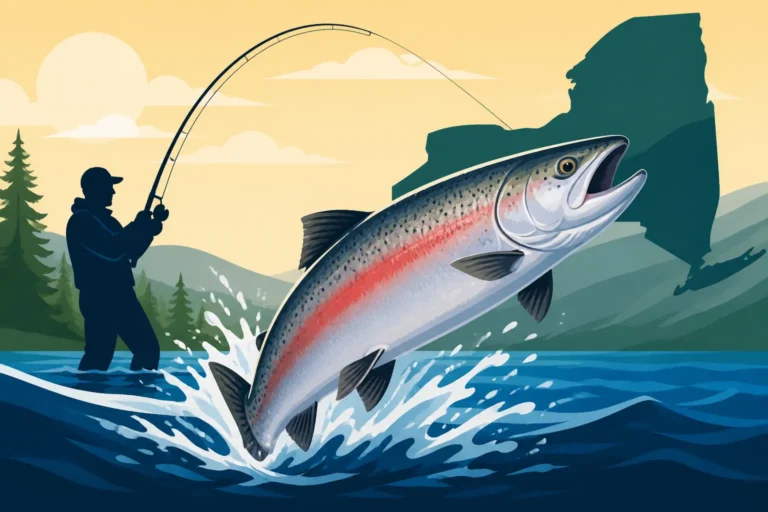
- Rainbow Trout: Known for the prominent iridescent pink or red stripe along their lateral line, especially in mature fish. They have numerous small black spots on their back, sides, and tail fin. Their tails are typically moderately forked. Steelhead are essentially migratory rainbow trout that spend part of their lives in larger bodies of water like the Great Lakes or the ocean before returning to rivers to spawn. Telling the difference between a resident rainbow and a steelhead can sometimes be a challenge, but usually, steelhead are much larger and more silvery. We have a great guide on How to Identify a Steelhead vs a Brown Trout.
- Lake Trout: These are the largest of New York's trout species. They have light spots on a dark body, with a deeply forked tail, almost like a salmon. They prefer deep, cold waters of large lakes.
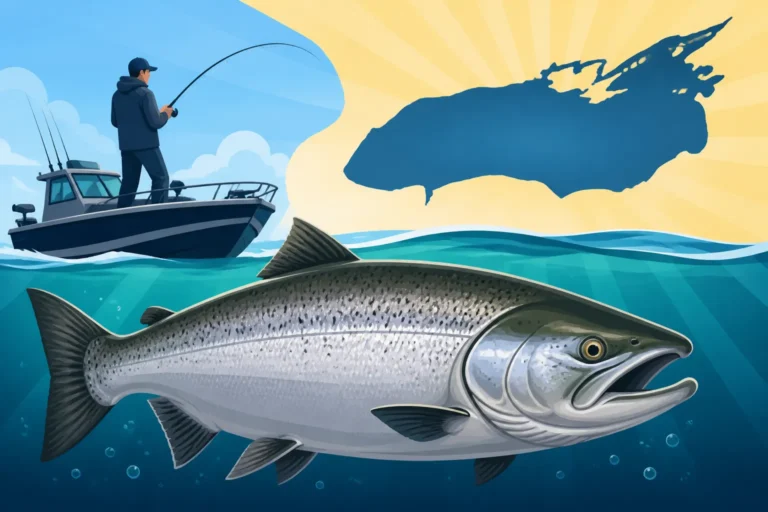
- Chinook Salmon (King Salmon): These powerful fish are characterized by numerous small, irregular black spots on their back and both lobes of their tail fin. Their gum line on the lower jaw is typically black. They grow to immense sizes, especially in Lake Ontario. If you're wondering How to Identify a Chinook vs a Coho Salmon, this tail spot pattern is key.
- Coho Salmon (Silver Salmon): Similar to Chinooks but generally smaller. They have spots on their back and usually only on the upper lobe of their tail. Their gum line on the lower jaw is usually white or pale. They are known for their acrobatic fights.
- Landlocked Atlantic Salmon: These are true salmon, landlocked in various New York lakes, particularly in the Finger Lakes and Adirondacks. They have slender, silvery bodies with small black spots, often X-shaped, and a deeply forked tail. They are incredibly beautiful and powerful fish, sometimes mistaken for large brown trout.
Bass Species Largemouth, Smallmouth
New York is a phenomenal destination for bass anglers, with both largemouth and smallmouth bass abundant throughout the state's diverse waters. While they share the "bass" name, they have distinct features.
- Largemouth Bass: The quintessential "bucketmouth." The most defining feature is their large mouth, where the jaw hinge extends well past the rear edge of the eye when the mouth is closed. They typically have a prominent, irregular dark horizontal stripe or blotches along their sides. Their dorsal fin has a very deep notch, almost separating it into two fins. Largemouth prefer warm, weedy, shallow waters and often hide in cover. You can find out more in New York's Bass Species Explained.
- Smallmouth Bass: Often called "bronzebacks" or "brown bass." Their mouth is smaller than the largemouth, with the jaw hinge typically ending directly under the middle of the eye or slightly before it. They usually have faint vertical bars or blotches on their sides, not a horizontal stripe. Their dorsal fin has a shallower, less distinct notch than the largemouth, appearing more continuous. Smallmouth prefer cooler, rocky, clear waters, often found in rivers and large, deep lakes. They are known for their incredible fighting ability.
Pike and Muskellunge
These two apex predators of New York's freshwater system are often confused, and rightfully so – they look incredibly similar! Getting them right is critical due to different size and creel limits.
- Northern Pike: Known for their elongated, torpedo-shaped bodies and duck-bill-shaped snout. Their most reliable identification feature is the scale pattern on their cheek and operculum (gill cover). Northern pike have scales covering their entire cheek and at least the upper half of their operculum. Their body coloration typically features light, horizontal bean-shaped or bar-like spots on a darker green or brown background. The tail fin is usually deeply forked.
- Muskellunge (Muskie): Often called "the fish of 10,000 casts." Muskies are generally larger and even more elongated than pike. The key differentiator is their cheek and operculum scale pattern: muskies typically have scales only on the upper half of both their cheek and operculum, with the lower halves being bare. Their body coloration usually consists of dark spots, bars, or stripes on a lighter background, though sometimes they can be nearly solid. Their tail is also deeply forked, often with more pointed tips than a pike. Due to their rarity and fighting prowess, Muskellunge in New York are highly prized.
Walleye
The walleye is a highly prized game fish in New York, particularly in the Great Lakes and larger inland waters. They are known for their excellent table fare and nocturnal habits.
- Key Features: Walleye have a long, slender body with a distinctly "walleyed" appearance due to their large, light-sensitive eyes (which is where they get their name!). Their coloration is typically olive green to gold, with darker mottling or faint bars on their sides. They possess prominent canine teeth in their mouths. A crucial identifier is the white tip on the lower lobe of their caudal (tail) fin, which is almost always present. They also have two separate dorsal fins, with the front one being spiny and the rear one soft-rayed. You can learn more about Walleye in New York in our detailed guides.
Saltwater Wonders: Identifying New York's Coastal Catches
New York's coastline, from Long Island Sound to the Atlantic Ocean, offers fantastic saltwater fishing opportunities. The array of species can be dizzying, but a few stand out as common and important catches. For any saltwater fishing, remember to check New York Saltwater Fishing Registration Guide for requirements.
Striped Bass and Bluefish
These two powerful predatory fish are iconic to New York's marine waters, providing thrilling action for anglers.
- Striped Bass: The "striper" is easily identifiable by its seven or eight distinct dark horizontal stripes running along its silvery-white sides. They have a streamlined, elongated body with a slightly forked tail. Their mouth is large and somewhat protractile. Stripers are powerful fighters and are highly sought after by recreational anglers. Understanding Striped Bass in New York regulations and identification is critical due to their popularity and conservation efforts.
- Bluefish: Known for their aggressive nature and sharp teeth. Bluefish have a stout, torpedo-shaped body that is typically greenish-blue on the back, fading to silvery-white on the sides and belly. Their most distinctive feature is their extremely sharp, conical teeth, which are visible even when the mouth is closed. Their tail fin is deeply forked. Be careful when handling bluefish; those teeth can do some damage!
Fluke and Flounder
Flatfish are a unique group, and in New York, fluke (summer flounder) and winter flounder are two of the most popular. They are masters of camouflage, lying flat on the seabed.
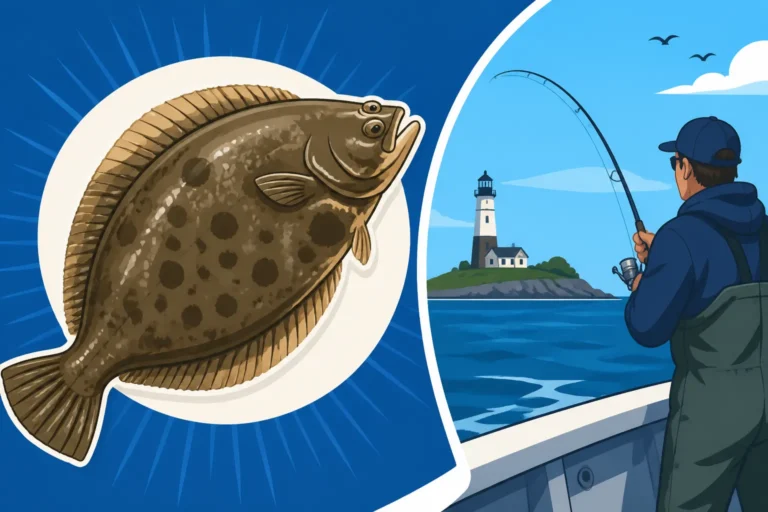
- Fluke (Summer Flounder): These fish are left-eyed, meaning that when lying flat on their "blind" (white) side, both eyes are on the left side of their head. They have a distinctive, large mouth with sharp teeth. Their body is usually light brown to olive green, with numerous distinct, circular spots (ocelli), some of which form rings. These spots are a key identifier for Fluke in New York Waters. They have a long, continuous dorsal fin.
- Winter Flounder: Unlike fluke, winter flounder are right-eyed, with both eyes on the right side of their head. They have a smaller mouth and lack the prominent teeth of a fluke. Their coloration is typically dark brown or olive, often with some mottling, but without the distinct spots of the fluke. They have a more rounded tail fin compared to the fluke's often straight or slightly concave tail.
Remember, both fluke and winter flounder can change their coloration to match their surroundings, so relying on their eye-side and mouth structure is often more reliable than color alone.
Tautog and Porgies
These bottom-dwelling species are common targets for inshore anglers in New York's rocky areas and reefs.
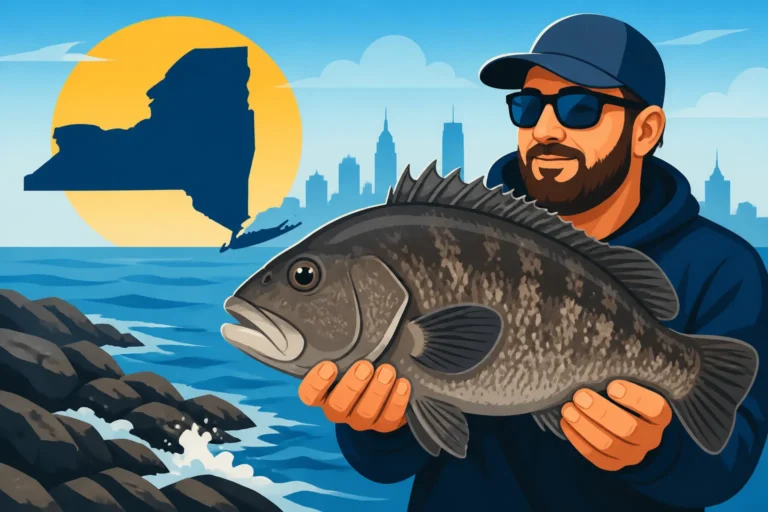
- Tautog (Blackfish): Known for their dark, often mottled brown or grayish coloration, stout bodies, and thick lips with prominent, somewhat bucktoothed front teeth. They also have molar-like teeth in the back of their jaws for crushing shellfish. Tautog have a continuous dorsal fin with stout spines. They are powerful fighters, especially when pulled from rocky structures.
- Porgies (Scup): These fish have a somewhat flattened, oval-shaped body, typically silvery in color, sometimes with a faint rosy tint. Their most distinguishing feature is a series of small, sharp teeth in the front of their mouths, with molars further back. They have a relatively small head and a continuous, spiny dorsal fin. Porgies are abundant and offer consistent action for anglers using bait.
Panfish and Other Common Catches
While not always considered "game fish" in the same vein as salmon or bass, panfish and other common species provide fantastic fishing opportunities, especially for beginners and families. They are fun to catch and often delicious to eat!
Perch and Crappie
These widespread panfish are favorites for their abundance and willingness to bite.
- Yellow Perch: Easily identified by their prominent, dark vertical stripes (typically 6-8) on a golden-yellow body. They have two distinct dorsal fins, the first being spiny and the second soft-rayed. Their pectoral and pelvic fins are often orange or reddish. They are schooling fish found in lakes, ponds, and slower rivers. Yellow Perch in New York are a popular target for ice fishing.
- Crappie (Black and White): Both black and white crappie are common in New York. They have very deep, compressed (pancake-shaped) bodies.
- Black Crappie: Identified by irregular black spots and blotches scattered over a silvery-olive body. They have 7-8 dorsal spines.
- White Crappie: Have more orderly, often faint, dark vertical bars on a silvery body. They typically have 5-6 dorsal spines.
Both species have large mouths and are popular for their schooling behavior and willingness to hit small lures and baits.
Sunfish and Bluegill
The true "sunfish" family offers a variety of small, colorful fish that are perfect for introducing kids to fishing.
- Bluegill: A popular and easily recognized sunfish. They have a small mouth, a deep, compressed, disc-shaped body, and a distinctive black spot on the posterior (rear) part of their dorsal fin. A prominent black "ear flap" (opercular flap) is also characteristic. Their coloration varies but often includes olive green with vertical bars and a bluish-purple sheen on the gill covers.
- Pumpkinseed Sunfish: Another common sunfish, known for its vibrant colors. They have a small mouth, a deep body, and are typically mottled olive-brown with iridescent spots of orange, green, and blue. Their most distinctive feature is a bright red or orange spot on the tip of their black opercular flap, often outlined in yellow or orange. They are very popular for their beauty and aggressive bites.
- Other Sunfish: New York hosts several other sunfish species, including green sunfish and redbreast sunfish, each with unique color patterns and opercular flap markings. Generally, sunfish are characterized by their deep, pan-shaped bodies and prominent dorsal and anal fins.
Catfish and Carp
These larger, often bottom-dwelling fish represent a different angling experience but are widely available in New York.
- Channel Catfish: Distinguished by their deeply forked tail, smooth, scaleless skin, and prominent barbels (whiskers) around their mouth. Their body color is typically silvery-gray, often with scattered dark spots, especially in younger fish. They prefer slow-moving water in rivers and lakes. Channel Catfish in New York can grow to impressive sizes.
- Common Carp: A large, non-native species with large, prominent scales and two pairs of barbels on their upper lip. They have a long dorsal fin and a stout, golden-brown or olive body. Their mouth is protractile and extends downwards, perfect for bottom feeding. Carp are powerful fighters, often found in warm, nutrient-rich waters.
Tools and Resources for Angler Identification
In today's world, you're not alone in identifying your catch. There are many fantastic resources, both traditional and digital, that can turn you into a fish identification expert. Don't hesitate to use them!
Field Guides and Apps
The most classic and often still the best tool for fish identification is a good field guide. These are specifically designed to help you quickly identify species based on visual characteristics.
- Waterproof Field Guides: Invest in a regional field guide specific to New York or the Northeast. These guides typically feature detailed illustrations or photographs, descriptions of key features, size and weight ranges, and sometimes even habitat and behavior notes. Having one laminated or made of waterproof material is a lifesaver when you're on the water. You can find an excellent selection of these on Amazon, often with spiral binding for easy flipping.
- Smartphone Apps: There are numerous fish identification apps available for smartphones, many of which use artificial intelligence to identify fish from photos. While not always 100% accurate, they can provide a good starting point and often link to detailed information about the species. Some apps even allow you to log your catches, track regulations, and connect with other anglers. These are particularly useful if you've practiced good Catch-and-Release Handling Rules and quickly snapped a photo before letting your catch go.
Always cross-reference with multiple sources if you're unsure, especially when it comes to legal fish limits. A quick check of the New York DEC Fishing Regulations Guide is always a good idea after identification.
Online Resources and Communities
The internet is a treasure trove of information, and the angling community is usually very willing to help.
- DEC Website: The New York State Department of Environmental Conservation (DEC) website is an official and invaluable resource. It provides detailed information on Fish Species You Can Catch in New York, including descriptions, photos, habitat, and—critically—the most up-to-date regulations for each species and waterbody. This should be your first stop for official information.
- Fishing Forums and Social Media Groups: Online fishing communities are vibrant and often filled with experienced local anglers. If you've got a photo of a fish you can't identify, posting it in a New York fishing forum or Facebook group will often get you an answer (or several opinions!) very quickly. Just be sure to provide clear photos from multiple angles if possible.
- Educational Websites and Blogs: Many dedicated fishing websites and blogs, like ours, provide species-specific guides and identification tips. These can offer more in-depth knowledge and local insights than a general field guide.
Photography and Observation Tips
Taking a good photo of your catch isn't just for social media; it's a powerful identification tool.
- Clear, Well-Lit Photos: Before you release a fish, take a few quick, clear photos from different angles. Get a shot of its full body, especially the dorsal and tail fins. Crucially, take a close-up of its head, focusing on the mouth, jawline, and eye.
- Highlight Key Features: If you're unsure about a specific feature, like an adipose fin or a scale pattern on the cheek, try to get a photo that isolates that feature as much as possible.
- Note Location and Water Conditions: When you take a photo, mentally or physically note where you caught the fish (e.g., "muddy creek," "clear lake," "rocky ocean reef") and the general water conditions (e.g., "warm, slow water," "cold, fast current"). This contextual information can sometimes help narrow down species possibilities. For example, if you catch a small trout-like fish in a warm, slow-moving river, it's far less likely to be a brook trout than if you caught it in a pristine, cold Adirondack stream.
- Handle Fish Gently: Remember, if you plan to release the fish, minimize its time out of water and handle it gently with wet hands or gloves to protect its slime coat. Rapid identification is key to a successful release. You can find waterproof cameras or phone cases on Amazon that make it easier to safely photograph your catch on the water.
Common Identification Challenges and How to Overcome Them
Even with all the tools and knowledge, fish identification can sometimes present a real head-scratcher. Nature is full of variations, and conditions aren't always ideal.
Hybrids and Subspecies Variations
Sometimes you catch a fish that just doesn't quite fit the description of any single species, and that's because it might not be!
- Hybrid Species: In some New York waters, you might encounter hybrid fish, which are a cross between two different species. A prime example is the Tiger Muskie, a sterile hybrid of a northern pike and a muskellunge. These can have a confusing mix of features from both parents, often displaying vertical tiger-like stripes or spots. Knowing about these possibilities helps you understand why a fish might not perfectly match a field guide entry.
- Subspecies and Regional Variations: Fish can also show significant variations within the same species depending on their specific environment. Factors like diet, water clarity, and even genetic isolation in different watersheds can lead to differences in coloration, body shape, and size. A brown trout caught in a tannin-stained Catskills stream might look quite different from one caught in a clear, deep Finger Lake. While the core identification features (fin counts, mouth structure) usually remain consistent, the aesthetic can throw you off. If you think you've caught a hybrid or an unusually marked fish, take clear photos and consult with local experts or the DEC.
Regional Differences and Environmental Factors
The environment a fish lives in plays a huge role in its appearance, and New York's vast and varied ecosystems mean you'll see a lot of these differences.
- Water Clarity and Habitat: Fish living in clear, rocky streams often display brighter, more vibrant colors than those living in murky, muddy waters, which tend to be duller and more camouflaged. A largemouth bass from a weed-choked pond will likely look darker and greener than one from a sandy-bottomed lake.
- Diet: The food sources available can also influence a fish's coloration and even its body shape. For instance, trout feeding heavily on crustaceans might develop more vibrant red and orange pigments.
- Seasonal Changes: Some species, especially salmonids, undergo dramatic color changes during their spawning runs. Male salmon, in particular, can develop hooked jaws (kypes) and distinct red or green hues. A fresh-run steelhead from Lake Ontario will be brilliantly silver, but one that has been in the river for weeks might turn dark and mottled. Always consider the season and the fish's life cycle stage when identifying. For instance, knowing New York Fishing Season Dates and Catch Limits is crucial, as some species exhibit different appearances outside of prime season.
Juvenile vs. Adult Fish
One of the most common identification pitfalls is confusing a juvenile fish with a different, smaller species, or assuming it's an adult of the species when it's just a young one.
- Scale and Pattern Development: Young fish often have different patterns or colors than their adult counterparts. Many juvenile trout, for example, have "parr marks" – dark vertical bars on their sides – which typically fade or disappear as they mature. Similarly, young striped bass might have more pronounced stripes than very large adults.
- Body Proportions: Juveniles often have disproportionately large eyes or heads compared to their developing bodies. As they grow, their body proportions change.
- Conservation Impact: This is especially critical for conservation. Mistaking a juvenile game fish for a panfish and keeping it can have a significant negative impact on future populations. Always err on the side of caution. If you're unsure if a fish is of legal size or a protected juvenile of a larger species, it's always best to release it unharmed. This is a common concern when trying to identify New York's Most Popular Freshwater Fish if they are young.
By understanding these challenges and taking a careful, holistic approach to observation, you'll greatly improve your fish identification skills and become a more knowledgeable and responsible angler in New York's fantastic waters.
Disclaimer
This article is for general informational purposes only and does not constitute professional advice. Laws, prices and regulations vary by location and change over time. Consult a qualified professional for guidance on your specific situation.