How to Identify a Steelhead vs a Brown Trout
It's incredibly frustrating when you've just landed what you think is a beautiful trout, but then you start second-guessing yourself. Is it a Steelhead? Or is it a Brown Trout? The lines can blur, especially when they're fresh out of the water and gleaming, and knowing the difference isn't just about bragging rights – it’s crucial for adhering to New York's specific fishing regulations. This guide will walk you through all the subtle and not-so-subtle cues to help you confidently identify your catch, every single time.
Why Accurate Identification is Crucial for New York Anglers
Let's be honest, we've all been there: staring at a fish, trying to remember what distinguishes one from another. But beyond satisfying your own curiosity, knowing your fish species accurately in New York is more than just an academic exercise. It directly impacts your fishing experience, your compliance with the law, and ultimately, the health of our fisheries.
Navigating Regulations and Catch Limits
New York State has a robust set of fishing regulations designed to protect different fish populations, and these rules often vary significantly between species, and sometimes even within the same species depending on the water body. For example, the daily creel limits and minimum size requirements for a wild Brown Trout in a particular stream might be completely different from those for a Steelhead in a Great Lakes tributary. Imagine landing a beautiful fish, proud of your catch, only to realize later that you've kept a fish that was either too small or the wrong species for that specific water, or that you've exceeded the daily limit for it. The penalties for fishing without a license in New York or violating catch limits can range from fines to confiscation of gear, and nobody wants that kind of trouble. Being able to quickly and accurately identify your catch means you can confidently decide whether to keep it or release it, ensuring you stay on the right side of New York Freshwater Fishing Rules and avoid any unfortunate misunderstandings with conservation officers. Understanding New York Fishing Regulations Explained is a fundamental part of responsible angling.
Enhancing Your Angling Knowledge and Experience
Beyond the legal aspect, accurate fish identification simply makes you a better, more knowledgeable angler. When you can tell a Steelhead from a Brown Trout, you start to understand their distinct behaviors, preferred habitats, and even their feeding patterns. This deeper understanding can inform your choice of lures, bait, and fishing techniques. Knowing you're targeting a specific species, and then successfully identifying it once caught, adds a profound layer of satisfaction to your time on the water. It turns a generic "I caught a fish" into "I successfully landed a stunning Steelhead," allowing you to truly appreciate the biodiversity of New York's waters. It also contributes to the collective knowledge of the angling community, making conversations about tactics and locations much more precise and helpful. This kind of nuanced understanding is what separates a casual fisherman from a truly dedicated angler who understands the ecosystem.
The Distinctive Traits of a Steelhead in New York
Steelhead are incredible fish, often celebrated for their powerful fights and acrobatic displays. But what exactly makes them them? While they're technically rainbow trout (an anadromous form, meaning they migrate from freshwater to saltwater, or in New York's case, to the Great Lakes and then return to rivers to spawn), their migratory lifestyle gives them a unique appearance compared to their resident cousins. If you're wondering about the specifics, you can dive deeper into Steelhead Trout in New York.
Physical Characteristics and Coloration
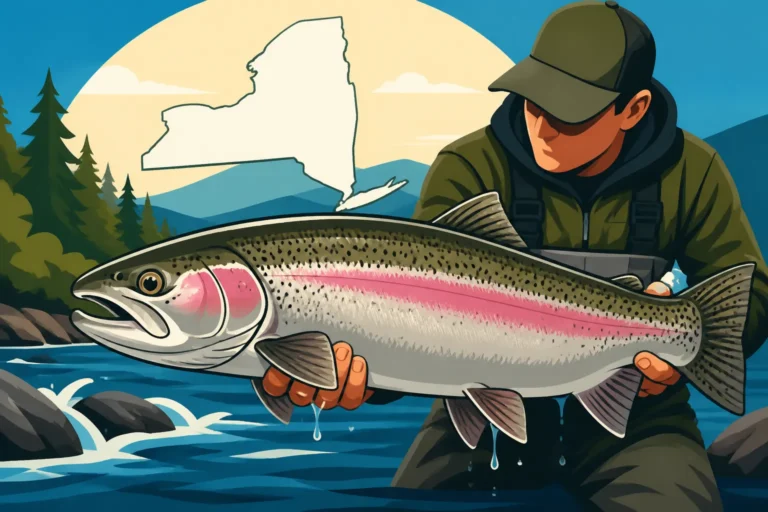
When you pull a Steelhead from the waters of a New York tributary, the first thing that often strikes you is their stunning silvery sheen. They are built for speed and power in open water, so their bodies tend to be torpedo-shaped and streamlined. Unlike many resident trout, their base color is usually a bright, iridescent silver, especially when they've recently entered a river from Lake Ontario or Lake Erie. You'll notice a prominent, broad, pink or reddish stripe running horizontally along their lateral line, which can become more vibrant during spawning season. Their backs typically have a greenish-blue hue that fades into the silver sides.
A key identifier for Steelhead (and rainbow trout in general) are the small, dark spots. These spots are usually profuse and well-defined, covering their back, dorsal fin, and especially their tail fin. These spots are often circular and quite numerous, setting them apart from other trout species. The intensity of these spots can vary, but their presence on the tail is a significant clue.
Fin Shape and Mouth Structure
Let's talk about the tail fin, also known as the caudal fin. A Steelhead typically has a square or slightly forked tail. It won't be deeply forked like a Lake Trout, but it also won't be completely rounded. It's often robust and powerful, a testament to their migratory journeys. This strong, square tail is crucial for propulsion in strong currents.
When you look at their mouth, you'll generally find it's relatively small, not extending much beyond the back of the eye. Their jaw structure is proportionate to their head, giving them a sleek, efficient profile. While mouth size can vary a bit with individual fish, the overall impression is one of a more compact, less predatory jaw compared to some other trout species you might encounter. The adipose fin, a small fleshy fin found between the dorsal and tail fins, will also be present, as it is with all salmonids.
Habitat and Behavior
Steelhead are truly unique in their life cycle. They are essentially rainbow trout that have adapted to spend a significant portion of their lives growing large in the rich, open waters of the Great Lakes before migrating upstream into rivers and tributaries to spawn. In New York, this means you'll typically find them in the major rivers and streams that feed into Lake Ontario and Lake Erie, particularly during the fall, winter, and spring when they make their spawning runs. Places like the Salmon River, the Oswego River, and the tributaries of Lake Erie are prime Steelhead territory.
Their behavior is also distinct. Steelhead are renowned for their incredible fighting ability. When hooked, they often make powerful runs, leap clear out of the water, and pull with surprising strength for their size. This makes them a highly sought-after sport fish. Understanding their migratory patterns is key to successful angling; for instance, knowing Best Time to Fish for Steelhead on New York's Lake Ontario Tributaries can dramatically increase your chances of a memorable catch. Their life as open-water predators also influences their diet, often consisting of smaller baitfish, insects, and crustaceans found in the vastness of the Great Lakes.
Unpacking the Features of a New York Brown Trout
Brown Trout are perhaps one of the most iconic freshwater fish in New York, cherished by fly anglers and bait fishermen alike. They are known for their cunning, hard fighting, and adaptability, thriving in a wide range of aquatic environments across the state. They have a more "classic trout" look to many, but even they can throw you a curveball. For a more general overview, check out Brown Trout in New York.
Classic Markings and Body Color
Brown Trout, as their name suggests, typically exhibit a beautiful palette of earthy tones. Their base color can range from a golden-brown to an olive-brown, sometimes with almost bronze or yellowish hues, particularly on their flanks. The belly is usually a cream or yellowish-white. This coloration often provides excellent camouflage in the rocky, vegetated, or muddy bottoms of the rivers and streams they inhabit.
The most distinctive feature of a Brown Trout is its spots. Unlike the uniform dark spots of a Steelhead, Brown Trout display a mix of dark spots and, crucially, reddish or orange spots. These darker spots are often surrounded by a lighter halo, creating a "halo effect" that is a classic identifier. The red spots are a dead giveaway. These spots are generally scattered across their sides, back, and gill covers, but are typically not found on the tail fin itself, or only very sparsely. The absence of heavy spotting on the tail is a key difference.
Head, Jaw, and Tail Distinctions
When examining a Brown Trout's head, you'll often notice a somewhat more robust and pronounced jawline compared to a Steelhead. Their mouth tends to be larger, often extending back past the eye, particularly in larger specimens. This larger mouth is indicative of their predatory nature, as they are known to feed on larger prey like baitfish, crayfish, and even small rodents.
Their tail fin can be a bit more variable than a Steelhead's. While it can sometimes appear somewhat square, it's often slightly forked, though rarely as deeply as a Lake Trout. The key is its appearance relative to the Steelhead's stronger, often squarer tail, and the lack of significant spotting on it. Brown Trout also possess the adipose fin, like all members of the trout and salmon family. As they age, especially in dominant males, the lower jaw can develop a noticeable "kype" or hook, a feature less common or pronounced in Steelhead.
Habitat Preferences and Diet
Brown Trout are typically resident fish, meaning they live their entire lives within the same freshwater system. You'll find them thriving in a vast array of New York waters, from cold, clear mountain streams in the Adirondacks and Catskills to larger rivers and even many of the Finger Lakes. They are incredibly adaptable and can tolerate slightly warmer water temperatures than some other trout species, which contributes to their widespread distribution. For more on targeting them, check out How to Trout Fish in New York.
Their diet is notoriously opportunistic and varied. Young Brown Trout will feast on aquatic insects, nymphs, and small crustaceans. As they grow, they become formidable predators, readily consuming minnows, sculpins, frogs, leeches, and even mice or other small mammals unfortunate enough to fall into the water. This broad diet explains why they can be caught using such a wide range of fishing techniques, from delicate dry fly presentations to large, aggressive streamers or even live bait. They are known for being wary and challenging to catch, especially larger, older specimens.
Side-by-Side Comparison: Steelhead vs. Brown Trout
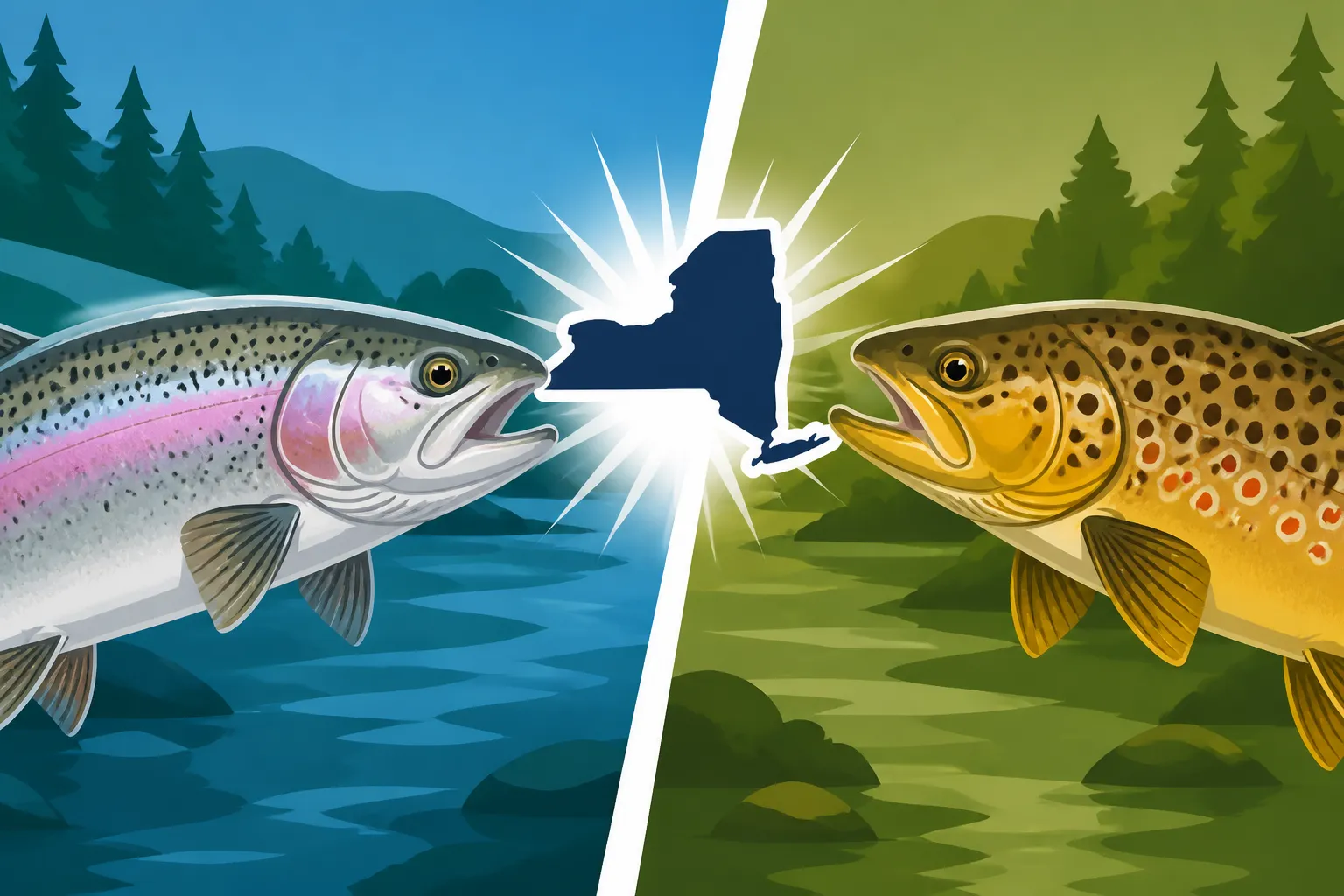
Now that we've gone through the individual characteristics, let's put them head-to-head. Sometimes, it's not until you see them side-by-side (or at least have a clear mental comparison) that the differences truly pop out. This comparison is vital for anyone who fishes New York's diverse waters, home to New York's Most Popular Freshwater Fish.
Spotting the Key Visual Differences
When you're holding a fish, or even just observing it in the water, train your eyes to look for a combination of these features. Don't just rely on one characteristic, as fish can have variations. For instance, a Brown Trout from a large lake might appear more silvery than one from a dark, tannin-stained stream, blurring the "brown" aspect. This is where the spots and fin shapes become your best friends. Remember, Steelhead are essentially migratory Rainbow Trout, so understanding A Guide to New York's Trout Species will also help solidify your identification skills. It's also worth noting that distinguishing Steelhead vs Rainbow Trout: What's the Difference? can be challenging, as Steelhead are a form of Rainbow Trout. The primary distinction is their migratory behavior and the resulting physical adaptations for a life spent largely in large bodies of water.
A Quick Reference Guide
Here's a table to help you quickly identify the key differences when you're out on the water.
| Feature | Steelhead (Migratory Rainbow Trout) | Brown Trout |
|---|---|---|
| Primary Color | Silvery, iridescent, often bluish-green back | Golden-brown, olive-brown, or bronze back and sides |
| Lateral Stripe | Prominent, broad pink/red stripe (more vibrant during spawning) | Less defined or absent, sometimes a yellowish tint |
| Body Shape | Streamlined, torpedo-shaped, built for open water | More robust, chunkier, slightly deeper body |
| Spots | Numerous small, dark spots on back, dorsal fin, and tail fin. No halos. | Dark spots, often with pale halos, and red/orange spots. Few to no spots on tail fin. |
| Tail Fin | Square or slightly forked, powerful, heavily spotted | Slightly forked to nearly square, usually unspotted or lightly spotted |
| Mouth | Relatively small, usually not extending past the eye | Larger, often extending beyond the eye (especially in larger fish) |
| Habitat | Anadromous (Great Lakes & tributaries), runs rivers to spawn | Resident (streams, rivers, lakes), found statewide |
| Fight Style | Acrobatic, powerful runs, frequent jumping | Strong runs, often stays deep, tenacious |
| Juvenile ID | Parr marks present, often silvery; difficult to distinguish from resident rainbows | Parr marks present, more brownish with prominent red/orange spots |
Common Misconceptions and Tricky Catches
Even with all the knowledge in the world, fish can sometimes fool you. Environmental factors, genetics, and even the time of year can cause variations in appearance that make identification a real head-scratcher. It's important to be aware of these instances so you don't jump to conclusions.
The "Silver" Brown Trout Phenomenon
One of the most common sources of confusion, particularly in larger lakes like some of the Finger Lakes or even portions of the Great Lakes, is the "silver" Brown Trout. When Brown Trout inhabit large, open bodies of water with abundant food sources and clear water, they sometimes lose much of their characteristic golden-brown pigmentation. Instead, their bodies take on a striking silvery hue, mimicking the appearance of a Steelhead or even an Atlantic Salmon. This adaptation helps them blend in better in open water and avoid predators.
However, even these silver Browns will almost always retain their distinctive spot patterns. Look for those dark spots with pale halos, and especially for the presence of red or orange spots on their sides. You might have to look closely, but they're usually there. The tail fin will also typically lack the heavy spotting you'd see on a Steelhead. So, if you catch a super shiny fish that fights like a demon but has those tell-tale haloed spots, it's very likely a lake-dwelling Brown Trout, not a Steelhead. Remember, even New York State Record Brown Trout Weight holders often come from these larger, more fertile waters, and can exhibit a silvery tint.
When Juveniles or Spawners Disguise Themselves
Another tricky situation arises with juvenile fish and fish during their spawning phases. Young trout, both Steelhead (rainbows) and Brown Trout, often have pronounced "parr marks" – dark, vertical oval markings along their sides. These marks are a form of camouflage and can make it harder to distinguish between species when they are small. As fish mature, these marks typically fade, but it's important to know they exist.
Furthermore, adult fish, especially males, can undergo significant color changes during the spawning season. Steelhead entering rivers to spawn often deepen their pink lateral stripe, sometimes taking on more olive or even reddish tones on their backs. Brown Trout, particularly the males, can develop very intense, dark, and vibrant colors, sometimes referred to as "spawning colors." Their jaws can become exaggerated (the kype mentioned earlier), and their spot patterns might seem to stand out more. These changes are temporary and related to reproduction, but they can momentarily obscure the subtle differences you'd rely on for identification during other times of the year. This is where understanding New York Freshwater Fishing Rules regarding seasons and specific waters becomes even more important.
Practical Tips for Field Identification
Being able to identify your catch quickly and accurately in the field takes practice, but there are some solid strategies you can employ to boost your confidence. Always remember that careful handling is paramount, especially if you intend to release the fish.
Observe Multiple Features, Not Just One
My biggest piece of advice is never to rely on a single feature. Fish are living creatures, not stamped out by a machine, and variations exist. A Steelhead might have a less pronounced stripe, or a Brown Trout from a specific lake might be unusually silver. Instead, try to assess several characteristics simultaneously:
- Coloration: Is it predominantly silvery-blue or golden-brown/olive?
- Spotting: Are the spots profuse on the tail? Do they have halos? Are there any red/orange spots?
- Body Shape: Is it sleek and torpedo-like, or more robust and deep-bodied?
- Mouth Size: Does the corner of the mouth extend past the eye?
- Tail Shape: Is it decidedly square, or more forked?
By looking at the whole picture, you'll be much more likely to make a correct identification. It's like being a detective – you're gathering clues to build a solid case for your fish's identity.
Carry a Reference Guide and Camera
When in doubt, a good field guide can be your best friend. There are many excellent waterproof fish identification guides available that specifically cover New York's freshwater species. You can often find these at local tackle shops or even on a site like Amazon. Keep one tucked into your tackle box or fishing vest. When you catch something that leaves you scratching your head, you can quickly flip to the relevant pages and compare your catch to the illustrations and descriptions.
Even better, always carry a camera or your phone (in a waterproof case, of course!). Snapping a clear photo of your catch, especially showing its sides, fins, and mouth, allows you to study it more closely later if you're unsure. You can also share the photo with experienced anglers or consult online resources for confirmation. Just be sure to get a good, well-lit shot before releasing the fish. Many experienced anglers I know even carry small, retractable measuring tapes (also easily found on Amazon) to quickly verify length against New York Statewide Trout Daily Limit Explained.
Respect Catch-and-Release Practices
Finally, if you're truly unsure about a fish's identity, especially if it's borderline legal size or in a special regulation zone, the safest and most ethical practice is to release it carefully. This is particularly important for species like Steelhead, which are often targeted in catch-and-release fisheries, and for wild Brown Trout, which might have stricter regulations. Always minimize handling time, keep the fish in the water as much as possible, and use wet hands to protect its slime coat. Gently slide it back into the water, allowing it to swim off on its own power. You can learn more about proper techniques in New York Catch-and-Release Trout Fishing Rules. It's always better to be safe than sorry, ensuring the health of our fisheries for future generations of anglers.
With a little practice and by keeping these tips in mind, you'll soon be able to confidently tell the difference between a Steelhead and a Brown Trout, enhancing your fishing trips and ensuring you're always a responsible steward of New York's incredible aquatic resources.
Disclaimer
This article is for general informational purposes only and does not constitute professional advice. Laws, prices and regulations vary by location and change over time. Consult a qualified professional for guidance on your specific situation.