Fishing New York’s Beaverkill River
The Beaverkill River in New York's Catskill Mountains is legendary among anglers, often spoken of with reverence and sometimes a touch of trepidation. Its rich history and challenging, clear waters can feel intimidating to both newcomers and seasoned veterans alike. This comprehensive guide aims to demystify fishing this iconic stream, offering practical insights into its unique character, the fish it holds, the best times to visit, and the essential techniques you'll need to successfully cast a line on its hallowed waters.
The Legacy of the Beaverkill River: A Fly Fishing Institution
The Beaverkill isn't just a river; it's a living museum of American fly fishing. Its currents have shaped the sport, inspired countless writers, and drawn generations of anglers to its banks. Understanding its deep roots and physical attributes is the first step toward connecting with its magic.
A Deep Dive into its History and Cultural Significance
For over a century, the Beaverkill River has been considered the birthplace of American dry fly fishing. Names like Theodore Gordon, Edward Ringwood Hewitt, and even a young Lee Wulff cut their teeth on its challenging currents. This river taught them, and through their writings, it taught the world, the subtle art of presenting an artificial fly with a drag-free drift to wary trout. It’s a place where fly patterns like the Hendrickson, the Quill Gordon, and the Neversink Skater became famous, designed specifically to imitate the insect life found right here. The sense of tradition is palpable along its banks; you're not just fishing, you're participating in a continuous legacy. This historical weight can sometimes make it feel a bit daunting, like you need to earn your stripes, but don't let that deter you. Every cast here is a part of that story.
The efforts to preserve the Beaverkill and its wild trout populations have also set precedents for conservation across the country. Anglers, landowners, and environmental groups have worked tirelessly to protect its water quality and riparian habitats, ensuring that future generations can experience the same pristine fishing opportunities. It’s a testament to the river’s enduring appeal and the passion it ignites in those who know it.
Understanding the River's Unique Structure and Flow
The Beaverkill is a classic freestone river, meaning its flow is largely dictated by snowmelt and rainfall, causing variations throughout the year. It tumbles out of the western Catskills, flowing approximately 44 miles before joining the East Branch of the Delaware River. Its character changes significantly along its length, offering diverse fishing experiences.
- Upper Reaches: Above Roscoe, often called "Trout Town, USA," the river is generally smaller, faster, and more intimate. It features a mix of pocket water, riffles, and smaller pools, perfect for anglers who enjoy wading and targeting wild brook trout and smaller brown trout. Access here can be more challenging, often requiring some bushwhacking, but the rewards are often solitude and stunning natural beauty.
- Middle Section (Roscoe to East Branch): This is arguably the most famous and heavily fished section, encompassing legendary spots like the Junction Pool (where the Beaverkill meets Willowemoc Creek), Cairn's Pool, and Barnhart's Pool. Here, the river widens, slows in places, and deep, iconic pools become prominent, interspersed with classic riffles and runs. The bottom is a mix of gravel and larger rocks, providing excellent holding water for larger brown and rainbow trout. Public access exists, but be prepared for company, especially during prime hatch periods.
- Lower Section (Below East Branch): As the Beaverkill approaches its confluence with the East Branch Delaware, it becomes a larger, more powerful river. This section can be less wader-friendly in spots due to depth and flow, often favoring those with drift boats or canoes, though shore fishing and careful wading are still possible. It still holds quality trout but generally sees less pressure than the hallowed waters around Roscoe.
The constant flow and cold, clear water are crucial. The river’s gravel and cobble substrate provide ideal habitat for a rich diversity of aquatic insects, which are the lifeblood of its trout population. These varied features demand a versatile approach from the angler, always adapting to the specific water you're fishing.
Navigating the Waters: Species, Seasons, and Regulations on the Beaverkill
Before you even think about tying on a fly, it's crucial to understand what fish you'll encounter, when the best times are to target them, and, perhaps most importantly, the specific rules that govern fishing on this special river. Respecting the resource and its regulations is paramount.
What You'll Catch: Trout Species of the Beaverkill
The Beaverkill River is renowned for its trout, and while it's primarily known for its brown trout, you'll find a mix of species that each offer a unique challenge and reward.
- Brown Trout: These are the superstars of the Beaverkill. Both wild, naturally reproducing brown trout and some stocked fish (especially in the easily accessible sections) call this river home. They are known for their wariness, making them a true test of an angler's skill. You'll find them in deeper pools, under undercut banks, and in seams where they can ambush passing insects. Their rich, spotted coloration makes them a beautiful catch.
- Wild Brook Trout: In the smaller, colder headwater streams and the upper reaches of the mainstem Beaverkill, you might be lucky enough to encounter native brook trout. These stunning fish, New York's official state fish, are smaller than browns but fiercely beautiful with their distinctive vermiculated patterns and vibrant red spots. Catching one is a truly special experience, a nod to the wild heritage of the Catskills.
- Rainbow Trout: While less prevalent than brown trout, rainbow trout are also present, particularly in stocked sections or areas closer to the confluence with the Willowemoc Creek. They are typically spirited fighters, known for their acrobatic jumps. They often inhabit faster water and riffles, where they can readily feed on emerging insects.
Understanding these different species helps you tailor your approach, from fly selection to presentation, increasing your chances of success. The Beaverkill demands a keen eye and a patient hand, regardless of the trout species you're pursuing.
When to Go: Best Seasons and Hatch Information
Timing your visit to the Beaverkill can significantly impact your success, as the river's character and the trout's feeding patterns fluctuate with the seasons and insect hatches.
- Spring (April – May): This is prime time for many fly anglers. The official trout season generally opens on April 1st in New York, and while water temperatures might still be chilly, the first major insect hatches begin. The celebrated Hendrickson hatch (Ephemerella subvaria) typically kicks off in mid-April, bringing large, hungry trout to the surface. Following closely are the Quill Gordons, Blue Winged Olives, and various caddisflies. This is also when the water levels are usually higher from snowmelt, requiring careful wading. For specific opening dates, always consult the official guides, but you can learn more about New York Trout Season Opening Day Is April 1 and how it impacts your planning.
- Early Summer (June): As spring turns to summer, water levels usually drop, and temperatures rise. Sulphur hatches (Ephemerella invaria and dorothea) are prominent, along with Green Drakes (Ephemera guttulata) and Isonychia. This can be excellent dry fly fishing, but trout become even warier in clearer, lower water.
- Mid-Summer (July – August): This can be the most challenging time due to low, clear, and warmer water. Anglers often switch to terrestrial patterns (ants, beetles, hoppers) or fish nymphs and small dry flies in the early mornings or late evenings. Trout will seek out cooler, oxygenated water, often in shaded areas or deeper pools. It's a time for stealth and precision. You can explore How to Fish Cold Water in New York to understand how temperature influences trout behavior.
- Fall (September – October): As temperatures cool, the Beaverkill comes alive again. Brown trout become more active, preparing for spawning. Late-season hatches like tiny Tricos and Blue Winged Olives can still occur, and streamer fishing becomes very effective, targeting aggressive, pre-spawn browns. This is also a beautiful time to be on the river, with the Catskills foliage in full glory. Many sections observe New York Catch-and-Release Trout Season Runs October 16 Through March 31, extending the fishing well into the cooler months under special regulations.
| Season | Typical Conditions | Key Hatches/Bait | Techniques |
|---|---|---|---|
| Spring | Higher water, cooler temperatures, often cloudy | Hendricksons, Quill Gordons, Caddis | Dry flies, Nymphs, Streamers |
| Early Summer | Moderate water, warming temps, clearer | Sulphurs, Green Drakes, Isonychia | Dry flies, Nymphs |
| Mid-Summer | Low, clear, warm water, bright sun (challenging) | Terrestrials (ants, hoppers), Tricos | Small dry flies, Nymphs (early/late) |
| Fall | Cooling temps, moderate water, colorful foliage | Blue Winged Olives, Streamers | Streamers, Nymphs, Dry flies (BWO) |
Understanding the Local Rules and Special Regulations
Fishing the Beaverkill, like any renowned trout stream, comes with specific regulations designed to protect its precious wild and stocked trout populations. These rules often go beyond the general statewide guidelines. Always check the current New York State Department of Environmental Conservation (DEC) Fishing Regulations Guide before you go, as rules can change annually. You can pick up a physical copy or view it online to understand the New York DEC Fishing Regulations Guide fully.
- Licenses: First and foremost, you'll need a valid New York State fishing license. This applies to both residents and non-residents, and there are different options like annual, 7-day, or 1-day licenses. Ensure you have the correct type for your trip. For detailed information, consult the New York Freshwater Fishing Rules.
- Special Regulations Sections: Many of the most popular sections of the Beaverkill, particularly those around Roscoe, fall under "Special Regulations" or "Trophy Trout" sections. These areas typically have:
- Artificial Lures Only: This means no bait fishing is allowed. You must use artificial flies or lures.
- Catch and Release: Some sections are strictly catch and release, meaning all fish must be immediately returned to the water unharmed.
- Minimum Size Limits: In other sections, there might be higher minimum size limits than the statewide general regulations, designed to protect larger, spawning fish.
- Reduced Bag Limits: Even where keeping fish is allowed, the daily creel limits are often much smaller than in general regulation waters.
- Gear Restrictions: Pay close attention to specifics like single-hook artificial lures, barbless hooks, or specific lure weights. These rules are in place to minimize harm to the fish.
- Seasonal Closures: While trout season generally opens in April, certain stretches might have extended catch-and-release seasons that lead into the winter months, offering unique cold-weather opportunities.
- Private Property: A significant portion of the Beaverkill flows through private land. Always be respectful of private property and know exactly where public access points are located. Trespassing is illegal and can lead to access issues for all anglers in the future.
Being informed and compliant with these regulations isn't just about avoiding fines; it's about being a responsible steward of a truly special fishery.
Mastering the Art: Essential Techniques and Gear for the Beaverkill
Fishing the Beaverkill is largely synonymous with fly fishing. While other methods might catch fish in some sections, to truly experience the river and its challenges, you'll want to embrace the fly rod. It demands finesse, observation, and a willingness to adapt.
Fly Fishing Fundamentals for Beaverkill Success
The Beaverkill's clear, often shallow water and wary trout necessitate a refined approach. Drag-free drifts are the holy grail here. Trout have ample time to inspect your offering, and even the slightest unnatural drag will send them scurrying.
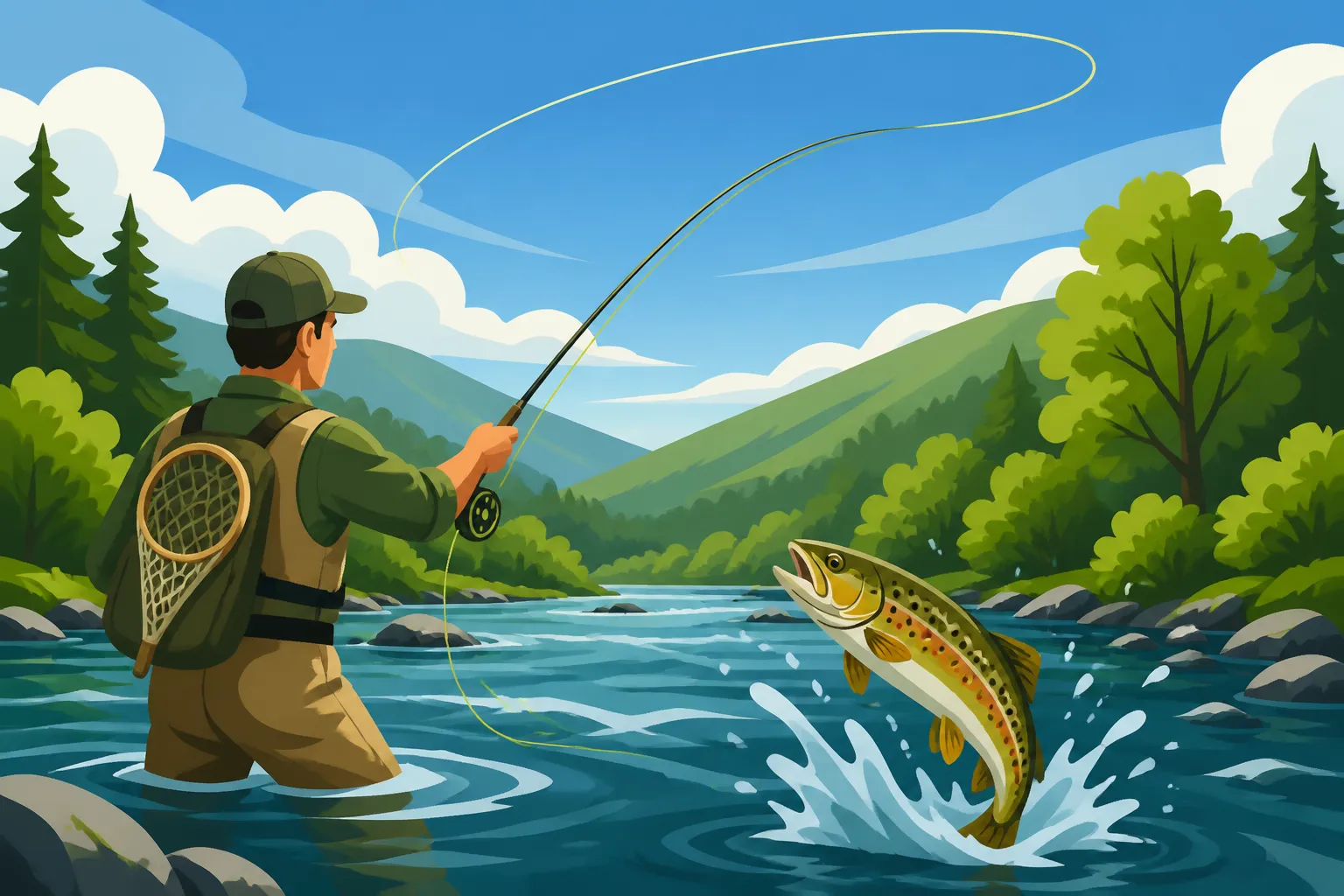
- Dry Fly Fishing: This is what the Beaverkill is famous for. When a hatch is on, presenting a perfectly matched imitation with a delicate, drag-free drift is incredibly rewarding. Focus on casting upstream or up-and-across, allowing your fly to float naturally downstream in the current. Pay close attention to the currents between you and your fly, as these are often the culprits for inducing drag. Mend your line judiciously to eliminate drag, but do so subtly to avoid spooking fish. For those looking to refine their skills, learning How to Fly Fish in New York will provide an excellent foundation. Matching the specific insect species hatching is critical, a technique often called "matching the hatch." You can explore How to Match the Hatch on Catskills Streams for detailed strategies.
- Nymph Fishing: When trout aren't rising to dry flies, nymphing is often the most productive method. This involves presenting a subsurface imitation of an aquatic insect larva or pupa. Techniques include:
- Indicator Nymphing: Using a strike indicator to detect subtle takes. This is often done with a weighted nymph or two, fished dead-drift under the indicator.
- Tight-Line Nymphing (Euro Nymphing): A more advanced technique that uses a specialized leader and rod setup to maintain direct contact with your nymphs, allowing for extremely sensitive strike detection without an indicator. This is particularly effective in pocket water and faster runs. You can dive deeper into How to Nymph Fish for Trout to master these essential techniques.
- Streamer Fishing: While less common than dry fly or nymph fishing, streamer fishing can be highly effective, especially for larger, aggressive brown trout, particularly in the fall or after heavy rains when the water is slightly off-color. Streamers imitate baitfish or larger aquatic insects. Cast streamers across or downstream and retrieve them with a varying strip-and-pause motion, mimicking a struggling baitfish. This can induce a reactionary strike from a territorial trout.
Remember, stealth is paramount. Move slowly, keep a low profile, and avoid casting a shadow over the water. Trout here are highly educated.
Essential Gear: Rods, Reels, and Lines
Having the right equipment won't guarantee fish, but it will certainly improve your experience and your chances of success on the Beaverkill.
- Fly Rods: A lightweight, sensitive rod is ideal. Most anglers opt for a 3-weight to 5-weight rod, typically 8.5 to 9 feet long.
- 3-weight or 4-weight: Excellent for delicate dry fly presentations and smaller nymphs, especially in the upper, more intimate sections.
- 5-weight: A versatile choice that can handle most situations, from casting larger dry flies to nymphing and even small streamers.
- Fly Reels: A simple, reliable reel with a smooth drag system is all you need. The reel's primary purpose is to hold your line, as these aren't typically battles where you're constantly fighting fish on the drag, but a good drag is always a plus for those unexpected larger fish.
- Fly Lines: A weight-forward floating line (WF) is standard for most Beaverkill applications. For nymphing, you might consider a specialized nymphing line or a slightly heavier-than-average floating line to help turn over heavier nymph rigs.
- Leaders and Tippet: Long leaders (9 to 12 feet) with light tippet (4X to 6X) are essential for achieving delicate presentations and avoiding spooking fish in the clear water. Carry spools of tippet in various sizes to adjust to conditions and fly sizes.
- Waders and Boots: Waders are a must, as the best fishing often requires wading. Felt-soled wading boots provide superior grip on the slippery, rocky bottom of the Beaverkill. Always bring a wading staff for safety, as currents can be strong and the bottom uneven.
- Accessories: A good vest or pack to carry fly boxes, nippers, forceps, strike indicators, split shot, and a landing net is indispensable. A thermometer can also be useful for checking water temperature, which heavily influences trout activity.
Reading the Water: Where to Find Fish
Successfully fishing the Beaverkill often comes down to your ability to "read the water" – understanding where trout are likely to hold and feed. This skill is developed over time but involves looking for key features.
- Riffles and Runs: These faster, shallower sections break up the surface, providing cover and delivering a constant supply of food. Trout will often hold in the slower seams adjacent to the fastest current, darting into the main flow to grab drifting insects. Look for subtle changes in current speed and depth.
- Pools: The Beaverkill is famous for its long, deep pools. Trout will hold at the head of the pool (where food enters), in the deeper sections, and especially in the tailouts (where the water speeds up and narrows again). Undercut banks along pools provide excellent cover.
- Seams and Eddies: These are created where fast water meets slow water. Trout will often position themselves in the slower water, conserving energy, while waiting for food to drift by in the faster current.
- Structure: Any obstruction in the river, like large rocks, fallen logs, or submerged branches, creates a current break and provides cover from predators and strong currents. Trout love these spots.
- Shade: During bright, sunny days, trout will seek shade from overhanging trees or high banks to avoid detection and stay cool.
- Confluences: The junction of the Beaverkill and Willowemoc Creek (the famous Junction Pool) is a prime example of a confluence. These areas often concentrate food and provide diverse habitat, making them hotspots.
Patience and observation are your best friends here. Spend time watching the water before you cast. Look for rising fish, insect activity, and subtle movements that might betray a trout's presence. Learning to identify these holding lies will dramatically increase your success. While a local guide might share tips on Best Fishing Guides in New York, developing your own ability to read water is a fundamental skill that will serve you well on any river.
Accessing the Beaverkill: Public Spots and Navigating Private Land
One of the most common frustrations for anglers on iconic rivers like the Beaverkill is simply knowing where you can legally and ethically fish. The river has a mix of public access points and extensive private holdings, requiring careful planning and respect for landowners.
Key Public Access Points and Parking
While much of the Beaverkill's shoreline is privately owned, the New York State Department of Environmental Conservation (DEC) has secured numerous Public Fishing Rights (PFR) easements along the river. These easements allow anglers to walk and fish along designated sections of the river, typically up to the high-water mark, while respecting private land beyond that.
Some of the most well-known and accessible public fishing stretches and pools include:
- Junction Pool (Roscoe): Located right where the Beaverkill meets the Willowemoc Creek, this is one of the most famous pools in the Catskills. It offers ample parking and easy access, but also sees heavy pressure.
- Barnhart's Pool (Roscoe): Another legendary pool downstream from the Junction Pool, also with good public access.
- Wagon Wheel: A popular spot with parking and PFR access.
- Beaverkill Campground: Operated by the DEC, this campground offers direct river access for campers and often has day-use parking available.
- Numerous DEC PFR signs: Look for the distinctive brown and yellow "Public Fishing Rights" signs along Route 17 (now I-86) and local roads. These signs indicate official access points, often with small pull-offs or parking areas. It's crucial to park only in designated spots and never block private driveways or gates.
Remember, even on PFR sections, the land adjacent to the river above the high-water mark is private. Be mindful of where you step, avoid disturbing vegetation or property, and always pack out everything you pack in. The continued goodwill of landowners is essential for maintaining these access opportunities. For a more general understanding of where you can find fishing access, check out Best Public Fishing Access Sites in New York.
Planning Your Trip: Guides and Resources
Navigating a new river, especially one with the Beaverkill's reputation and complex access, can be challenging. Fortunately, there are excellent resources available to help you make the most of your trip.
- Local Fly Shops: These are goldmines of information. Shops like Dette Flies or the Beaverkill Angler in Roscoe are staffed by incredibly knowledgeable local experts who can provide up-to-the-minute hatch reports, recommend flies, and offer advice on current conditions and access points. They often have maps showing PFR sections and can help you understand the nuances of the local regulations. Supporting these local businesses is a great way to give back to the community that helps sustain the fishery.
- Fishing Guides: For an unparalleled learning experience, consider hiring a local fly fishing guide. A good guide can quickly get you on fish, teach you specific techniques for the Beaverkill, and show you prime spots that might take years to discover on your own. They are intimately familiar with the river's moods, hatches, and access points. If you're looking for an experienced local guide to show you the ropes, platforms like FishingBooker can connect you with highly-rated Catskills fly fishing guides. Their expertise is invaluable for beginners and seasoned anglers alike looking to unlock the river's secrets. You can find more specific details on Fly Fishing Guides in the Catskills and even learn How to Find a Reputable Fishing Guide in New York.
- Online Resources: The New York DEC website offers detailed maps of public fishing rights and current regulations. Various online forums and fishing reports can also provide insights, though always cross-reference information with official sources or local shops.
- Books and Maps: Invest in a good waterproof map of the Beaverkill River. Several excellent guidebooks specifically cover the Catskill rivers, offering detailed descriptions of pools, access points, and historical insights.
By utilizing these resources, you can transform a potentially frustrating trip into a highly rewarding one. Whether you're a first-timer or returning to reconnect with this special place, thoughtful preparation is key to a successful Beaverkill experience. And remember, platforms like FishingBooker are a great tool for connecting with those expert guides.
Disclaimer
Fishing regulations and conditions can change. Always consult the official New York State Department of Environmental Conservation (DEC) website or local authorities for the most current rules and advisories before planning your fishing trip. This guide is for informational purposes only.